Table of Contents
Learning how to upgrading RAM for mac to increase performance doesn't have to be complicated. This updated guide presents a clear workflow, practical checks, and troubleshooting advice you can use while completing the process.
Key Takeaways
- Review signs that your mac needs a RAM upgrade.
- Follow the steps to check mac RAM.
- Understand instructions for upgrading RAM for mac.
Signs That Your Mac Needs a RAM Upgrade
- The device runs slowly when opening many applications at the same time. - The cooling fan makes loud noise when running heavy software. - Lag when operating on macOS. - The application suddenly exits due to lack of memory.
How to Check Mac RAM
Depending on the version of macOS or Mac OS X you have installed, there are different ways to check:
- On El Capitan OS X:
Step 1: First open Spotlight.
Step 2: Type Activity Monitor into the Search box on Spotlight.
Step 3: Click the Memory tab in the top corner of the window.
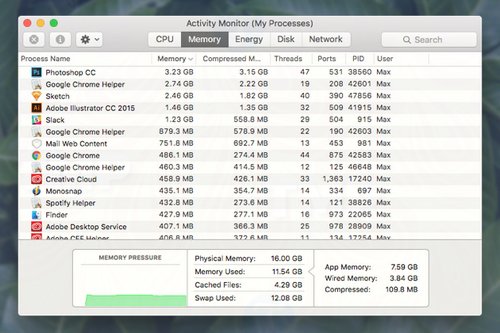
The Memory Pressure chart will now appear on the screen. It means that the system RAM is fine if most of the chart is green. On the contrary, if most of the chart is yellow, it means that the RAM is running out, and if it is red, it means that the Mac is in an alarming state, and the Mac is using many RAM.
- On older versions of OS X like Leopard and Lion:
On older versions of Mac OS X, you perform the same steps above, but the System Memory tab interface will be slightly different. Here you will see 2 items: Free and Page Outs. In which:
- Free: The amount of RAM currently available. It means your device has enough RAM if you have a bunch of apps open and your Mac still has free RAM.
- Page Outs: This item shows the high frequency of RAM usage, leading to the device slowing down and requiring additional RAM upgrades.
Using RAM analysis tools
Another simple way to check RAM on all versions of Mac OS X is to use a third-party tool. The third-party tool that this guide wants to introduce here is CleanMyMac X. In addition to cleaning up junk to speed up your Mac, the tool also has an App Menu that lets you monitor RAM.
Download CleanMyMac X to your computer and install it here: Download CleanMyMac X.
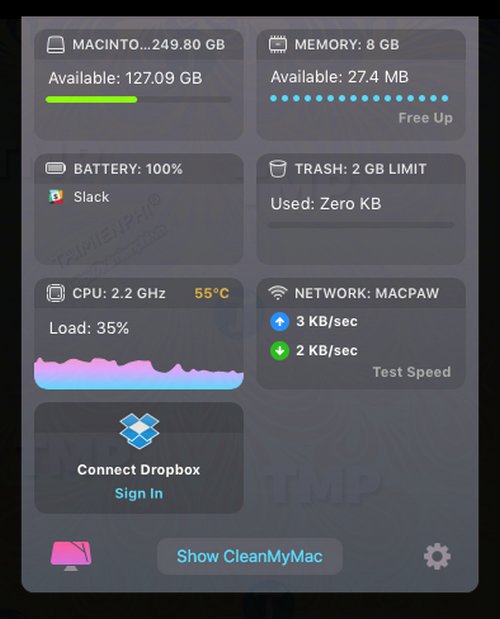
Using the tool to monitor your Mac's RAM is quite simple, just select the Memory Monitor tab to see an overview of your Mac's RAM usage. In addition, the tool also allows you to free up RAM by closing unnecessary applications, which will be useful in case your device is running slow.
Instructions for Upgrading RAM for Mac
Step 1: Check the model of the device you are using.
- Select the Apple icon.
- Select About this Mac.
- Check system information.
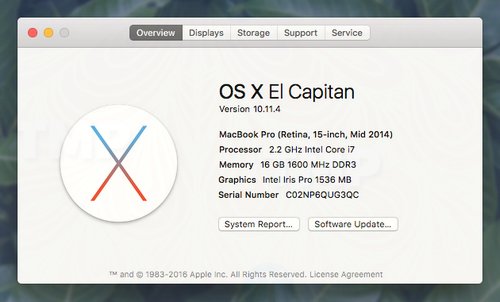
Step 2: Check the number of RAM slots on your Mac.
The next step is to check the number of RAM slots to know how many RAM slots your Mac supports. Follow the same steps as in step 1 above, then in the About this Mac window, find and click More Info.
At this time, the System Profiler window will appear on the screen. Here, you find and select Memory in the left column.
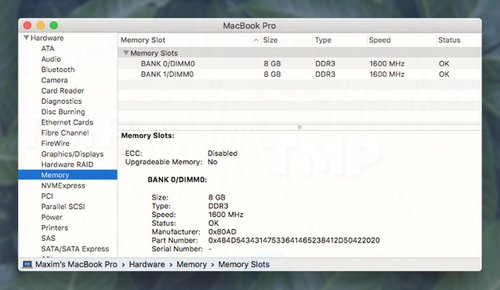
The right column will display detailed information so you can know exactly how many RAM slots your Mac supports.
Step 3: Determine the maximum RAM capacity.
Next check how much RAM your device supports and how many GB of RAM it is currently using to find out and choose the right RAM after checking the model and the number of RAM slots that your Mac supports.
Step 4: Choose to buy RAM
The next step now is just to choose to buy new RAM. Readers can refer to the article 3 ways to choose and upgrade suitable RAM for computers to know how to choose and buy suitable RAM.
Step 5: Install RAM
Installing RAM on a Mac is not too difficult, the only difficulty is determining where the RAM is located, and all you need to prepare is a screwdriver. Refer to the content below to learn how to install RAM on some specific Mac models.
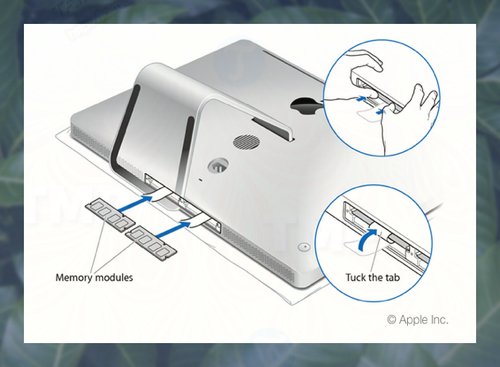
Upgrade RAM on iMac
- Turn off the iMac and unplug all power cords, mouse and keyboard.
- Place the iMac screen face down on a soft pad to ensure the device screen is not scratched.
- Use a screwdriver to unscrew the screws on the RAM plastic cover counterclockwise to remove these screws.
- Use your hand to gently pry the 2 RAM fixing latches on both sides to remove the RAM.
- Next step is to insert the new RAM stick into the old RAM slot, close the plastic cover and screw it back in.
- Finally reconnect the power cord, and peripherals, then turn on your Mac and test the new RAM.
Upgrade RAM on Macbook Pro
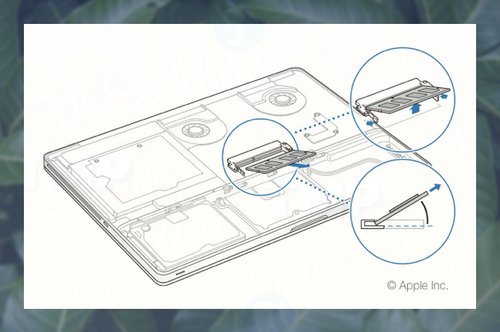
- First turn off the Macbook.
- Turn the Macbook screen upside down under the soft cushion to remove the plastic cover covering the RAM.
- Use a screwdriver to remove the RAM plastic cover.
Note: You will need to use a small 4-sided screwdriver to remove these screws.
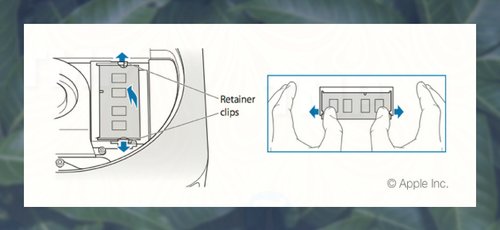
- Gently pry the 2 fixed latches at both ends. At this point, the RAM stick will pop up, all you need to do is remove the RAM stick.
- Insert the new RAM stick into the old RAM slot, close the plastic cover and screw it back in.
- Finally reopen Macbook and check new RAM.
Upgrading RAM on Mac Mini
Because the Mac Mini is quite small in size, upgrading will be more difficult, so this guide recommends that you seek the help of experts and reputable Mac repair centers.
You can use cleaners to speed up Mac OS, making your device run smoother if you can't upgrade your RAM. In addition, if your device is too old and doesn't meet your needs, you can also consider upgrading to a new Mac for a better experience.
Final Thoughts
The most reliable way to handle upgrading RAM for mac to increase performance is to follow the process in order, verify each important setting, and test the result before moving on. Use the guidance above as a practical reference, then adjust the details for your device, software version, or specific goal.
FAQ
What should I check before I upgrading RAM for mac to increase performance?
Use the latest available software, confirm that your device meets the requirements, and make sure you have the necessary permissions, account access, or backup before changing anything.
Why might I be unable to upgrading RAM for mac to increase performance?
Common causes include outdated software, missing permissions, incompatible settings, incomplete setup steps, or a temporary network problem. Recheck the process from the beginning and restart the app or device if needed.
Is it safe to upgrading RAM for mac to increase performance?
It is generally safe when you use official tools, review every permission, and back up important data before making system-level or account-level changes.
Related Articles
 How to Increase CPU Performance: Step-by-Step Guide6 minutes read
 How to Improve Gaming Performance on Mac6 minutes read
 Instructions for Upgrading BIOS, How to Update BIOS27 minutes read
 How to Increase Gaming Performance on Windows 10 April 20184 minutes read
 How to Find the Maximum RAM Capacity of Your Computer: Complete Guide7 minutes read
 Change These 4 Settings to Increase Your Smart TV's Performance6 minutes read
Reader Comments 0
Sign in with email or Google to join the discussion.