Table of Contents
Overview
This guide explains how to view MAC address on Windows using command prompt in clear, practical terms. It covers the key concepts, recommended steps, common limitations, and useful checks so you can make a better-informed decision.
When shopping online, if you want the shipper to deliver the goods to you, you need to have an exact address. And the same goes for devices using the Internet. In a network environment, if you want the device to receive data packets when we access information, the computer also needs an address to receive them. This address on a normal computer is called IP and MAC. This guide has an article with instructions on how to view the IP address, so what about how to view the MAC address? Let's see in this tutorial!
What Is MAC address?
MAC is an abbreviation for the phrase 'Media Access Control' translated into Vietnamese means media access control used to indicate the physical address of network devices used at the data link layer in the 7-layer OSI model. To better visualize what MAC address information is, you can simply understand that MAC is the ID of the network card in the computer, used to distinguish it from other types of cards mounted on the motherboard such as graphics cards, sound cards. If your computer uses multiple network cards, it means that you will have many different MAC addresses.
Structure of MAC address
The MAC address on a normal computer has a structure of 12 digits. In which, each digit is any number in the sequence from 0 to 9. If it is a letter, it will include characters from A to F. The common MAC address model often has 3 forms as follows:

- 68:7F:74:12:34:56
- 68-7F-74-12-34-56
- 687. F74.123.456
The first 6 numbers represent the manufacturer and the last 6 numbers are the digits used for the converter. In particular, the MAC address will not contain information related to the network of the device you manage.
How to view MAC address on Windows 10
View MAC address on Windows via CMD (Command Prompt)
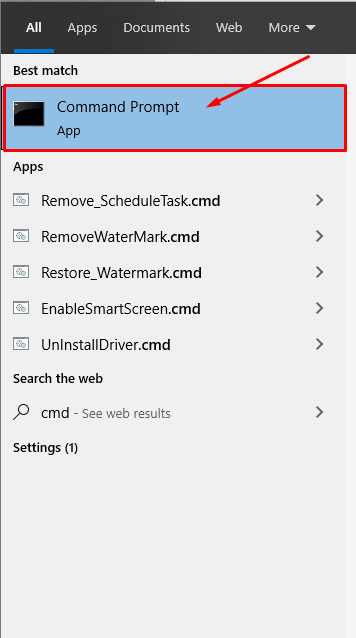
Press the key combination Window + R or type cmd in the Search box on Window 10. Select Command Prompt
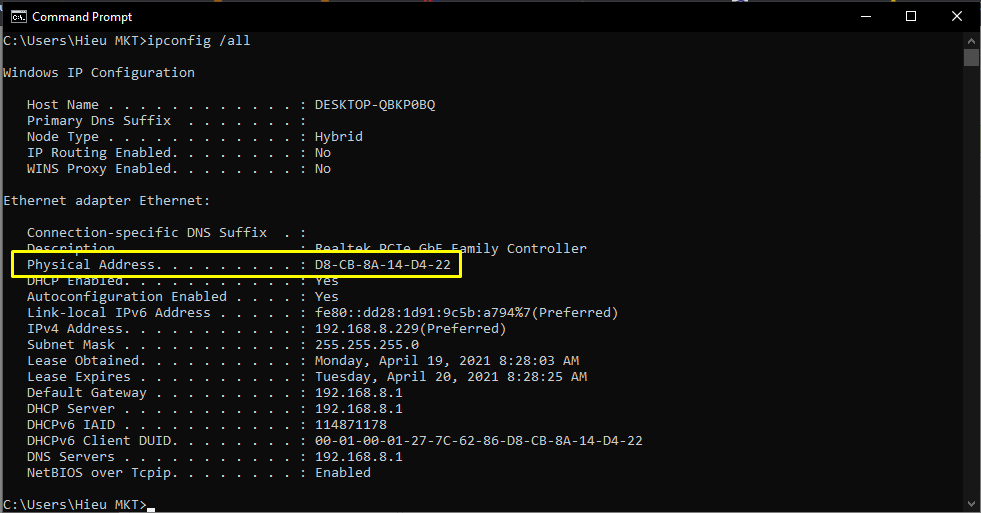
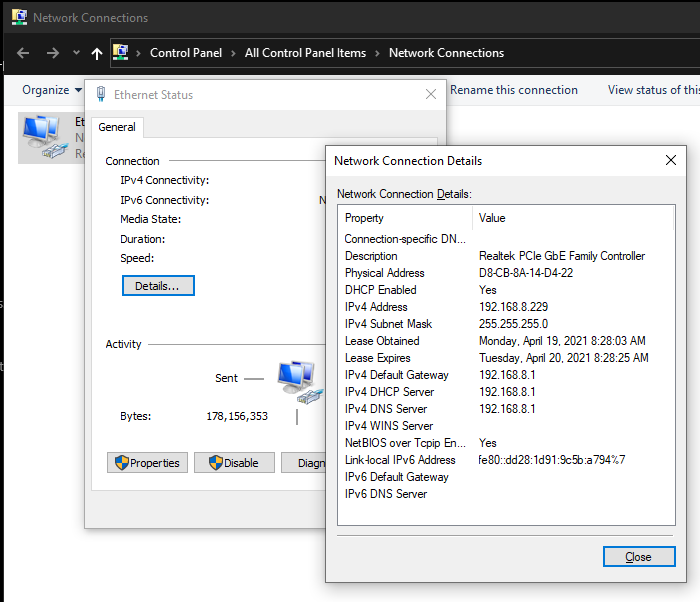
In the CMD window that appears, type the command ipconfig /all then press Enter. All parameters about your network configuration will be displayed. Now, check the Physical Address line - this is your MAC address.
View MAC address via network icon
In addition to the way to view the MAC address via CMD above, if you are afraid of typing, you can view the MAC address via the current network icon. Here's how:
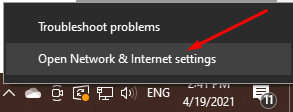
Right-click on the LAN or Wi-Fi icon in the left corner of the screen, select Open Network & Internet Settings.
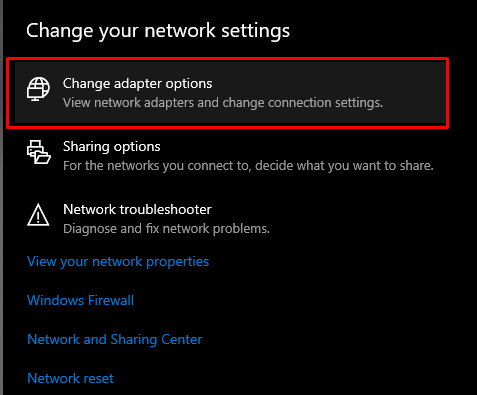
In the Change your network settings section, click on the Change adapter options line.
Double click on the network icon and select Details. Similar to how to view the MAC address using CMD, you will see your MAC address in the Physical Address line.
Key Takeaways
Use the guidance above as a practical reference for view MAC address on Windows using command prompt. Check compatibility, follow the steps carefully, and verify important details with official documentation when software, security, accounts, health, or purchases are involved.
FAQ
How do I view MAC address on Windows using command prompt?
Follow the steps in this guide in order, confirm each setting before continuing, and save, restart, or reconnect the device when the instructions require it.
What should I check before I begin?
Confirm the correct device, account access, software version, compatibility, and a current backup whenever the process could affect files, settings, or security.
What should I do if the process does not work?
Repeat the steps carefully, check for model or version differences, install available updates, and consult the manufacturer's official support documentation.
Related Articles
 Displays CPU Information Via Command Prompt on Windows 104 minutes read
 How to Use the Command History Function in Command Prompt9 minutes read
 Instructions to Change IP Address from Command Prompt5 minutes read
 How to Open Command Prompt on Windows 10, 8, 7, Vista and XP6 minutes read
 Add Command Prompt to Power User Menu on Windows 103 minutes read
 Use the Command in Windows: How to Using Command Prompt20 minutes read
Reader Comments 0
Sign in with email or Google to join the discussion.