Table of Contents
Learning how to set virtual RAM on windows to increase performance doesn't have to be complicated. This updated guide presents a clear workflow, practical checks, and troubleshooting advice you can use while completing the process.
Key Takeaways
- Review instructions for increasing memory capacity using virtual RAM.
- Follow the recommended steps in order to avoid common mistakes with set virtual RAM on windows to increase performance.
- Review compatibility, settings, or requirements before making changes.
Instructions for Increasing Memory Capacity Using Virtual RAM
Step 1: From the Start menu, right-select My Computer, then select Properties.

Step 2: Next select Advanced system settings.

Step 3: In the Advanced tab, click the Settings button.

Step 4: Continue to switch to the Advanced tab, then select Change. To continue.

Step 5: Here the Virtual Memory window will be displayed. Uncheck the box Au tomatically manage paging file size for all drives, then move to the Custom size section.

Here, enter the minimum capacity in the Initial size box and the maximum capacity in the Maximum size box. Then select Set and OK to finish. According to what we know, you should set the virtual RAM capacity to 1.5 times the main RAM capacity. For instance, my RAM is 6GB, so the virtual RAM should be set to 9GB.
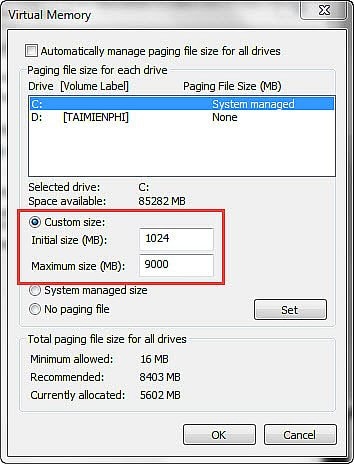
Step 6: The system will now ask you to click OK to confirm.

Click Restart Now to restart the computer after confirming.

Virtual memory will help the system operate more stably, limiting RAM shortage errors after installation. However, this is only a temporary solution, you should consider upgrading RAM to improve long-term performance.
Final Thoughts
The most reliable way to handle set virtual RAM on windows to increase performance is to follow the process in order, verify each important setting, and test the result before moving on. Use the guidance above as a practical reference, then adjust the details for your device, software version, or specific goal.
FAQ
What should I check before I set virtual RAM on windows to increase performance?
Use the latest available software, confirm that your device meets the requirements, and make sure you have the necessary permissions, account access, or backup before changing anything.
Why might I be unable to set virtual RAM on windows to increase performance?
Common causes include outdated software, missing permissions, incompatible settings, incomplete setup steps, or a temporary network problem. Recheck the process from the beginning and restart the app or device if needed.
Is it safe to set virtual RAM on windows to increase performance?
It is generally safe when you use official tools, review every permission, and back up important data before making system-level or account-level changes.
Related Articles
 What Is the GPU: What Is a Virtual GPU?5 minutes read
 How to Speeding up Virtual Machines in Full Set10 minutes read
 How to Increase Gaming Performance on Windows 10 April 20184 minutes read
 Top Best Virtual RAM Creation Software on Today's Computer4 minutes read
 Here's How to Increase Virtual Memory Capacity on Windows4 minutes read
 How to Increase Virtual RAM on Win 104 minutes read
Reader Comments 0
Sign in with email or Google to join the discussion.