Table of Contents
This updated guide examines Folder: How to Map a Network Drive and organizes the essential facts, background, and practical takeaways in clear American English.
Method 1of 2:
On Windows
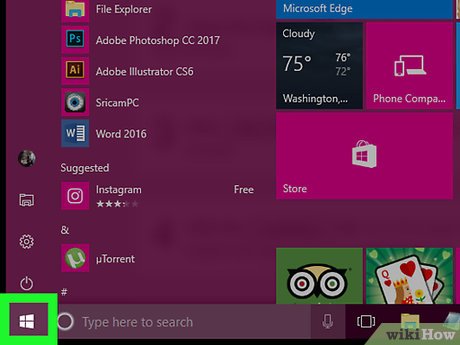 Open Start
 . Click the Windows logo in the bottom-left corner of the screen.
 Open File Explorer
 . Click the folder-shaped icon in the lower-left side of the Start window.
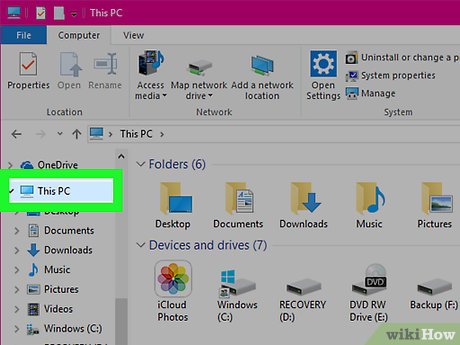 ClickThis PC. This folder is in the left-hand column of options in the File Explorer window.
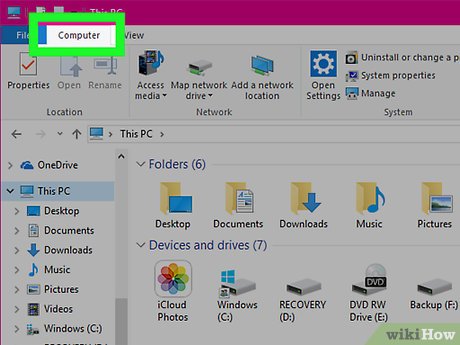 Click theComputertab. It's in the upper-left side of the This PC window. A toolbar will appear below the Computer tab.
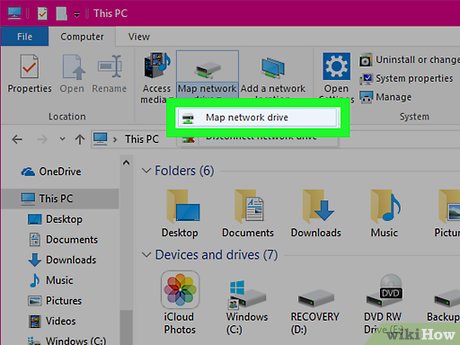 Click theMap network driveicon. This option is in the "Network" section of the toolbar; it resembles a grey drive with a green bar below it. Clicking this prompts a pop-up window to appear.
 Select a drive letter. Click the "Drive" drop-down box, then click the letter that you want to use for the folder.
- Hard drives all have letters assigned to them (the hard drive on your computer is most likely labeled "C", for example).
- Consider picking a letter like X or Z to avoid conflicting with any of the A through F drive letters that you will most likely use on your computer at some point.
 ClickBrowse…. It's in the middle-right side of the window. Another window will open.
 Select the folder that you want to use as the drive. Click on the name of the computer you want to use, then navigate to the folder that you want to select as the drive and click on it once to select it.
- If you aren't connected to at least one other computer on your network, you won't be able to select a folder.
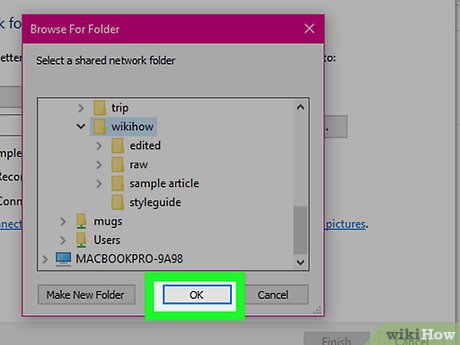 ClickOK. It's at the bottom of the window. Doing so saves your selected folder as the drive destination.
- Make sure that the owner of the folder's computer doesn't move the folder after this point.
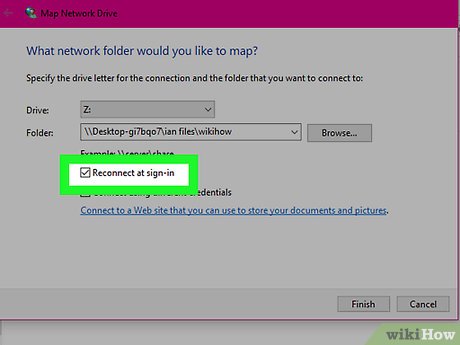 Make sure that the "Reconnect at sign-up" box is checked. Click the checkbox to the left of this option if the box isn't checked. This will ensure that you always have access to the folder.
- If you are connecting to a shared folder on a network that is not on your computer, you may also need to provide login information. If so, check the box labeled "Connect using different credentials" and enter your login information.
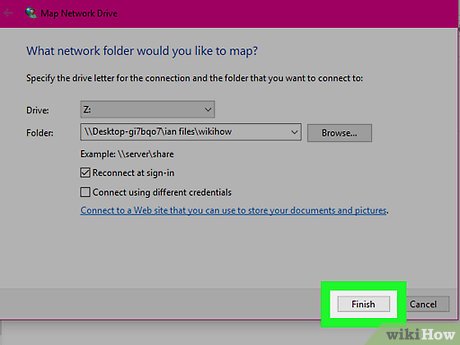 ClickFinish. It's at the bottom of the window. This will complete the setup process and link your computer to the selected folder. You should now be able to use the specific folder as a drive.
- The folder in question will appear in the This PC window below the "Devices and drives" heading. It will have the letter you selected as its name.
Method 2of 2:
On Mac
 Open Finder. Click the blue, face-shaped icon in your Mac's Dock.
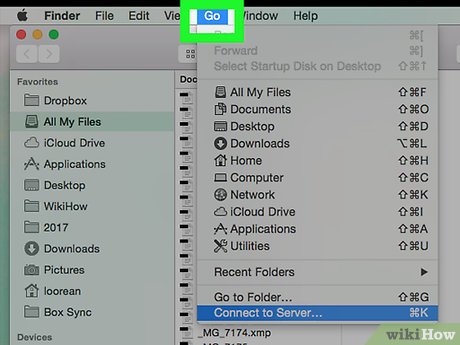 ClickGo. This tab is in the menu bar at the top of the screen. A drop-down menu will appear.
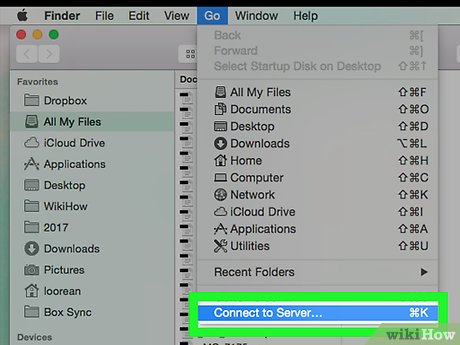 ClickConnect to Server. You'll find this option near the bottom of the drop-down menu. A new window will open.
 Enter the address for the folder that you want to use. For example, if the folder is named Pickles and it is inside of the Documents folder on a computer named Hal , you would typeHal/Documents/Pickles/on the right side of the smb:// tag.
- Depending on your network type, you may see ftp:// or something similar here instead of smb:// .
 Click+. It's to the right of the address bar. This will add the folder's address to your Mac.
 ClickConnect. This blue button is at the bottom of the window.
 Enter your credentials when prompted. The login and password you need to enter here will vary depending on your network, so check with your system administrator if you don't know how to log in.
- Once you log in, you should see the folder's drive icon appear on your desktop.
FAQ
What is Folder: How to Map a Network Drive about?
It provides a structured overview of folder, explains the main context, and highlights practical takeaways for readers.
Why does this topic matter?
Understanding the main concepts helps readers evaluate the issue, avoid common mistakes, and make better-informed decisions.
How should readers use this information?
Use the guidance as a practical starting point, confirm details that may have changed, and follow current product, safety, or security recommendations.
Related Articles
 How to Use Google Drive Like Free Ftp Server or Network Drive6 minutes read
 How to Set Up a Network Drive: Step-by-Step Guide9 minutes read
 How to Map Network Drives in Windows 116 minutes read
 How to Create Network Drive with AirDisk in OS X5 minutes read
 How to Set Up a Network Drive: Step-by-Step Guide8 minutes read
 Drive Mapping: How to Map Network Drives in Windows 106 minutes read
Reader Comments 0
Sign in with email or Google to join the discussion.