Table of Contents
This updated guide examines How to Make a Map Using Leaflet and organizes the essential facts, background, and practical takeaways in clear American English.
Part 1
Setting Up the Map
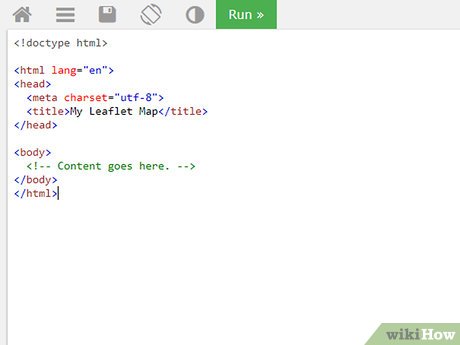 Open or create your webpage. If you don't already have a webpage you want to insert the map into, you can use the following HTML5 template; save it as 'map_page.html':
My Leaflet Maptitle>head><body>body>html></pre>
</li>
<li id="step-id-01"><img src="/data/images/how-to-make-a-map-using-leaflet-picture-2-D1Gl2XZqv.jpg" loading="lazy" decoding="async" alt="How to Make a Map Using Leaflet — contextual image 2"> <strong>Include the Leaflet JavaScript and CSS files.</strong> Your webpage will need to include the Leaflet JavaScript file and CSS file. To do this, paste the following line of code into your HTML file, inside the<code></code>area, on a new line below the<code></code>:
<pre><scriptsrc="http://cdn.leafletjs.com/leaflet/v0.7.7/leaflet.js">script><linkrel="stylesheet"href="http://cdn.leafletjs.com/leaflet/v0.7.7/leaflet.css"/></pre>
</li>
<li id="step-id-02"><img src="http://tipsmake.com/data/images/how-to-make-a-map-using-leaflet-picture-3-gnGs6xZeD.jpg" alt="How to Make a Map Using Leaflet — contextual image 3" /> <strong>Add an HTML map container.</strong> Leaflet will display the map inside an HTML element, so you need to provide one for it. Paste the following line of markup inside the<code></code>:
<pre><divid="map">div></pre>
</li>
<li id="step-id-03"><img src="http://tipsmake.com/data/images/how-to-make-a-map-using-leaflet-picture-4-kkxpi5atC.jpg" alt="How to Make a Map Using Leaflet — contextual image 4" /> <strong>Style the map container.</strong> You need to set how large the map will be when it is displayed, and you should use CSS to do this. You can add the following to the document<code></code>:
<pre><style>#map{height:500px;width:700px;}style></pre>
</li>
<li id="step-id-04"><img src="http://tipsmake.com/data/images/how-to-make-a-map-using-leaflet-picture-5-ObCpFtWQl.jpg" alt="How to Make a Map Using Leaflet — contextual image 5" /> <strong>Create the map object.</strong> To start writing the JavaScript code that sets up the map, you'll need to add a<code></code>area to the<code></code> <strong>after</strong> the map container<code>div</code>. Also inside of this, you can create the map object by calling the<code>map()</code>function of the leaflet object, like this:
<pre><scripttype='text/javascript'>varmap=L.map('map');</script></pre>
</li>
<li id="step-id-05"><img src="/data/images/how-to-make-a-map-using-leaflet-picture-6-KGC6MPC5L.jpg" loading="lazy" decoding="async" alt="How to Make a Map Using Leaflet — contextual image 6"> <strong>Set the map's view.</strong> A Leaflet map's view property is what manages what part of of the map you see. Set your map's view to center on the coordinates [0, 0] (off the coast of central Africa):
<ul>
<ul>
<li><strong>Note:</strong> Unlike the OpenLayers mapping library, Leaflet deals with coordinates in the format [latitude, longitude].</li>
</ul>
</ul>
<pre>map.setView([0,0],2);</pre>
</li>
<li id="step-id-06"><img src="/data/images/how-to-make-a-map-using-leaflet-picture-7-0VQu50Rl9.jpg" loading="lazy" decoding="async" alt="How to Make a Map Using Leaflet — contextual image 7"> <strong>Add a tile layer.</strong> Leaflet maps have layers which are stacked on top of one another, and are what you actually see in a map. There are several types of layers: UI (markers and popups), Raster (tile layers), Vector (shapes), and Other. Tile layers are are the standard 'base' layers, and can come from map providers like Google Maps, MapQuest, or OpenStreetMaps. Each layer has a urlTemplate, which tells Leaflet where the layer information is coming from. You should also provide attribution information to tell visitors where the map tiles are from.
<pre>varlayer=L.tileLayer('http://{s}.tile.osm.org/{z}/{x}/{y}.png',{attribution:'© OpenStreetMap contributors'});layer.addTo(map);</pre>
</li>
</ol>
<h2 id="part-2">Part 2</h2>
<h3 id="adding-additional-layers-and-features">Adding Additional Layers and Features</h3>
<ol>
<li id="step-id-17"><img src="/data/images/how-to-make-a-map-using-leaflet-picture-8-Nmtg0vIg0.jpg" loading="lazy" decoding="async" alt="How to Make a Map Using Leaflet — contextual image 8"> <strong>Add a marker.</strong> Markers show the location of a point on a map. In Leaflet, markers are a type of 'UI layer', so they can be directly added to maps. Simply copy the following line of code into your<code>element:</code>.
<pre>varmarker=L.marker([20,20]);marker.addTo(map);</pre>
</li>
<li id="step-id-18"><img src="/data/images/how-to-make-a-map-using-leaflet-picture-9-12HdDdFzQ.jpg" loading="lazy" decoding="async" alt="How to Make a Map Using Leaflet — contextual image 9"> <strong>Add a popup.</strong> Popups are used to add contextual information to a marker or other layer.
<pre>marker.bindPopup('Chad');marker.openPopup();</pre>
</li>
<li id="step-id-19"><img src="/data/images/how-to-make-a-map-using-leaflet-picture-10-l1LXSwEcs.jpg" loading="lazy" decoding="async" alt="How to Make a Map Using Leaflet — contextual image 10"> <strong>Add a polyline.</strong> In Leaflet, a polyline is a line with multiple segments, and is a type of 'vector layer'.
<pre>varpolyline=L.polyline([[20,10],[10,20],[20,30]])polyline.addTo(map);</pre>
</li>
<li id="step-id-110"><img src="/data/images/how-to-make-a-map-using-leaflet-picture-11-vUDuxQNEG.jpg" loading="lazy" decoding="async" alt="How to Make a Map Using Leaflet — contextual image 11"> <strong>Set the style of a vector layer.</strong> Styles determine what the vector looks like, and include line color, line style, fill color, opacity, and so on. Different style options apply to different types of vectors; for instance, a polyline has no area, so the fill options don't apply.
<pre>polyline.setStyle({color:'red'});</pre>
</li>
<li id="step-id-111"><img src="/data/images/how-to-make-a-map-using-leaflet-picture-12-9cNZ3Gw79.jpg" loading="lazy" decoding="async" alt="How to Make a Map Using Leaflet — contextual image 12"> <strong>Add a scale control.</strong> Controls let you interact with the map in various ways, or show additional information about the map. A scale control displays how large distances are on the map, which changes when the map is zoomed.
<pre>varscale=L.control.scale()scale.addTo(map);</pre>
</li>
<li id="step-id-112"><img src="/data/images/how-to-make-a-map-using-leaflet-picture-13-zCyfOqRC9.jpg" loading="lazy" decoding="async" alt="How to Make a Map Using Leaflet — contextual image 13"> <strong>Review the finished map.</strong></li>
</ol>
<section class="faq">
<h2 id="faq">FAQ</h2>
<h3 id="what-is-how-to-make-a-map-using-leaflet-about">What is How to Make a Map Using Leaflet about?</h3>
<p>It provides a structured overview of map, explains the main context, and highlights practical takeaways for readers.</p>
<h3 id="why-does-this-topic-matter">Why does this topic matter?</h3>
<p>Understanding the main concepts helps readers evaluate the issue, avoid common mistakes, and make better-informed decisions.</p>
<h3 id="how-should-readers-use-this-information">How should readers use this information?</h3>
<p>Use the guidance as a practical starting point, confirm details that may have changed, and follow current product, safety, or security recommendations.</p>
</section></div>
<nav class="article-pagination" aria-label="Article navigation">
<a class="article-page-link article-page-prev" href="https://tipsmake.com/how-to-draft-a-software-licensing-agreement" rel="prev"><span class="article-page-label"><svg class="ui-icon" viewBox="0 0 24 24" aria-hidden="true"><path d="m15 18-6-6 6-6"></path></svg>Previous article</span><strong>Licensee: How to Draft a Software Licensing Agreement</strong></a><a class="article-page-link article-page-next" href="https://tipsmake.com/how-to-video-chat-with-friends-on-oovoo" rel="next"><span class="article-page-label">Next article<svg class="ui-icon" viewBox="0 0 24 24" aria-hidden="true"><path d="m9 18 6-6-6-6"></path></svg></span><strong>How to Video Chat with Friends on Oovoo</strong></a></nav>
<section class="comments-section" id="comments" data-comments data-article="41772" aria-labelledby="comments-title">
<div class="comments-heading">
	<div>
		<span class="eyebrow">Discussion</span>
		<h2 id="comments-title">Reader Comments <span class="comment-count" data-comment-count>0</span></h2>
	</div>
	<button type="button" class="btn" data-open-auth>Sign In to Comment</button>
</div>
<div class="comment-member" data-comment-member hidden><span>Signed in as: <strong data-user-name></strong></span><button type="button" class="text-button" data-logout>Sign Out</button></div>
<div class="comment-guest" data-comment-guest><p>Sign in with email or Google to join the discussion.</p></div>
<form id="comment-form" class="comment-form" hidden><label for="comment-body">Comment</label><textarea id="comment-body" name="body" minlength="5" maxlength="2000" required placeholder="Share your thoughts…"></textarea><input type="text" class="honeypot" name="website" tabindex="-1" autocomplete="off" aria-hidden="true"><div class="comment-form-footer"><small>Maximum 2,000 characters</small><button class="btn" type="submit">Post Comment</button></div></form>
<div class="comments-status" data-comments-status aria-live="polite"></div><div class="comments-empty" data-comments-empty hidden>No comments yet. Be the first to share your thoughts.</div><div class="comments-list" data-comments-list></div><button type="button" class="btn secondary load-comments" data-load-comments hidden>Load More Comments</button>
</section><section class="related-section" aria-labelledby="related-title">
<div class="section-head"><h2 class="section-title" id="related-title">Related Articles</h2></div>
<div class="related-grid">
<a class="related-card" href="/how-to-design-brochures-in-word"><span class="related-thumb blue"><img loading="lazy" decoding="async" src="/data/thumbs_200x120/how-to-design-brochures-in-word_thumbs_200x120_TAtEnOXUr.jpg" alt="How to Design Brochures in Word"></span><strong>How to Design Brochures in Word</strong><small>4 minutes read</small></a><a class="related-card" href="/size-of-paper-size-a0-a1-a2-a3-a4-is-how-many-pixel-cm-inches-standard"><span class="related-thumb blue"><img loading="lazy" decoding="async" src="/data/thumbs_200x120/size-of-paper-size-a0-a1-a2-a3-a4-is-how-many-pixel-cm-inches-standard_thumbs_200x120_ReGMfgHgg.jpg" alt="Size of Paper Size A0 A1 A2 A3 A4 Is How Many Pixel, Cm, Inches"></span><strong>Size of Paper Size A0 A1 A2 A3 A4 Is How Many Pixel, Cm, Inches</strong><small>5 minutes read</small></a><a class="related-card" href="/how-to-make-a-simple-yet-delicious-carrot-jam"><span class="related-thumb blue"><img loading="lazy" decoding="async" src="/data/thumbs_200x120/how-to-make-a-simple-yet-delicious-carrot-jam_thumbs_200x120_TKzKnDiBT.jpg" alt="How to Make a Simple Yet Delicious Carrot Jam"></span><strong>How to Make a Simple Yet Delicious Carrot Jam</strong><small>4 minutes read</small></a><a class="related-card" href="/instructions-for-making-simple-creams-do-not-require-an-ice-cream-machine"><span class="related-thumb blue"><img loading="lazy" decoding="async" src="/data/thumbs_200x120/instructions-for-making-simple-creams-do-not-require-an-ice-cream-machine_thumbs_200x120_AEJUfgSEZ.jpg" alt="Instructions for Making Simple Creams Do Not Require an Ice Cream"></span><strong>Instructions for Making Simple Creams Do Not Require an Ice Cream</strong><small>4 minutes read</small></a><a class="related-card" href="/how-to-make-taut-apple-jam-delicious-on-tet-holiday"><span class="related-thumb blue"><img loading="lazy" decoding="async" src="/data/thumbs_200x120/how-to-make-taut-apple-jam-delicious-on-tet-holiday_thumbs_200x120_NZkllNVCj.jpg" alt="How to Make Taut Apple Jam, Delicious on Tet Holiday"></span><strong>How to Make Taut Apple Jam, Delicious on Tet Holiday</strong><small>4 minutes read</small></a><a class="related-card" href="/how-to-make-money-by-kwai"><span class="related-thumb blue"><img loading="lazy" decoding="async" src="/data/thumbs_200x120/how-to-make-money-by-kwai_thumbs_200x120_HAOilCL7L.jpg" alt="How to Make Money by Kwai: Set Money to Earn Money"></span><strong>How to Make Money by Kwai: Set Money to Earn Money</strong><small>5 minutes read</small></a></div>
</section>
</article>
<aside class="sidebar">
<section class="widget">
<h2 class="widget-title">Related Reading</h2>
<div class="trend-list">
<div class="trend-item"><a href="https://tipsmake.com/how-to-burn-dual-layer-dvd">How to Burn Dual Layer DVD</a></div><div class="trend-item"><a href="https://tipsmake.com/how-to-color-inside-the-lines-in-firealpaca">How to Color Inside the Lines in FireAlpaca</a></div><div class="trend-item"><a href="https://tipsmake.com/how-to-learn-photobie-toolbars">How to Learn Photobie Toolbars</a></div><div class="trend-item"><a href="https://tipsmake.com/how-to-trace-an-image-using-inkscape">How to Trace an Image Using Inkscape</a></div><div class="trend-item"><a href="https://tipsmake.com/how-to-make-a-bug-in-gimp">How to Make a Bug in GIMP</a></div><div class="trend-item"><a href="https://tipsmake.com/how-to-create-a-realistic-lightsaber-in-gimp">How to Create a Realistic Lightsaber in GIMP</a></div><div class="trend-item"><a href="https://tipsmake.com/how-to-change-hair-color-in-gimp">How to Change Hair Color in GIMP</a></div><div class="trend-item"><a href="https://tipsmake.com/how-to-adjust-brightness-in-gimp">How to Adjust Brightness in GIMP</a></div><div class="trend-item"><a href="https://tipsmake.com/how-to-recolor-anything-on-gimp">How to Recolor Anything on Gimp</a></div><div class="trend-item"><a href="https://tipsmake.com/how-to-create-steampunk-photography-using-gimp">How to Create Steampunk Photography Using GIMP</a></div></div>
</section>
<section class="widget toc-box" data-toc>
<h2 class="widget-title">In This Article</h2>
<a href="#part-1">Part 1</a><a href="#part-2">Part 2</a><a href="#faq">FAQ</a><a href="#setting-up-the-map">Setting Up the Map</a><a href="#adding-additional-layers-and-features">Adding Additional Layers and Features</a><a href="#what-is-how-to-make-a-map-using-leaflet-about">What is How to Make a Map Using Leaflet about?</a><a href="#why-does-this-topic-matter">Why does this topic matter?</a><a href="#how-should-readers-use-this-information">How should readers use this information?</a><a href="#comments">Discussion</a>
</section>
</aside>
</div>
</div>
</main>
<footer class="site-footer">

    <div class="container footer-grid">

        <div class="footer-brand">

            <a class="brand" href="/" aria-label="TipsMake">
                <span class="footer-logo-text">
                    Tips<strong>Make</strong>
                </span>
                <span class="footer-logo-domain" aria-hidden="true">.com</span>
            </a>

            <p>Practical Technology Knowledge.</p>

        </div>

        <div class="footer-col">
            <h2>Topics</h2>

            <a href="/c/technology/">Technology</a>
            <a href="/c/system/">System</a>
            <a href="/c/windows-11/">Windows 11</a>
            <a href="/c/artificial-intelligence/">AI</a>
            <a href="/c/security-solution/">Security</a>
        </div>

        <div class="footer-col">
            <h2>Resources</h2>

            <a href="/utility-assets/">Utility Lab</a>
            <a href="/tools/">Free Tools</a>
            <a href="/learn/">Learning Library</a>
        </div>

        <div class="footer-col">
            <h2>TipsMake</h2>

            <a href="/about.htm">About</a>
            <a href="/contact.htm">Contact</a>
            <a href="/terms.htm">Terms</a>
            <a href="/privacy.htm">Privacy</a>
        </div>

    </div>

    <div class="container footer-bottom">
        <span>© <b id="year">2026</b> TipsMake.com</span>
        <span>All rights reserved.</span>
    </div>

</footer><div class="search-panel" role="dialog" aria-modal="true" aria-label="Search"><div class="search-box"><button type="button" class="search-close" aria-label="Close">×</button><h2>Search TipsMake</h2><form action="/search.htm"><input id="site-search" class="search-input" name="keystips" type="search" placeholder="Windows, AI, security…" aria-label="Keywords"><button type="submit" class="btn">Search</button></form></div></div><div class="auth-modal" id="auth-modal" role="dialog" aria-modal="true" aria-labelledby="auth-title" hidden>
<div class="auth-card"><button type="button" class="auth-close" data-close-auth aria-label="Close sign-in">×</button><h2 id="auth-title">Join the Discussion</h2><p class="auth-intro">Sign in to comment and follow the discussion.</p><div class="auth-tabs" role="tablist"><button type="button" class="active" role="tab" aria-selected="true" data-auth-tab="login" id="auth-login-tab">Sign In</button><button type="button" role="tab" aria-selected="false" data-auth-tab="register" id="auth-register-tab">Create Account</button></div>
 <div id="auth-login-panel" role="tabpanel" aria-labelledby="auth-login-tab" tabindex="0">
<form class="auth-form" data-auth-form="login" ><label>Email<input type="email" name="email" autocomplete="email" required></label><label>Password<input type="password" name="password" autocomplete="current-password" required></label><button class="btn" type="submit">Sign In</button></form></div>
<div id="auth-register-panel" role="tabpanel" aria-labelledby="auth-register-tab" tabindex="0">
<form class="auth-form" data-auth-form="register" hidden><label>Display Name<input type="text" name="name" autocomplete="name" minlength="2" maxlength="60" required></label><label>Email<input type="email" name="email" autocomplete="email" required></label><label>Password<input type="password" name="password" autocomplete="new-password" minlength="8" maxlength="72" required></label><small>Password must contain at least 8 characters, including letters and numbers.</small><button class="btn" type="submit">Create Account</button></form></div>
<div class="auth-divider"><span>or</span></div><div class="google-button" data-google-button></div><p class="google-note" data-google-note></p><div class="auth-status" data-auth-status aria-live="polite"></div><p class="auth-legal">By continuing, you agree to the <a href="terms.htm">Terms</a> and <a href="privacy.htm">Privacy Policy</a>.</p></div>
</div><script src="/template/tech-nova/assets/comments.js" defer></script>
</body>
</html>