Table of Contents
This guide explains how to enable BitLocker Encryption on Computers That Do Not Support the TPM, with clear steps, practical tips, and important checks before you begin.
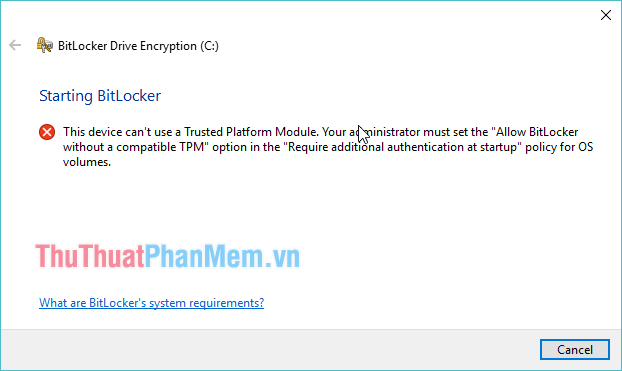
Step 1: You press Windows + R key combination to open the Run dialog box, then enter the command gpedit. msc and press Enter

Step 2 : The Local Group Polici Editor window appears, you browse for the following link:
Computer Configuration> Administrative Templates> Windows Components> BitLocker Drive Encryption> Supported operating systems Drives
Then in the right window, double-click the Require additional authentication at startup line

Step 3: In the new window, select Enabled then go to the bottom, select Allow BitLocker without a compatible TPM. Finally, click Apply to save the settings and exit the window.

Now you can try to enable the BitLocker feature on a certain drive partition, such as drive C, to see no error messages anymore:

So with just a few simple steps, we can enable BitLocker encryption on computers that do not support TPM chips, hope you will find the article useful. Good luck.
FAQ
What should I know about Enable BitLocker Encryption on Computers That Do Not Support the TPM?
Focus on the key features, requirements, limitations, and practical use cases explained in this guide.
How do I get the best results with Enable BitLocker Encryption on Computers That Do Not Support the TPM?
Follow the recommended steps, use current software or information, confirm compatibility, and review settings before major changes.
Are there any risks or limitations?
Potential limitations depend on compatibility, data quality, cost, privacy, support, and how the product or method is used.
Related Articles
 How to Use Bitlocker to Encrypt Data on Windows 10 (the Last4 minutes read
 Windows 11 Will Enable BitLocker Drive Encryption on Every PC Explained5 minutes read
 How to Use Bitlocker to Encrypt Data on Windows 85 minutes read
 How Are Bitlocker and EFS Different?7 minutes read
 Instructions for Encrypting USB or Memory Cards with Bitlocker on5 minutes read
 FBI Unlocks BitLocker Thanks to Microsoft: Is Windows Encryption Still Secure4 minutes read
Reader Comments 0
Sign in with email or Google to join the discussion.