Table of Contents
This updated guide examines How to Bypass Net Nanny and organizes the essential facts, background, and practical takeaways in clear American English.
Method 1
Method 1: Bypassing Net Nanny Using the Software Itself
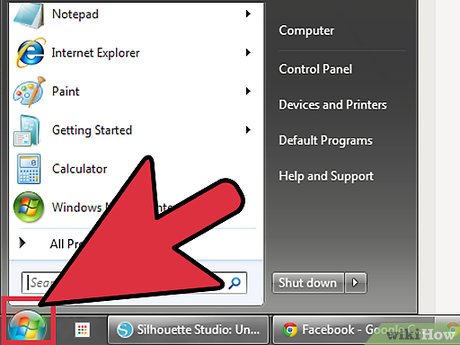 Open the start menu. Press the Windows button on your keyboard to open the start menu.
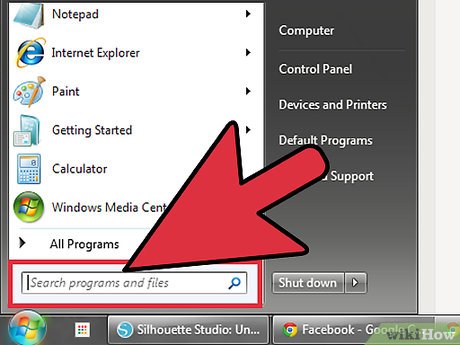 Find the application. If you're using Windows 8, look for Net Nanny in the start menu. If you're using Windows 7, Vista, or XP, browse for the application in the 'Programs' section.
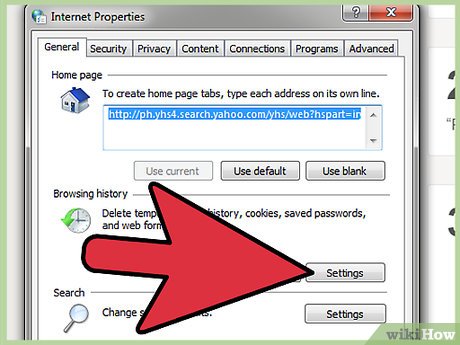 Enter '~frontdoor' as the password. When the password text box appears, type '~frontdoor' into it, and click 'Ok.'
- Note that this password will work only if the version of Net Nanny installed on the computer is Version 5.0 or older. You would need the actual password to change the program's settings.
 Adjust the settings. Once you're in Net Nanny, check all the boxes under the field 'Allow,' and do the same for all the drop boxes. Then click 'Ok.' All websites should now be permitted.
 Try to access a blocked site. Open your browser and navigate to a site that was blocked. You should now be able to access it.
Method 2
Method 2: Bypassing Net Nanny with the Windows Task Manager
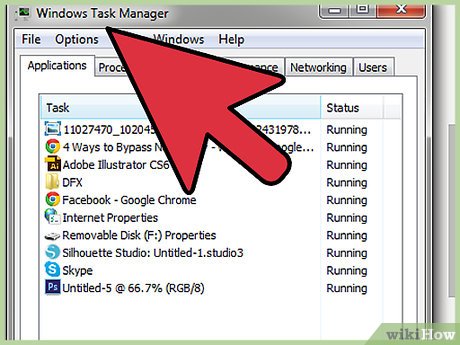 Open the Task Manager. Press Ctrl + Alt + Delete to bring up the Windows Task Manager windows.
- For some computers, you may need to click 'Task Manager' first.
 Find the 'Ocraware' process. Go to the 'Processes' tab and look for a process called 'Ocraware.'
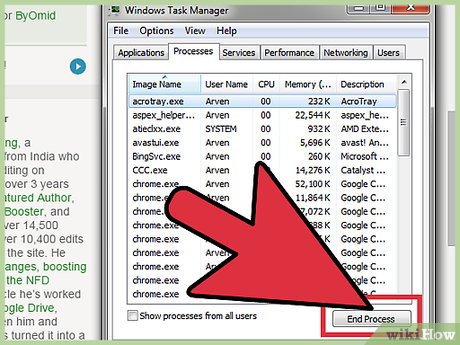 End the task. Select 'Ocraware,' then click 'End Task.'
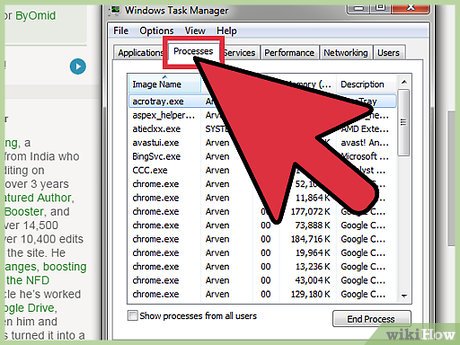 Look for the 'Wnldr32' process. Now look for a process called 'Wnldr32.' It should also be running under the 'Processes' tab.
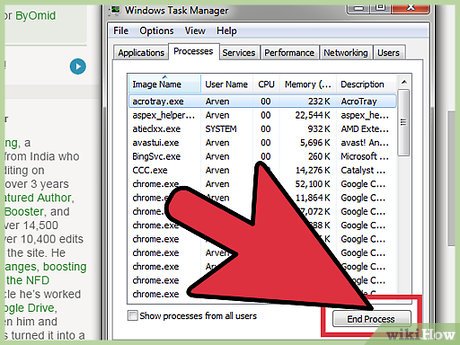 Shut down the task. Select 'Wnldr32,' then click 'End Task' again.
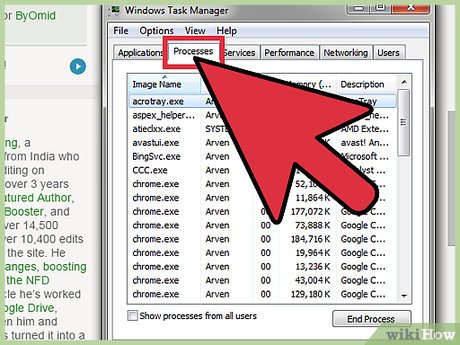 Search for the 'Net Nanny' process. Under the 'Processes' tab, you should also see a process called 'Net Nanny.'
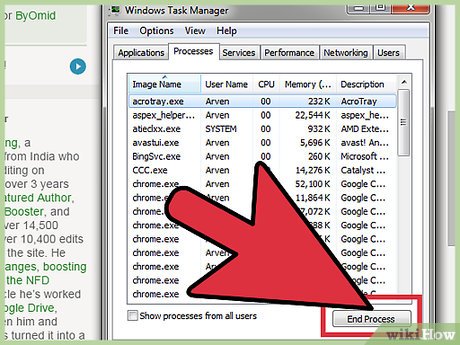 Stop Net Nanny. Select 'Net Nanny,' then click 'End Task' one final time. Net Nanny should now be disabled.
 Try to access a blocked site. Open your browser and navigate to a site that was blocked. You should now be able to access it.
Method 3
Method 3: Bypassing Net Nanny by Stopping during Start-Up
 Search for 'msconfig. ' Open the start menu and type 'msconfig' into the search bar. The program should come up.
- If you use Windows 8, move your cursor to the upper right corner of your screen, then click on the magnifying glass icon to search. Type in 'msconfig.'
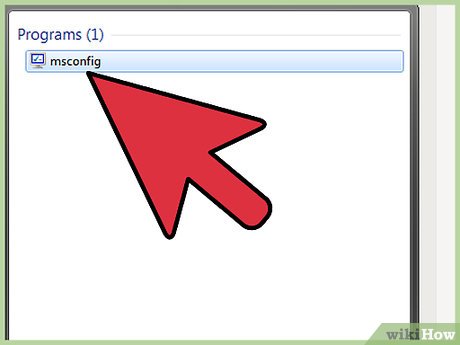 Start MsConfig. When the program appears in the search results, double-click it. Then click the 'Start Up' tab.
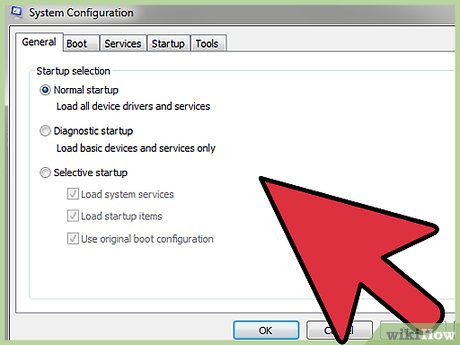 Change the settings immediately. Uncheck the boxes 'NNSvsc' and 'nntray.exe' to change the settings.
 Restart your computer. Once you've unchecked the 'NNSvsc' and 'nntray.exe' boxes, restart your computer. Net Nanny should be disabled.
 Try to access a blocked site. Open your browser and navigate to a site that was blocked. You should now be able to access it.
Method 4
Method 4: Bypassing Net Nanny with a Proxy Website
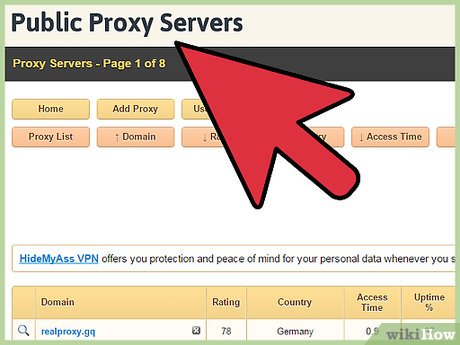 Navigate to a proxy website. Open your browser and go to a proxy website, such as stupidcensorship.com. This site is used to access blocked sites.
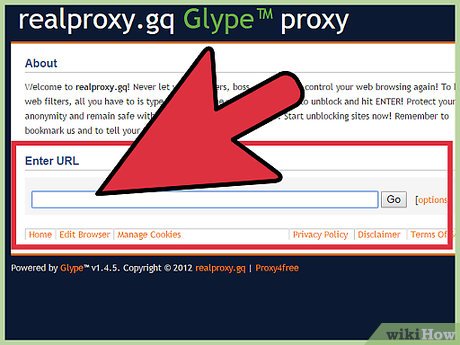 Enter the information for the blocked site you wish to access. The site will prompt you to enter the address of the blocked site. Type it into the text box. Press enter.
- Stupidcensorship.com also gives you the option to click on the links provided for some of the most popular sites, including Facebook and YouTube.
 Try to access the blocked site. Stupidcensorship.com should now allow you to enter the site. Note that you may notice a decrease in functionality on the site.
FAQ
What is How to Bypass Net Nanny about?
It provides a structured overview of nanny, explains the main context, and highlights practical takeaways for readers.
Why does this topic matter?
Understanding the main concepts helps readers evaluate the issue, avoid common mistakes, and make better-informed decisions.
How should readers use this information?
Use the guidance as a practical starting point, confirm details that may have changed, and follow current product, safety, or security recommendations.
Related Articles
 What Is Bypass? Information About iPhone Bypass You Need to Know7 minutes read
 How to Bypass ICloud IPhone/Ipad with Tenorshare 4MeKey6 minutes read
 How to Use Rufus to Bypass TPM and Secure Boot Requirements5 minutes read
 How to Bypass Windows 7 Password Using Passfab 4winkey8 minutes read
 How to Create a USB Drive to Bypass Computer Passwords When You Forget Them5 minutes read
 How to Bypass Website Restrictions: Step-by-Step Guide13 minutes read
Reader Comments 0
Sign in with email or Google to join the discussion.