Table of Contents
Core Temp is a free Windows utility that shows live temperatures reported by supported processors. Use it to check how hot your CPU gets during a game, a render, or another demanding task. The highest reading during the workload is usually more informative than the temperature you see after closing it.

Download and open Core Temp
Get Core Temp from the developer’s download page. The page offers an installer and standalone ZIP files. If you choose a ZIP, extract it before running the program. Check the supported processor list if Core Temp cannot identify your CPU or display a temperature.
Measure temperatures during a workload
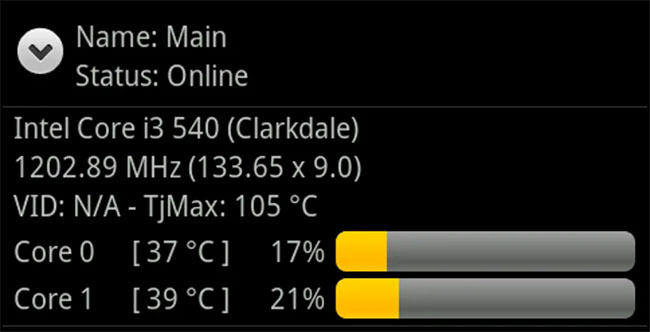
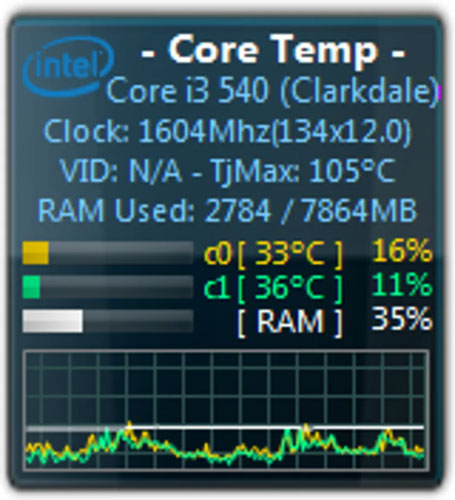
- Open Core Temp and note the CPU model and idle temperature. The main window shows current readings and the lowest and highest readings recorded so far.
- Choose Tools > Reset High/Low or press F6 to clear previous peaks.
- Leave Core Temp open while you do the task you want to measure. Check the highest recorded temperature afterward. Repeat with the same workload if you are comparing cooling settings.
Interpret the highest reading
Short spikes are common when a CPU boosts. Compare sustained readings with the specification for your exact CPU model and use the same type of temperature reading for each comparison. If Core Temp displays Tj. Max, treat it as a CPU temperature limit, not a target. Repeated slowdowns under load, sustained temperatures near the specified limit, or unexpected shutdowns warrant a closer look at cooling.
If temperatures stay high even at idle, check for background CPU activity in Task Manager and make sure the vents have clear airflow. The Windows performance troubleshooting guide explains how to identify background load. For additional sensor readings, see how to check CPU temperature with HWMonitor.
Log readings and set alerts
Choose Tools > Logging On to collect readings over time. Open the resulting log in a spreadsheet and compare it with the times you noticed slowdowns. Core Temp also offers overheat protection alerts. Check the configured threshold and action before enabling automatic sleep, hibernation, or shutdown.




Reader Comments 0
Sign in with email or Google to join the discussion.