Table of Contents
Dota Auto Chess is easier to learn when each round is treated as a set of decisions rather than a search for one perfect lineup. Scout what other players are buying, build around the useful units you actually receive, protect the economy and place items on units that will remain valuable.
This guide covers the original Dota Auto Chess custom game. Unit traits, shop odds and item recipes may change between versions. Use the Dota Auto Chess economy guide for detailed spending decisions and the positioning guide to arrange the units after buying them.
1. Scout opponents and the shared unit pool

Copies of a unit come from a shared pool. When several players hold the same pieces, completing upgrades becomes less likely. Check other boards before spending heavily on rerolls.
Scouting should answer three practical questions:
- Is the main carry or frontline unit heavily contested?
- Which opponents rely on assassins, area damage or a cornered formation?
- Can the current lineup switch to an uncontested unit without losing its main synergy?
Do not abandon a strong pair just because one opponent owns the same unit, but avoid forcing a three-star project when several players have already removed many copies from the pool.
2. Build a coherent synergy, not a collection of rare units

A team with a durable frontline, reliable damage and an active class or species bonus can outperform individually expensive pieces that do not support each other. Start with flexible pairs and small synergies, then commit only after the shop gives the composition a realistic path.
Multi-trait units can bridge two groups, but their value depends on the current version and board. Before buying one, identify which bonus it activates and which active unit it would replace. A unit that creates no immediate improvement and no likely future upgrade may only occupy a bench slot.
3. Give every gold purchase a purpose
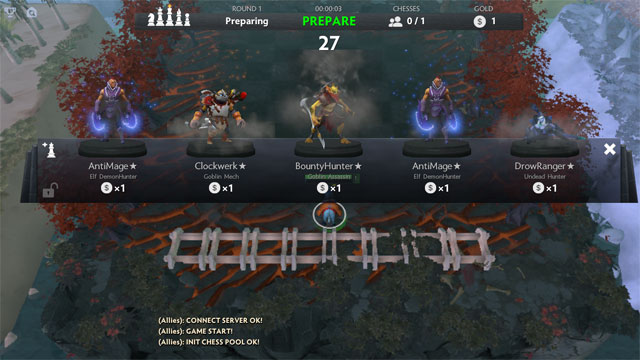
Gold creates three different types of power: shop access through rerolls, a larger board through leveling, and future income through saving. The correct use depends on health and the strength of the active team.
- Save when the board is stable and the desired units are easier to find later.
- Level when an extra unit completes a synergy or materially improves the frontline.
- Reroll when several pairs are close to upgrading and the current board is losing too much health.
Interest and streak thresholds can change, so confirm the current values in the game. The important habit is to stop a roll-down at a planned limit instead of spending everything after a few unsuccessful shops.
4. Combine and assign items deliberately
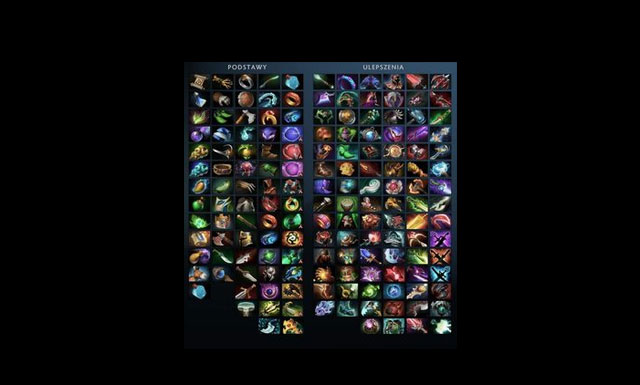
Neutral rounds can provide components that combine into stronger equipment. Do not assume every Dota 2 recipe works identically in the current Auto Chess version; check the in-game recipe or combination preview before committing valuable components.
Give defensive items to a frontline unit that reliably survives and generates value from taking damage. Attack-speed or damage items should go to a carry that can remain active for most of the fight. Mana-related equipment belongs on an important caster only when it helps that unit cast earlier.
Avoid stacking all items on a temporary early-game piece unless you know the item can be moved or the unit can be sold without losing it in the version you are playing.
A simple preparation routine
- Check the current shop for pairs and direct upgrades.
- Scout the opponents contesting your units.
- Decide whether to save, level or reroll before spending.
- Place the frontline, protect the main carry and account for assassins.
- Review unused items and assign only those with a clear recipient.
These habits reduce dependence on lucky shops. Scouting prevents impossible upgrade chases, synergies make average units work together, economy preserves future options, and careful item use turns the strongest part of the board into a reliable win condition.
Related Articles
 Dota Auto Chess: How to Build Teams According to Each Stage of the Most Effective7 minutes read
 Dota Auto Chess: Rank the up Line Combo Currently the Most Meta6 minutes read
 Dota Auto Chess: Combine More Than 10 Tactics to Help You Get into the Top 38 minutes read
 Dota Auto Chess: Synthesize Assassins to Be Strengthened in This Update4 minutes read
 Top the Strongest Generals Dota Auto Chess After the March 5 Update5 minutes read
 How to Install Vietnamese Dota Auto Chess4 minutes read
Reader Comments 0
Sign in with email or Google to join the discussion.