Table of Contents
A second SSD is worth installing if you need more storage or regularly run tasks that read and write large files at the same time. Adding a drive gives you more room for games and projects. By itself, it will rarely make Windows boot faster or help an application that still runs from the original drive.
When two separate SSDs make sense
For most PCs, keep Windows and applications on the first SSD and use the second for a game library, media, or active projects. Video editors can try putting source media on one drive and cache or scratch files on the other. This can help when both sets of files are being accessed heavily at the same time. Compare one of your usual jobs before and after moving the files to see if storage was the bottleneck.

Check how many storage slots your motherboard supports before buying a second drive.
Separate drives, RAID 0, or RAID 1?
- Separate drives: Use the capacity of both and choose what goes where. This is the simplest setup for most home PCs.
- RAID 0: Stripes data across both drives and can improve sequential throughput. If either drive fails, data on the entire array can be lost.
- RAID 1: Mirrors data so a supported system can continue operating after one drive fails. With two same-size drives, usable capacity is about that of one drive. Accidental deletion or corruption can affect both copies, so keep a separate backup.
See the guide to RAID levels if you need an array for a specific workload.

Two SSDs give you the option to separate files or configure an array.
Check compatibility before buying
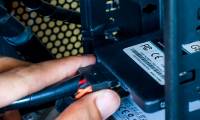
Consult the motherboard or laptop manual for a spare M.2 storage slot or a 2.5-inch SATA bay. For M.2, verify supported drive lengths and whether the slot accepts SATA, PCIe/NVMe, or both. Some boards share lanes between an M.2 slot and a SATA port or expansion slot. A 2.5-inch SATA drive also needs the appropriate power and data connection. See the guide to SATA, M.2, and NVMe SSDs for help reading the specifications.




Reader Comments 0
Sign in with email or Google to join the discussion.