Table of Contents
Real-time visibility gives logistics teams a current view of where a shipment is, what condition it is in, whether it is likely to arrive on time, and what action is needed when plans change. It goes beyond showing customers a moving dot on a map: the same data can help dispatch, warehouse, sales, and support teams prevent avoidable delivery failures.
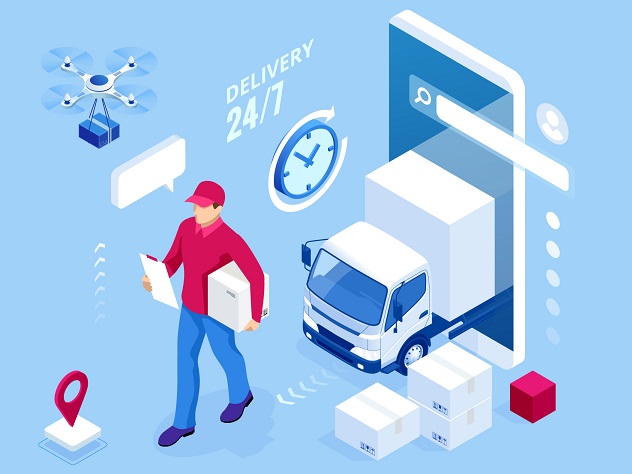
Customers have become accustomed to specific delivery windows and proactive updates. A status that says only “shipped” is not enough when a delay could affect staffing, production, inventory, or a time-sensitive household delivery. For operators, spreadsheets and occasional status scans cannot provide the continuous, shared view needed to manage those expectations.
Real-time visibility is more than basic tracking
Traditional milestone tracking records discrete events such as “collected,” “left warehouse,” or “delivered.” Those events are useful for history, but they may not reveal what is happening between scans. Real-time visibility combines location and operational events with route, order, vehicle, and delivery-window data.
| Static milestone | Operational visibility |
|---|---|
| The shipment left the depot | The route is progressing behind plan and later stops may be affected |
| The delivery is delayed | The likely cause, affected orders, and available response are visible |
| The order was delivered | Arrival time, proof of delivery, and any recorded exception are linked |
The important difference is actionability. If a dispatcher sees a developing delay early enough, the team may be able to adjust a route, notify the recipient, reassign work, or prepare an alternative. A late status received after the delivery window has passed explains a failure but does not prevent it.
Where visibility creates business value
More reliable ETAs and customer communication
A useful estimated time of arrival changes as traffic, service time, route progress, and new exceptions affect the plan. When the same ETA is available to customers and internal teams, support staff can answer questions consistently and notifications can be sent before a recipient has to ask.
Predictive ETAs can support this process, but they should be presented as estimates rather than promises. Operations teams also need rules for what happens when confidence drops or a delivery is likely to miss its window.
Faster exception management
Live data helps teams distinguish normal route variation from an exception that requires intervention. Alerts can be based on meaningful conditions—such as a predicted missed window, a long unplanned stop, a failed proof-of-delivery step, or a temperature threshold—instead of notifying staff about every location change.
A good exception workflow identifies the affected order, shows relevant context, assigns an owner, records the response, and communicates the revised plan. Visibility without an agreed response process can simply create a larger stream of alerts.
Better fleet and route utilization
Managers can use current and historical route data to identify underused capacity, repeated waiting time, unrealistic service assumptions, and opportunities to consolidate work. A dedicated delivery management software platform may centralize these signals for dispatch and related teams.
Do not assume that a route is inefficient solely because one driver is consistently late. The cause may be a difficult loading dock, an inaccurate service-time estimate, recurring congestion, or an upstream warehouse delay. Visibility is most useful when it helps investigate the system rather than assign blame from a single metric.
More accurate operational accountability
Timestamped events can show where a delay entered the delivery chain: picking, loading, dispatch, travel, site access, service, or proof of delivery. This evidence makes process reviews more specific and helps managers separate one-off disruption from a recurring pattern.
Data quality matters. Incomplete scans, misconfigured devices, inconsistent status codes, and inaccurate order information can produce false conclusions. Teams should monitor the visibility system itself and provide a simple way to correct exceptions.
Integration turns data into action
Location data trapped inside a dispatch screen has limited value. Real-time visibility becomes more useful when relevant events reach the systems and people that can act on them.
- ERP and order management: update fulfillment status and surface delays against the correct order.
- Warehouse management: coordinate loading, dock availability, and returned inventory.
- Customer service: provide the latest ETA, delivery history, and exception notes in one place.
- E-commerce and messaging: send recipient updates based on confirmed events and meaningful changes.
- Billing and proof of delivery: connect completed service and supporting evidence to downstream workflows.
Integrations should define which system is authoritative for each field and what happens when data arrives late, is duplicated, or conflicts. APIs alone do not solve unclear ownership or poor operational processes.
Do not overlook reverse logistics
Returns often lose visibility after a collection is booked. Applying the same event model to inbound items can show whether a return was collected, received, inspected, restocked, repaired, or disposed of. That reduces unexplained inventory differences and gives customers a clearer expectation for refunds or replacements.
Reverse workflows may require different milestones from outbound delivery. Design them around the decisions staff and customers need to make rather than forcing a return into an unsuitable delivery-status sequence.
How to implement real-time logistics visibility
- Define the decisions first. List the questions dispatchers, customers, warehouse staff, and support teams must answer.
- Map trustworthy data sources. Identify order data, driver or vehicle location, route plans, scans, proof of delivery, and exception codes.
- Set a clear event model. Use consistent names, timestamps, time zones, identifiers, and ownership rules.
- Start with a limited route or operation. Test data quality and staff workflows before expanding.
- Create exception playbooks. Specify which alerts matter, who owns them, and what response is expected.
- Integrate selectively. Send each team only the events it needs, with retry and duplicate-handling rules.
- Measure operational outcomes. Compare results against a baseline and revise thresholds that create noise.
Metrics worth monitoring
- On-time pickup and delivery by route, site, and service type
- ETA error measured at consistent points before arrival
- Time from exception detection to assignment and resolution
- Waiting and dwell time at depots and customer locations
- Failed delivery rate and recorded reason quality
- Customer contacts asking for order status
- Return cycle time and unaccounted-for returned stock
- Percentage of orders with complete, valid tracking events
Real-time visibility is valuable when it changes an outcome: a delay is handled earlier, a customer receives a useful update, a route plan improves, or a recurring bottleneck becomes measurable. The technology provides the signal; well-designed data, integrations, and response processes turn that signal into better logistics performance.
Related Articles
 How to Turn Off the RTT Feature on iPhone3 minutes read
 How to Use Real Time Text (RTT) on Mac and iPhone8 minutes read
 Scania Demonstrates Self-driving Truck Technology7 minutes read
 TOP Tools for Tracking AI Search Visibility and AI Rankings5 minutes read
 11 Paintings That Reflect the Negative Issues of Modern Life3 minutes read
 Increase the LG G3's Outdoor Visibility1 minutes read
Reader Comments 0
Sign in with email or Google to join the discussion.