Table of Contents
Debris from Malaysia Airlines flight MH370 has been recovered and identified, but its main wreckage was not found in the latest completed search phase reported by Malaysian authorities and Ocean Infinity in March 2026. A later agreement extension allowed further search efforts; it was not an announcement that the aircraft had been found.
MH370 disappeared on March 8, 2014 while flying from Kuala Lumpur to Beijing with 227 passengers and 12 crew. The evidence points toward the southern Indian Ocean, but the exact crash site and the full sequence of events remain unresolved.

What is known about the aircraft's route?
Routine position transmissions stopped early in the flight. Military radar subsequently tracked the aircraft away from its planned route, back across the Malaysian peninsula toward the northern tip of Sumatra.
Satellite communication analysis indicated that the aircraft continued flying for hours after routine contact was lost. This evidence informed the southern Indian Ocean search area. It did not provide a continuous GPS track or an exact final position.
The Australian Transport Safety Bureau's operational search account explains how radar and satellite data contributed to the search. Describing a system as no longer transmitting is more precise than assuming who switched it off or why.
What debris has been confirmed?
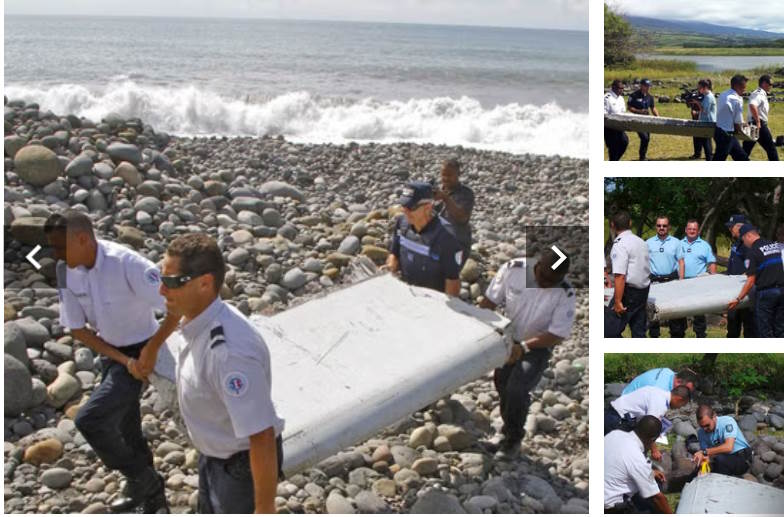
A right-wing flaperon found on Réunion Island in July 2015 was the first item positively confirmed as coming from MH370. Investigators compared identifying numbers on internal components with manufacturer records.
Other aircraft parts were subsequently recovered around the western Indian Ocean, including along African coasts and on islands. Items have different identification statuses: confirmed, probable or suspected. A photograph of aircraft-like debris is not sufficient to establish that it came from this flight.
The ATSB's final operational search report documents the flaperon and other recovered material. Drift modeling helps investigators assess possible origins, but ocean currents and uncertainty prevent debris locations from pinpointing a crash site by themselves.
Why have previous underwater searches failed?
The multinational search examined more than 120,000 square kilometers of seabed before being suspended in January 2017. Ocean Infinity conducted another search in 2018 without locating the main wreckage.
These were searches of areas selected from imperfect evidence, not a scan of the entire Indian Ocean. The region is remote, the seafloor is complex and the precise final location is uncertain. Failure to find the aircraft in one area does not prove any particular alternative theory.
What changed in the 2025–2026 search?
Malaysia contracted Ocean Infinity for renewed work in a selected southern Indian Ocean area. The source article's announcement of a December 30, 2025 restart is now historical, rather than a future date.
In its March 8, 2026 update to families, Malaysia's Ministry of Transport said the second phase concluded on January 23, 2026 and that operations had not produced findings confirming the wreckage's location. Weather and sea conditions periodically disrupted the work.
Ocean Infinity's statement of the same date also said the latest effort had not found MH370 and that it hoped to return when circumstances allowed.
On June 29, 2026, Bernama reported the transport minister's announcement that the agreement would be extended from July 1, 2026 to June 30, 2027, retaining its no-find, no-fee terms. Contract duration does not mean a vessel is searching continuously throughout that period.
What did the investigation establish?
Malaysia's 2018 safety investigation examined the diversion, aircraft systems and the response by air traffic control. It could not determine the cause of the disappearance. Possible explanations should not be presented as findings that a particular pilot or another person was responsible.
The missing main wreckage and flight recorders leave important gaps. Satellite evidence, recovered debris and search results provide constraints, but do not reconstruct every decision or event aboard the aircraft.
How to read future “MH370 found” reports
Check whether a report concerns a suspected object, confirmed detached debris or an identified main wreckage site. Look for a dated announcement from Malaysian authorities and supporting identification evidence. A newly proposed search location is not a discovery.
Other aviation mysteries, such as Flight 19 in Bermuda Triangle accounts or the missing Tasmanian light plane, involve separate incidents and evidence. They do not establish a common cause for MH370.
Related Articles
 How to use disappearing effects in PowerPoint
 Instructions for using the disappearing effect in Powerpoint
 The inexplicable mystery of the legendary 'ghost island' lies in the middle of the Atlantic Ocean
 The answer to the disappearance of water on Mars already exists
 Unsolved disappearances and murders: five cases and their evidence
 Top 10 jobs are now threatened by the development of technology
Reader Comments 0
Sign in with email or Google to join the discussion.