Table of Contents
This guide covers when to update the computer driver with practical context and easy-to-follow details. Use it to understand the subject and apply the information confidently.
Basically, Drivers Are computer programs that help Windows operating systems and other apps interact with hardware devices. Computers don't always know how to use all the features of motherboards, graphics cards or other hardware, so they need a separate ' Person' For each device to do this. Like other computer programs that need to be updated and have service packs to fix bugs or add new features, drivers need to do the same.
If you are consulted, most computer experts recommend you To update the driver . But is it really necessary to update the driver and when to update? Here are some guidelines to apply when driver updates are provided by HowToGeek , as well as how to check the version and steps to perform driver updates.
Principle When Updating Drivers
The first and most important principle is: No damage is not corrected. If a device in the computer has a problem, you should consider upgrading the device's driver. Conversely, if you just want to speed up the system, updating the driver with the latest version will not be a magic improvement method to help you avoid upgrading the hardware for your slow computer. .
If upgrading from one driver version to another, you can only fix errors in certain situations or only slightly increase performance. But maybe you will ruin a part. Therefore, if the computer is in good use and has no problems, skip the driver update.
Of course, this principle will have exceptions. If you want to add a little performance to your computer, see if your graphics card is updated with the manufacturer's driver, and you may also want to upgrade the microchip processor, Network card and sound card. Switching from Windows built-in drivers for graphics cards to using genuine drivers like NVIDIA or ATI / AMD will also make you feel completely different. Always update these drivers to help speed up the system significantly. Basically, if you have an AMD / ATI or NVIDIA graphics card and if you are using a pre-installed Windows driver, you should change it. Conversely, there is no need to do this.
Second principle: Use the appropriate, not the latest, driver. When you first buy a new computer or reinstall Windows operating system on an old computer, users need to consider whether to use the appropriate driver. It is not always necessary to update to the latest driver version.
You also do not need to use a generic Windows driver while using its own driver. Anyway, do not use the driver auto-update software when you can search for yourself and choose the appropriate driver.
How to Check the Driver Version
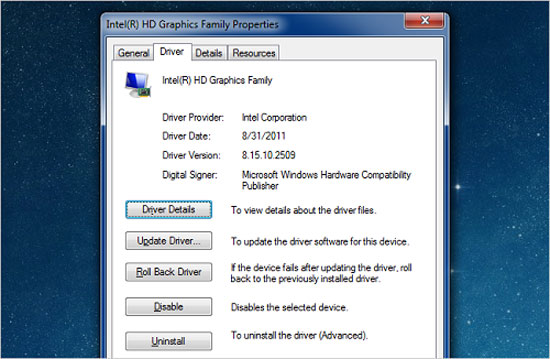 You can check all device driver information in the Driver card.
How to Update Drivers in a Safe Way for Microsoft
If something is wrong, you can quickly upgrade the driver to a newer version by opening Device Manager, right-clicking on the failed component name and choosing Update Driver Software . Soon there will be a wizard to find the latest driver. Or users can also manually install drivers by using the Browse option.
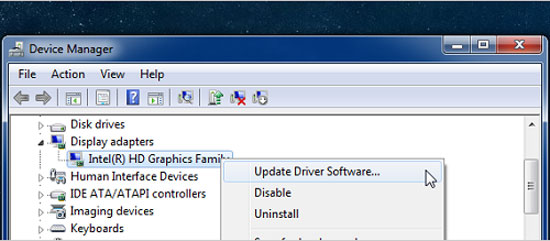 The Update Driver Software feature helps automatically update Windows drivers.
If Windows automatically updates, the operating system will install immediately and ask you to restart the computer after it is completed. If the problem is not fixed, you may have to restore the previous driver version.
How to Update the Manufacturer's Driver
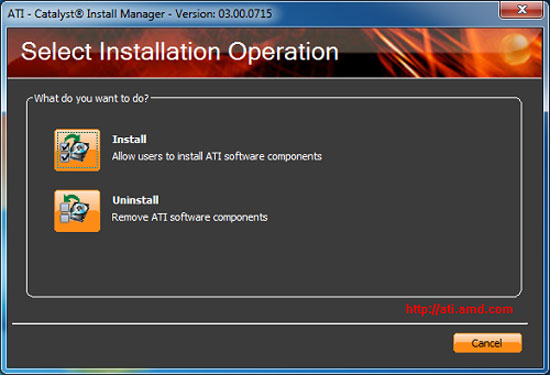 The driver of the manufacturer usually has the installation instructions.
Usually when downloading drivers from a manufacturer like NVIDIA or AMD / ATI, they usually have a full installation guide in the download file. Therefore, you only need to run this wizard to upgrade the driver to the latest version.
FAQ
What should I check before following these steps?
Confirm device and software compatibility, save important data, and make sure you have the required permissions, files, and account access.
Why might the process not work?
Common causes include outdated software, missing permissions, incompatible hardware, an unstable connection, or completing a step in the wrong order.
Can I undo the changes if necessary?
That depends on the tool or setting. Use built-in restore options when available, keep a backup, and record the original configuration first.
Related Articles
 The Best Driver Update Software for Computers10 minutes read
 How to Update Driver Using Device Manager for Windows 108 minutes read
 How to Use Driver Talent for Free Driver Updates7 minutes read
 4 Practical Ways to Update Win 11 Driver, Quick Update Tips5 minutes read
 Update Driver, the Software Automatically Finds Driver for9 minutes read
 How to Disassemble an Acer Aspire ES1-532G Laptop7 minutes read
Reader Comments 0
Sign in with email or Google to join the discussion.