Table of Contents
Bluetooth Core 6.0 is a revision of the Bluetooth specification published in 2024. Its headline addition is Channel Sounding, which gives compatible Bluetooth Low Energy devices a standards-based way to measure the distance between them. The revision also improves advertising scans, device monitoring, time-sensitive data transport, feature discovery, and frame timing.
The version number alone does not guarantee that a phone, computer, headset, or accessory implements every Bluetooth 6.0 feature. Manufacturers select the optional capabilities that suit a product, so its specifications remain the best guide.
Bluetooth Core 6.0 concentrates on ranging and several Bluetooth LE efficiency improvements.
What changed in Bluetooth 6.0?
The Bluetooth SIG's Core 6.0 feature overview identifies six main enhancements. They are not simply a speed upgrade over Bluetooth 5.4; each addresses a specific part of Bluetooth Low Energy operation.
1. Channel Sounding for secure fine ranging
Channel Sounding lets two compatible devices estimate the distance between them using phase-based ranging, round-trip timing, or both. This can support digital keys, item-finding systems, and other applications that need more dependable distance awareness than a rough signal-strength estimate.
Accuracy depends on the radios, antenna design, implementation, and surroundings. Channel Sounding should therefore not be treated as a promise that every Bluetooth 6.0 product will deliver a particular centimeter figure, nor as an automatic replacement for Ultra Wideband in every use case.
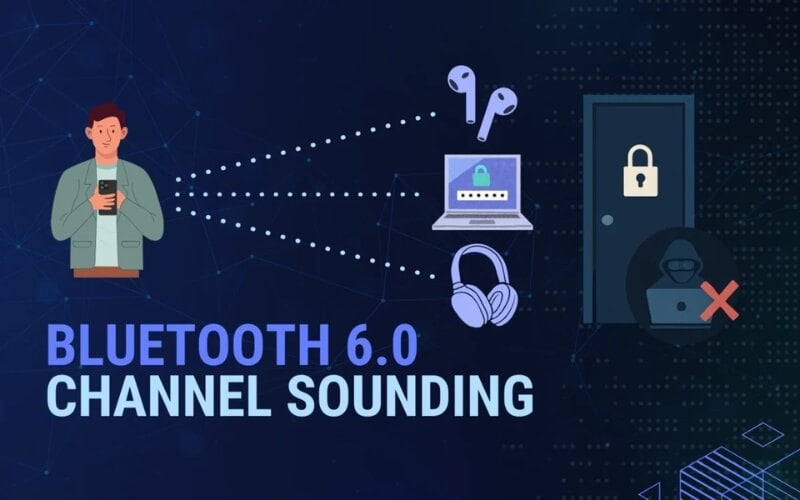
Channel Sounding supplies measurements that an application can use to calculate distance.
2. ISOAL Enhancement for time-sensitive streams
The Isochronous Adaptation Layer, or ISOAL, already supported time-bound Bluetooth LE data such as LE Audio. Core 6.0 adds an unsegmented framed mode. When a complete service data unit fits in one link-layer packet, the receiver does not have to wait for several segments before processing it. That can reduce segmentation-related latency and lower the chance that one lost packet invalidates part of a multi-packet frame.
This is a technical improvement, not a guarantee of lag-free gaming audio. Codec choice, buffering, the operating system, the radio link, and the headset's implementation also affect end-to-end latency. For context, see how Bluetooth headphone versions and features differ.
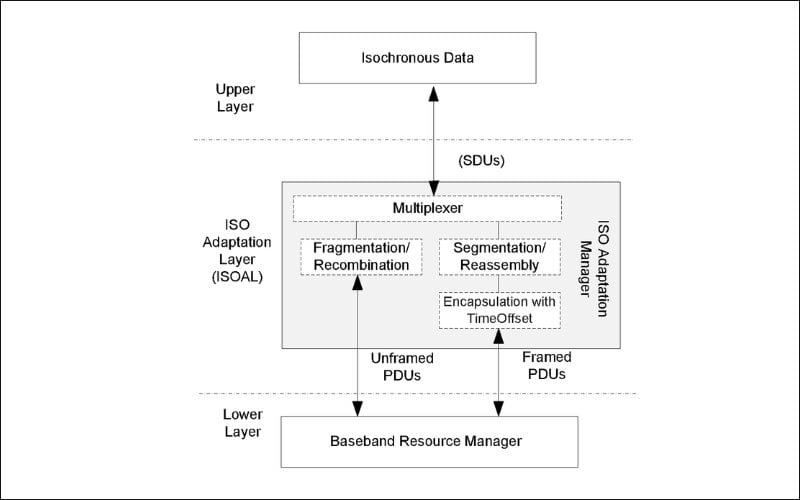
ISOAL Enhancement can remove segmentation delay in compatible framed streams.
3. More efficient advertising scans
Extended Advertising can place related packets on primary and secondary radio channels. Decision-Based Advertising Filtering allows a scanner to inspect information in a primary-channel packet before deciding whether it is worth following the associated secondary-channel packets. Skipping irrelevant secondary scans can make scanning more efficient.
Monitoring Advertisers addresses a related problem. It can notify the host when a device of interest moves into or out of range, instead of leaving the host to infer this while duplicate advertising packets are filtered. Both changes may help an implementation avoid unnecessary work, but actual battery savings depend on the product and its software.
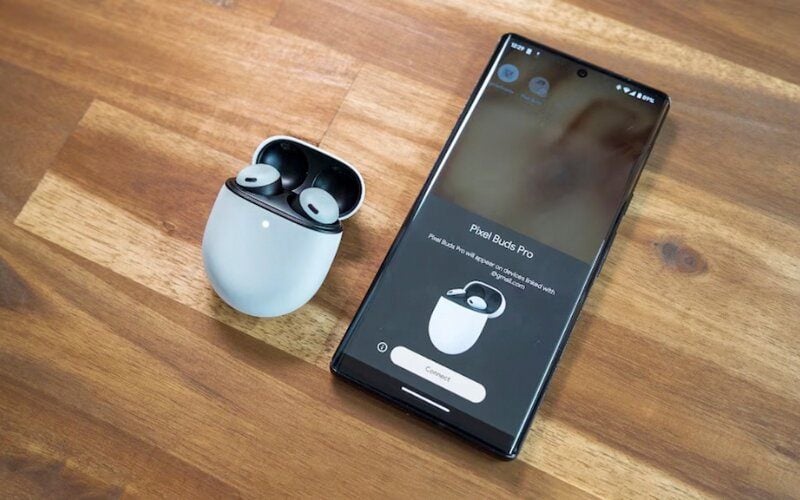
Core 6.0 gives compatible scanners better ways to avoid irrelevant work and monitor advertisers.
4. Expanded feature discovery and adjustable frame spacing
The LL Extended Feature Set expands the mechanism that connected devices use to report supported link-layer features. It creates room for Bluetooth LE to describe more capabilities as the standard grows; it is not a feature that by itself prevents interference or increases the number of peripherals a computer can use.
Frame Space Update makes certain packet intervals in ACL connections and connected isochronous streams negotiable instead of always fixed at 150 microseconds. A shorter supported interval can improve throughput in suitable implementations, while a longer one may be useful for other design constraints.
Feature discovery and frame timing are separate link-layer improvements in Core 6.0.
What Bluetooth 6.0 means for headphones and PCs
Bluetooth 6.0 creates useful building blocks, but product makers must implement them. A headset does not become low-latency merely because its radio is described as Bluetooth 6.0, and Channel Sounding is useful only when the participating devices and software support it.

Check the headset's codec and latency claims in addition to its Bluetooth version.
For a mouse or keyboard, polling behavior, firmware, receiver design, and interference can matter more to responsiveness than the core version printed on the box. Some gaming peripherals also use a proprietary 2.4 GHz receiver rather than Bluetooth when their lowest-latency mode is selected.
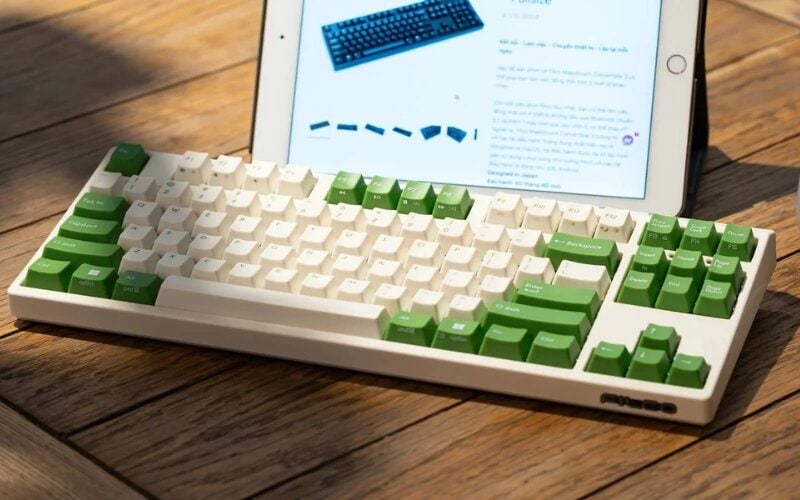
Peripheral performance depends on the complete connection design, not only the Bluetooth revision.
A laptop or desktop can still connect to several Bluetooth peripherals, but Core 6.0 does not remove radio congestion or guarantee an unlimited number of simultaneous devices. Workload, profiles, radio conditions, drivers, and controller resources still apply. If cable-free audio is the priority, this comparison of wireless and true wireless headphones explains the product categories.
Bluetooth 6.0 does not by itself eliminate bandwidth and interference limits.
Bluetooth 5.4 vs. Bluetooth 6.0
| Area | Bluetooth 5.4 | Bluetooth 6.0 change |
|---|---|---|
| Fine ranging | No Channel Sounding feature | Adds secure fine ranging with phase-based ranging and round-trip timing |
| Advertising scans | Extended Advertising available | Adds decision-based filtering and advertiser monitoring |
| Isochronous transport | ISOAL supports framed and unframed transport | Adds unsegmented framed mode to avoid segmentation in suitable streams |
| Feature reporting | Original link-layer feature set mechanism | Adds an extensible paged feature set |
| Frame spacing | Relevant intervals fixed at 150 microseconds | Allows certain ACL and CIS intervals to be negotiated |
This comparison describes the core specifications, not a checklist that every compliant product must implement.
The most visible Core 6.0 addition is distance measurement, while the other changes work lower in the Bluetooth LE stack.
Do you need new hardware?
Using a Bluetooth 6.0 feature requires compatible controller hardware, firmware, host software, and support on the other device. A firmware or operating-system update may enable a feature only when the existing controller was designed to support it; software cannot add radio capabilities that the hardware lacks.
On a desktop PC, an appropriate PCIe adapter or USB dongle may add newer Bluetooth support. Before buying one, verify the exact features it exposes, its operating-system drivers, and whether both ends of the intended connection support the feature. Do not rely on the version number alone.

Product documentation should identify the supported Bluetooth capabilities and compatibility requirements.
Related Articles
 What Is Bluetooth? Useful Information About Bluetooth Technology15 minutes read
 The 'Bluetooth 4.2' Technology Standard Was Released3 minutes read
 What Is Bluetooth: Learn About Bluetooth Technology12 minutes read
 Le Audio, the New Bluetooth Standard That Helps Listen on3 minutes read
 New Bluetooth Standard Connects by Jumping Between Devices, Connecting up to 32,000 Devices3 minutes read
 How to Fix Bluetooth Metered Connection Error on Windows 106 minutes read
Reader Comments 0
Sign in with email or Google to join the discussion.