Table of Contents
Headphones are personal audio transducers worn on or around the ears, usually joined by a headband. They convert an electrical signal into sound through a driver in each ear cup. Some models also contain microphones, batteries, amplifiers, wireless radios, and digital processing; the word “headphones” does not require or exclude those features.
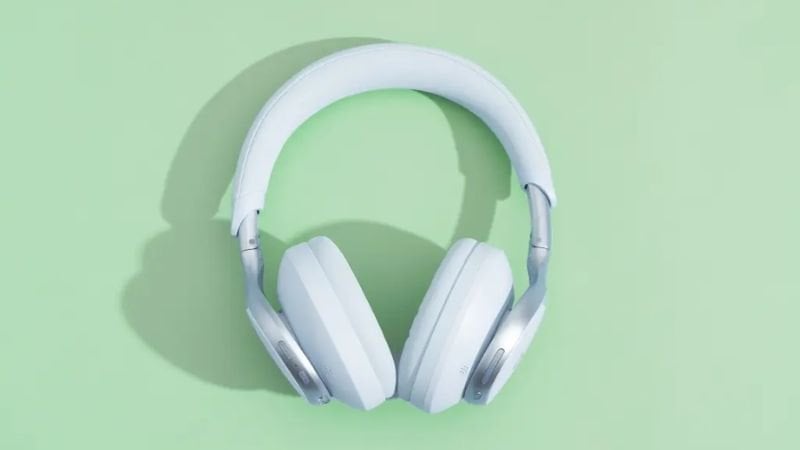
Headphones, headsets, and earphones
| Term | Defining idea | Possible microphone | Typical forms |
|---|---|---|---|
| Headphones | Personal listening device worn on or around the ears | Yes or no | Over-ear and on-ear |
| Headset | Headphones or earphones designed for two-way communication | Yes | Over-ear, on-ear, or in-ear, with boom, inline, or built-in mic |
| Earphones or earbuds | Compact devices worn in or at the ear opening | Yes or no | Sealed in-ear or open-fit |
The categories overlap. A headphone with a call microphone can also be sold as a headset, and true wireless earbuds with microphones handle headset duties. Product performance cannot be inferred from the label alone. The detailed headset versus headphones guide focuses on microphone and communication features.
Over-ear versus on-ear
Over-ear headphones
The cushions surround the pinnae and rest mainly against the head. This gives designers room for large pads and can provide a consistent seal, but the headphones may be warm or bulky. Over-ear does not guarantee strong isolation: an open-back model intentionally allows sound through.
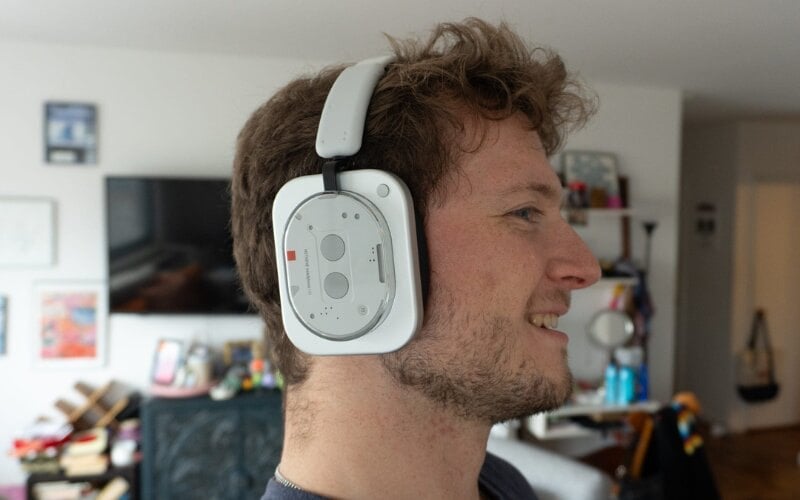
On-ear headphones
The pads rest on the ears. They can be smaller and lighter, yet comfort depends on clamp force and ear shape. Because the pads press directly on cartilage, some people find them less comfortable than larger over-ear models. They are not automatically more breathable or more portable; folding design and materials matter.
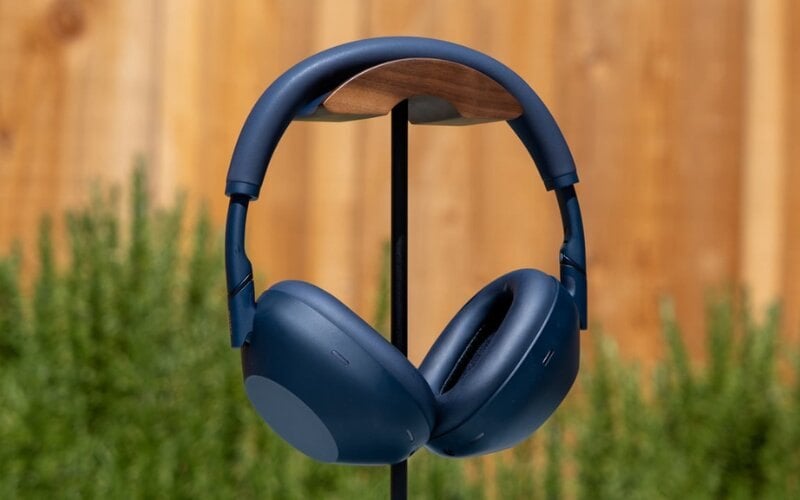
Open-back versus closed-back
Open-back ear cups let air and sound pass through the rear of the driver. They provide little isolation and leak audio, making them best for a quiet private room. Their spacious presentation is useful to many listeners, but an open grille does not guarantee accurate soundstage.
Closed-back cups reduce leakage and normally provide more passive isolation. Seal, pads, glasses, hair, and enclosure acoustics strongly affect bass and tonal balance. Closed headphones are practical around other people, for recording near a microphone, and while traveling.

Wired and wireless connections
Analog wired
A 3.5mm or 6.35mm connection carries analog audio from the source's DAC and amplifier. It adds negligible cable transmission delay and passive headphones need no charging. Contact wiring and source power still have to match; see the 3.5mm jack guide.
USB
A USB-A or USB-C headphone contains its own digital audio interface, DAC, and amplifier. It may add firmware, EQ, microphone processing, or spatial-audio controls. USB connector shape alone does not guarantee console or phone compatibility.
Bluetooth
Bluetooth prioritizes portability and broad wireless support. Latency, codec, microphone quality, multipoint, and battery behavior vary by product; a Bluetooth version number does not guarantee them.
Dedicated wireless receiver
Many gaming headphones use a 2.4GHz USB receiver for lower, more predictable latency and a bidirectional microphone link. The receiver occupies a port and may work only on listed platforms.

Specifications that help—and those often misread
Driver size
Driver diameter does not determine bass depth or sound quality. A larger driver can move air differently, but diaphragm material, motor, enclosure, damping, seal, and tuning are at least as important.
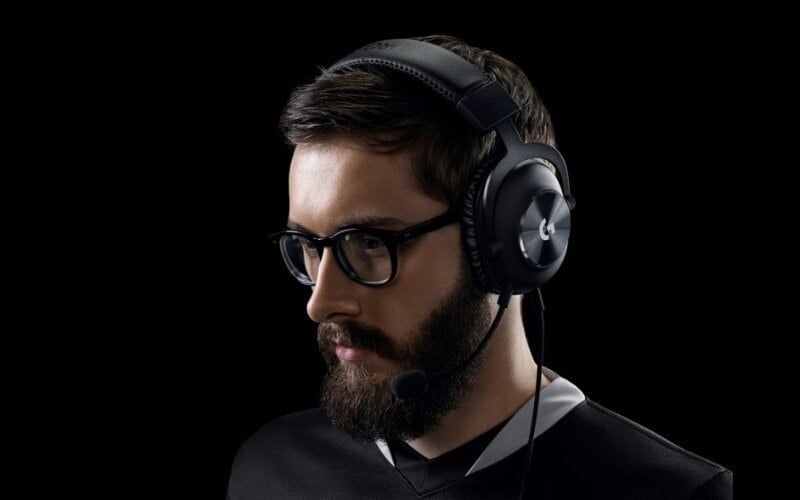
Frequency response
A broad claimed range such as 10Hz–40kHz says little without tolerance and level information. Independent response measurements reveal tonal balance more clearly, while personal fit still changes the result.
Impedance and sensitivity
Impedance describes the electrical load; sensitivity estimates acoustic output for a specified input. Use both to decide whether a source has enough voltage and current. High impedance is not a quality rating. Start with the impedance and amplifier-matching guide.
ANC
Active noise cancellation uses microphones and signal processing to reduce some outside sound, especially steady low-frequency noise. It does not create silence, and its quality varies. Passive isolation comes from the physical cup or ear-tip seal.
How to choose for your use
Office, calls, and study
Prioritize comfort, microphone samples, mute controls, sidetone, battery behavior, and connection reliability. ANC can help in a shared office, while an open design may be better when hearing colleagues is important.
Gaming
Check platform support, measured latency, channel balance, microphone quality, and comfort. Virtual 7.1 is optional processing, not a requirement for accurate footsteps. Many games already provide headphone spatial audio, and additional processing can sometimes blur cues.
Music and production
Choose a frequency response appropriate to the task, low distortion at normal levels, repeatable fit, and known measurements. Closed-back isolation helps while recording; open-back designs are often comfortable for quiet editing, but neither category is inherently more accurate.
Travel and exercise
Consider folding size, clamp, battery, wind performance, controls, water-resistance rating, and replaceable parts. Earphones may pack smaller, but a secure and comfortable fit matters more than category. Compare open-fit earbuds and sealed in-ear models separately.
Fit and durability checklist
- Wear the headphones for a normal session; pressure points may appear slowly.
- Check ear-cup depth, pad opening, clamp, heat, and fit with glasses.
- Look for replaceable pads, headband parts, cable, and battery service where possible.
- Test controls and microphone on every intended device.
- Prefer measured reviews and a useful return policy over brand or driver-size claims.
- Clean pads according to their material and let them dry before use; do not stretch headphones on an oversized stand.
The best headphones are not the model with the largest driver, highest impedance, or longest feature list. They are the model whose acoustic performance, fit, connection, microphone needs, and serviceability match the real use.
Related Articles
 What Are Headsets with Microphones?9 minutes read
 4 Outstanding Advantages of Sennheiser HD 180 Headband4 minutes read
 Sony MDR-XB610 Headset Review: Nice Design, Good Sound, Reasonable Price5 minutes read
 Choose Headphones Like In-ear, On-ear or Over-ear?8 minutes read
 Sennheiser HD 202 II and HD 238: Headphones Are 'Worth the Money'6 minutes read
 Which Sony MDR- ZX310 and Sennheiser HD 201 Headphones Are Better?6 minutes read
Reader Comments 0
Sign in with email or Google to join the discussion.