Table of Contents
Open-ear headphones play personal audio without sealing the ear canal. Some place a small air-conduction speaker near the ear; others use a bone-conduction transducer against the cheek or temple. Because the canal stays open, the wearer can usually hear more of the surrounding environment than with sealed earbuds or over-ear headphones.
That awareness can be useful for running, walking, conversation, or all-day wear, but it is not a guarantee of safety. Loud playback can mask traffic and warning sounds, and any headphone can expose hearing to unsafe sound levels.
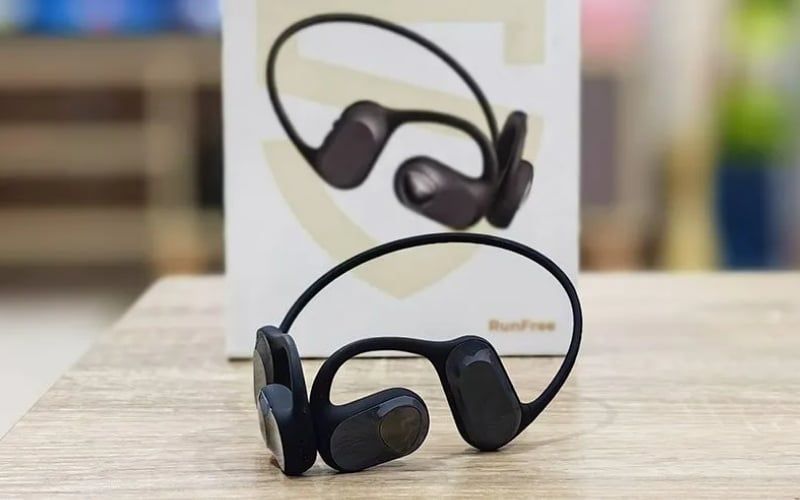
How open-ear headphones differ
“Open-ear” describes the wearing style, not one sound technology. It should also not be confused with open-back headphones, which are conventional over-ear headphones with ventilated earcups.
Most consumer open-ear models use one of two approaches:
Air-conduction open-ear earbuds
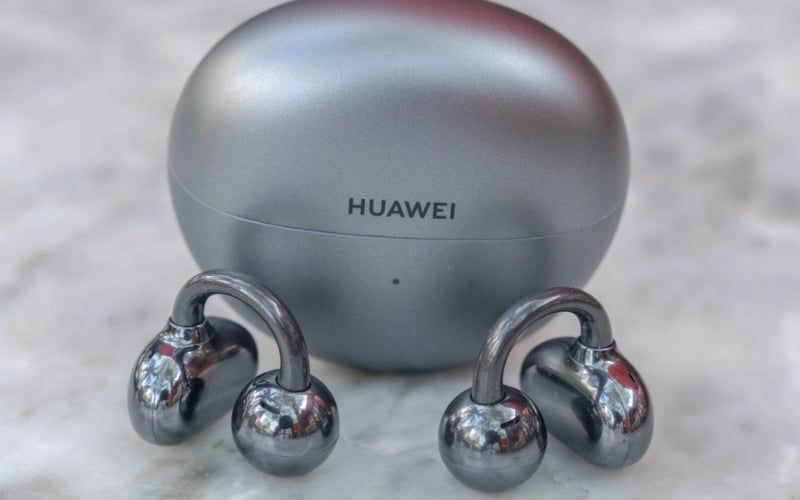
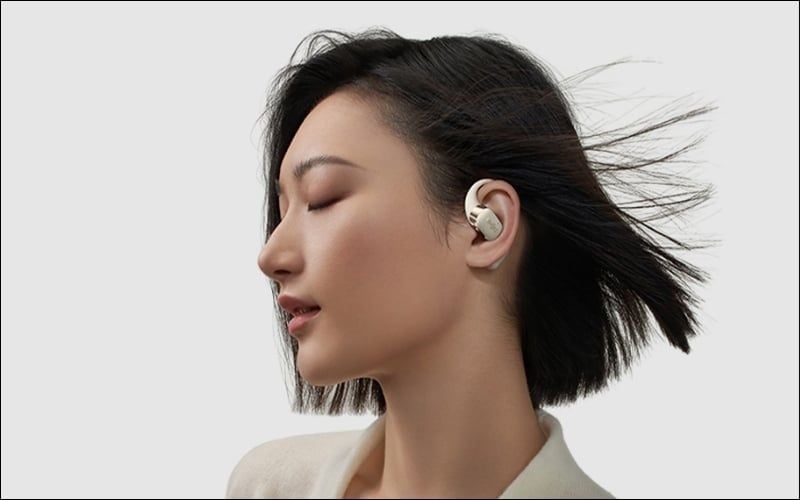
A small speaker sits close to the ear canal and sends sound through the air, much like other speakers. Ear-hook and clip-on designs are common. Bose's explanation of open-ear audio describes this outside-the-canal air-conduction approach.
Air-conduction models often provide more familiar tonal balance than bone-conduction designs, but performance varies with speaker position and ear shape. They can leak sound, and external noise competes directly with the music.
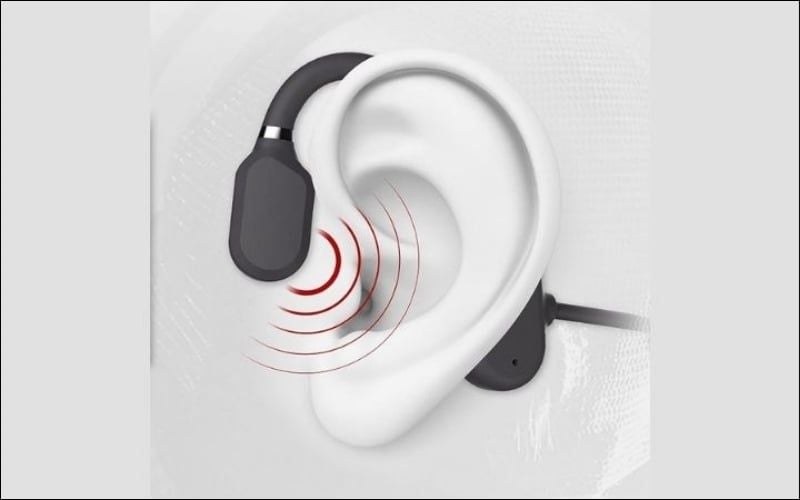
Bone-conduction headphones
Bone-conduction models use transducers that create vibrations against the skull near the ear, stimulating the inner ear without relying on sound traveling through the open ear canal in the usual way. The eardrum is bypassed, but the cochlea is still involved in hearing.
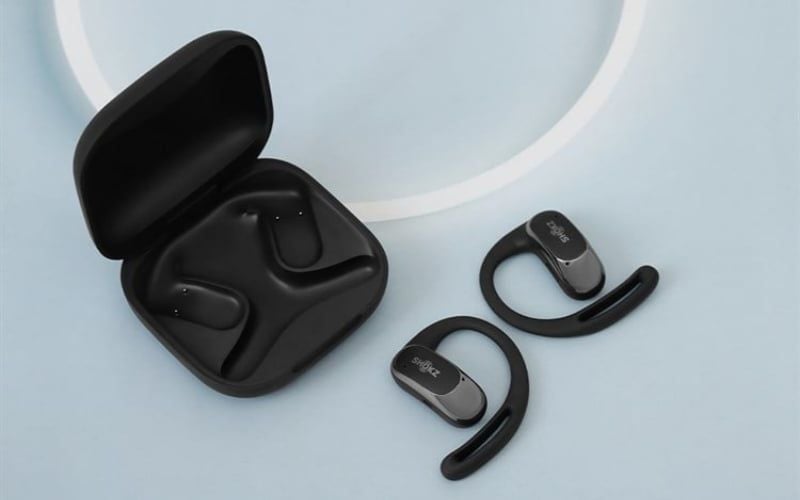
Many use a wraparound band that stays secure during movement. The vibration can feel unusual, especially at stronger bass levels, and the sound may be less full than a well-sealed conventional headphone. Shokz provides a visual explanation of its bone-conduction design.
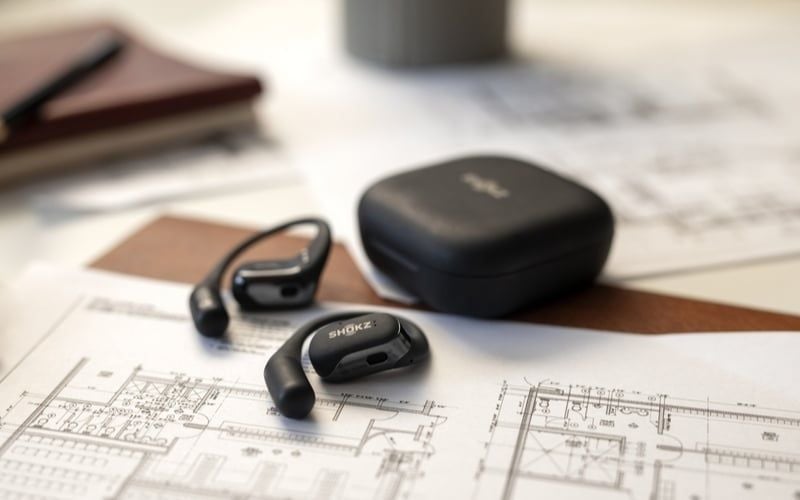
Advantages of the open-ear design
- More environmental awareness: outside sound enters the ear canal naturally rather than through a transparency microphone.
- No object inside the canal: useful for people who dislike ear tips or experience pressure and heat from sealed designs.
- Easier brief conversation: many users can hear a nearby person without removing the device, provided playback is quiet enough.
- Secure sport options: hooks or neckbands can remain stable during running and gym movement.
- Less isolation: helpful when isolation itself is undesirable, such as listening for a doorbell or colleague.
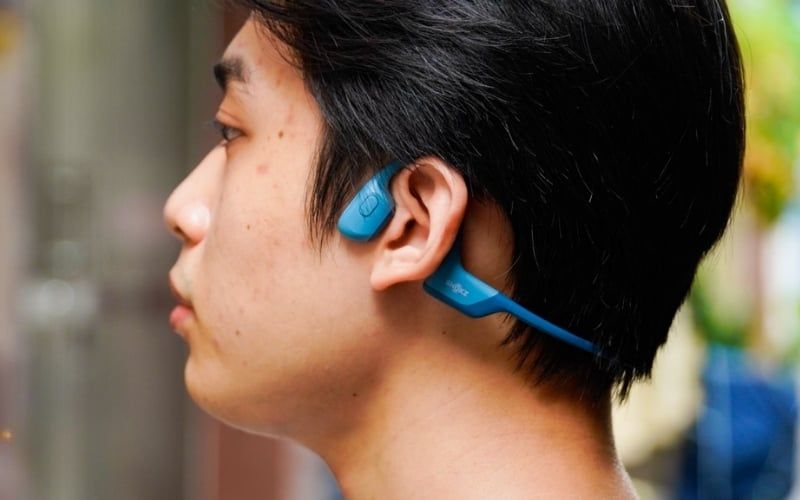
Trade-offs to expect
- Noise competes with the audio: on a train, plane, or loud street, detail can disappear and users may raise the volume.
- Bass is harder to reproduce: an open fit does not create the acoustic seal that helps conventional earbuds produce low-frequency impact.
- Sound leakage: people nearby may hear the audio, especially in a quiet room or at higher volume.
- Fit is highly personal: speaker position, clamp pressure, glasses, hats, and ear shape can change comfort and sound.
- Call quality varies: microphone placement and wind processing matter more than the open-ear label.

Open-ear vs in-ear vs over-ear
| Criterion | Open-ear | In-ear | Over-ear |
|---|---|---|---|
| Ear-canal seal | None | Usually sealed with a tip | No canal insert; earcup may seal around the ear |
| Awareness without electronic ambient mode | Generally high | Usually low when sealed | Low to moderate, depending on cup design |
| Isolation in noisy places | Low | Good with a proper seal; some models add ANC | Varies; closed-back models and ANC can isolate well |
| Bass potential | Usually limited by the open fit | Strong when fit and seal are good | Can be strong, depending on tuning and fit |
| Leakage | Possible | Usually low at moderate volume | Low for closed-back; higher for open-back |
| Best use | Awareness, sport, calls, casual listening | Portable, detailed, or isolated listening | Long listening, travel, office, or home audio |
Comfort cannot be ranked universally. Some people dislike ear tips; others find open-ear hooks or bone-conduction pressure uncomfortable. A return window or in-person fit test is valuable.
Are open-ear headphones safer?
They can improve situational awareness because the ear canal remains open, but they do not make an unsafe situation safe. Do not rely on music or a headset while driving, cycling, or crossing traffic where local rules prohibit use or full attention is required. Wind, speed, playback volume, and a busy soundscape can still hide an approaching vehicle or warning.
Open-ear headphones are also not automatically safer for hearing. The World Health Organization's safe-listening guidance emphasizes both sound level and exposure time. In a noisy environment, the lack of isolation may tempt the wearer to increase volume; a well-fitted noise-isolating or noise-cancelling headphone can sometimes support a lower listening level.
If you have pain, drainage, sudden hearing change, persistent ringing, or another ear concern, stop using the device and seek appropriate medical advice rather than assuming a different headphone style will solve it.
Which type suits your use?
Running, walking, and gym sessions
Prioritize secure fit, easy controls, sweat resistance, low weight, and awareness at the volume you actually use. Bone-conduction neckbands and air-conduction ear hooks can both work. Test for movement bounce and discomfort over a full session.

Office and home use
Air-conduction clip or hook designs can work well when you need to hear colleagues or a doorbell. Check sound leakage in a quiet room, multipoint connection, mute controls, and microphone quality. TipsMake's guide to ENC and microphone noise reduction explains the call-side technology.
People who dislike in-ear tips
An open-ear design avoids inserting a tip into the canal, but it can create pressure elsewhere. Clip models squeeze the outer ear, hooks share space with glasses, and bone-conduction bands press against the head. Try the exact design rather than buying only from the category description.
Buying checklist
- Fit and stability: test walking, head movement, glasses, a hat, and the intended workout.
- Volume at normal use: make sure speech and music remain clear without pushing the level up in your environment.
- Sound leakage: ask someone nearby to listen in a quiet room.
- Call performance: record samples indoors, near a fan, and outdoors; compare them over the connection you will use.
- Water and dust rating: read the exact IP code and warranty exclusions. Water resistance does not automatically mean the model is suitable for swimming.
- Battery and charging: use independent tests where possible and check whether quick charging meets your schedule.
- Controls and app: confirm volume, track, mute, EQ, multipoint, and firmware support on your devices.
- Codec and latency: Bluetooth version alone does not guarantee low latency; verify codec support and video or game performance end to end.
For a more isolated alternative, TipsMake's roundup of noise-cancelling headphones covers conventional ANC models.
Open-ear headphones are a strong option when awareness and an unblocked ear canal matter more than isolation and deep bass. The best choice is the model that stays comfortable, audible at a responsible level, and secure in your real environment.
Related Articles
 This Is a Headset That Costs Less Than 500 Thousand Making Music Lovers4 minutes read
 15 Great Benefits of Listening to Music You May Not Know15 minutes read
 Young People Are Temporarily Deaf Because They Wear Headphones to Listen to Music and Overslept5 minutes read
 When You Have Problems at Work, Open a Song You Love and Listen To6 minutes read
 Headphone, Earphones Are Shy, Noisy, Hard to Hear and How to Fix9 minutes read
 Sennheiser CX 213 Review: Great Mid-range Headphones6 minutes read
Reader Comments 0
Sign in with email or Google to join the discussion.