Table of Contents
Prolonged use of in-ear headphones often causes ear canal pain and discomfort. Infra-eardrum sound transmission technology has emerged as an effective alternative to this problem. This article will provide a detailed explanation of the definition, operating mechanism, and help users assess the suitability of the device for their practical needs.
Key points
- Bone conduction headphones transmit sound through vibrations on the cheekbones, without impacting the eardrum.
- The open-ear design allows users to listen to music while remaining aware of their surroundings, ensuring safety while on the go.
- The main advantage is its comfort; it doesn't cause stuffiness or ear pain, making it ideal for athletes and those who wear headphones for extended periods.
- The drawbacks include limited sound quality, a weak bass range, and poor sound isolation, making it unsuitable for very noisy environments.
1. What is bone conduction hearing loss?
Bone conduction headphones are audio devices that transmit mechanical vibrations through the cheekbone directly to the inner ear. They feature an open-ear design that allows for good ventilation of the ear canal.
This technology initially originated as a medical solution for hearing assistance. Over time, bone conduction technology has evolved into a popular wearable smart technology. Modern devices are refined to better serve athletes and office workers alike.
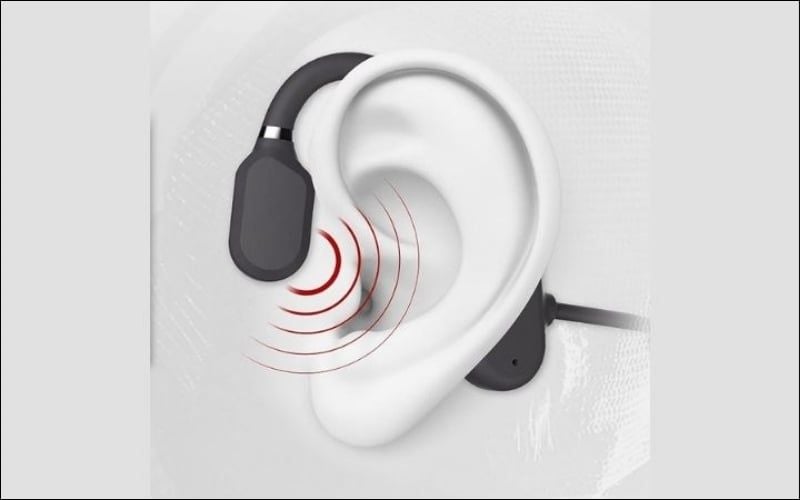
Bone conduction headphones transmit vibrations directly to the inner ear, bypassing the eardrum.
2. Operating principle of bone conduction technology
The device's sound transmission mechanism follows a specific physical process. The sound source sends an audio signal, and the device converts this signal into mechanical vibrations. The transmission of these vibrations through the cheekbone or jawbone then begins.
Sound signals travel directly to the cochlea without affecting the eardrum. Tiny hairs in the cochlea receive the signals and send them to the auditory nerve. Finally, the brain receives and decodes these signals into complete sounds.
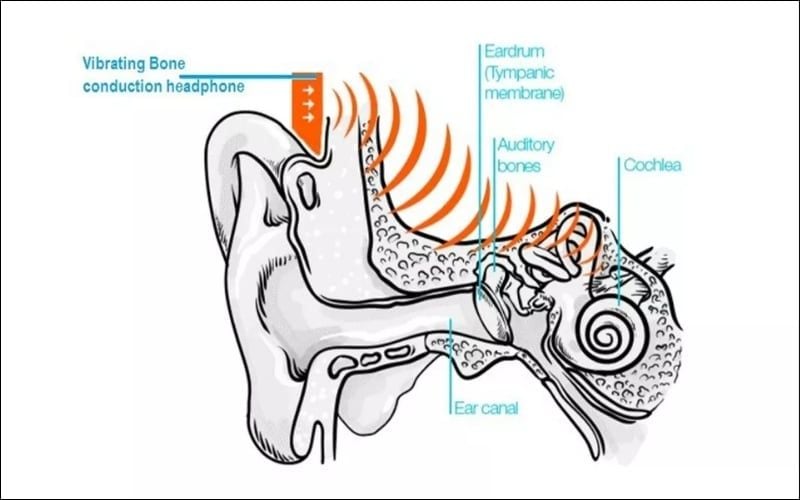
Bone conduction technology converts sound into vibrations that travel through the bones to the cochlea.
3. Advantages and disadvantages of bone conduction headphones
3.1. Outstanding Advantages
- It helps protect hearing by not putting pressure on the eardrum, reducing the risk of ear canal infections.
- It helps users easily recognize sounds from their surroundings, making it suitable for office workers to use while working.
- Ergonomic designs that fit snugly around the head, often using ultra-lightweight titanium, provide secure support during strenuous activity.
- Featuring advanced water and dust resistance standards such as IP67 or IP68, suitable for harsh training environments.
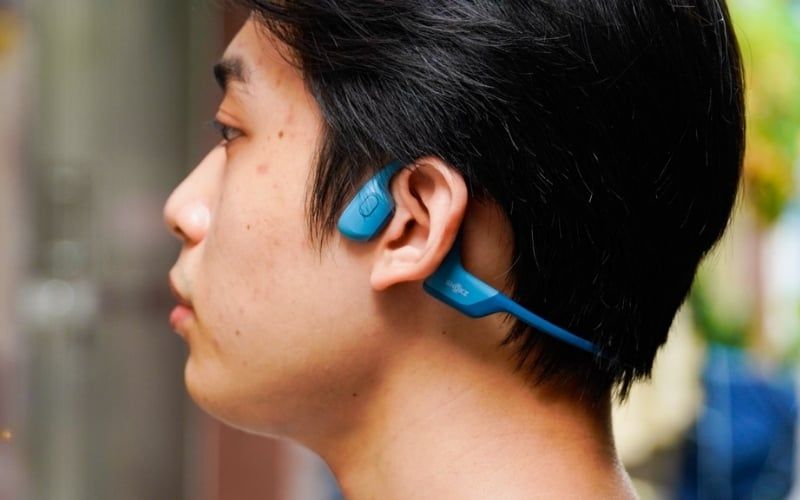
Bone conduction headphones are safe for the ears even when worn for extended periods.
3.2. Disadvantages to note
- The bass range is often thin and lacks detail compared to in-ear headphones in the same price range, making it unsuitable for audiophiles.
- Sound leakage into the surrounding environment is more likely to occur when listening at high volume levels.
- The product lacks active noise cancellation (ANC) technology, making it difficult to listen in noisy environments.
- Users may feel a slight tingling or vibration in the temples when the device volume is turned up to maximum.

These headphones lack ANC technology, making them difficult to hear in noisy environments.
4. Comparison of bone conduction headphones and in-ear headphones
|
Criteria |
Bone conduction headphones |
In-ear headphones |
|---|---|---|
|
Sound transmission mechanism |
Through the cheekbone straight to the cochlea |
Through the air, it strikes the eardrum. |
|
Sound detail |
Medium level, thin bass range. |
High detail, deep and powerful bass. |
|
Soundproofing capabilities |
Lack of soundproofing; background noise is clearly audible. |
Good sound insulation, supports ANC noise cancellation. |
|
Comfort level for extended wear |
Comfortable, with good ventilation around the ears. |
It can easily cause ear blockage and pain in the ear canal. |
|
Outdoor safety level |
Very high, clearly perceptible to car horns and other noises. |
Low, reduced environmental awareness |
5. Who are bone conduction headphones suitable for?
The following groups should prioritize using this product:
- People who enjoy outdoor sports like running and cycling should pay attention to traffic safety.
- Users are looking for marathon runner accessories that offer good sweat resistance.
- Office workers who frequently attend online meetings need to stay in touch with their colleagues.
- People with sensitive ear canals are prone to inflammation or pain when using traditional earplugs.

Bone conduction headphones are suitable for outdoor sports enthusiasts.
This group should consider other options:
- Professional eSports gamers need to be able to hear their opponents' footsteps with high accuracy.
- Users are looking for entertainment devices that deliver perfect sound quality and powerful bass.
- People who frequently work in construction sites or factories with excessively high noise levels.
6. Prominent Bone Conduction Headphone Brands
- Soundpeats: Aimed at the budget segment with basic functions, a sporty design, and sufficient battery life for all-day use.
- Lenovo: Offers devices at affordable prices, equipped with stable Bluetooth connectivity and basic water resistance.
- Xiaomi: A good balance between price and technology, offering low latency, lightweight design, and a youthful look.
- Shokz: Headphones made with premium materials, offering durability and leading the global market.
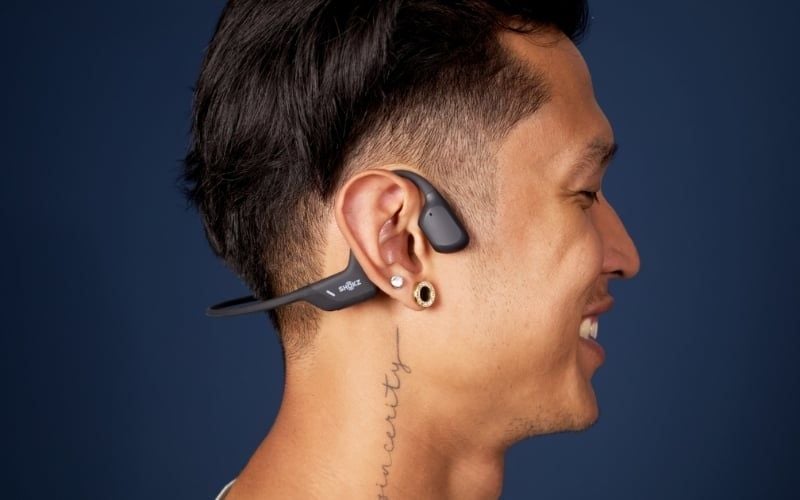
Shokz headphones use high-quality, durable materials and are favored by users.
7. Frequently Asked Questions
7.1. Will wearing bone conduction headphones with prescription glasses be inconvenient?
It's usually not uncomfortable or irritating. The device has a flexible frame that hugs the back of the neck and sits neatly outside the ears. Users can comfortably wear it with prescription glasses or sunglasses without any obstruction.
7.2. Will using headphones with a computer for gaming cause audio lag?
Since the device connects via Bluetooth, there is still a certain level of signal latency. This latency is acceptable for playing story-driven games or light entertainment. However, the product does not meet the requirements for instantaneous reflexes in competitive eSports games .
7.3. How to properly clean and maintain your headphones?
Users should simply wipe away sweat and dirt from the device with a soft, dry cloth after each workout. Avoid using strong chemical cleaning solutions on the surface of this sports accessory. Ensure the charging port is completely dry before plugging it in to prevent short circuits and damage to the circuit board.
Bone conduction headphones are a worthwhile option for outdoor sports enthusiasts who need ample ear space.
Related Articles
 What Are Open-Ear Headphones?9 minutes read
 Top 7 Best Wired Headphones: What You Need to Know8 minutes read
 Choose Headphones Like In-ear, On-ear or Over-ear?8 minutes read
 Sennheiser CX 213 Review: Great Mid-range Headphones6 minutes read
 Research Shows That Bone Strength May Be Genetic4 minutes read
 Good News: New Drugs Can Prevent Damage and Bone Loss Caused3 minutes read
Reader Comments 0
Sign in with email or Google to join the discussion.