Table of Contents
Pokémon GO has 18 types. An attack deals more damage when its move type is super effective against the defender and less damage when the defender resists it. The move's type—not only the attacking Pokémon's type—determines the matchup.
Pokémon GO does not divide types into physical and special categories. It also adapts main-series immunities into very strong resistances rather than reducing damage to zero. Use the chart below for raids, Gyms, Team GO Rocket and Trainer Battles, then consider the format's move values and rules.
How type effectiveness works in Pokémon GO
- Super effective: the move deals increased damage.
- Not very effective: the move deals reduced damage.
- Same-type attack bonus: a Pokémon receives an additional bonus when it uses a move matching one of its own types.
- Dual types: both defending types apply, so weaknesses and resistances can combine or cancel.
For example, a Fire/Flying Pokémon is especially vulnerable to Rock attacks because both types are weak to Rock. An Electric/Flying Pokémon's Flying weakness to Electric is canceled by Electric's resistance to Electric, producing neutral damage.
All 18 Pokémon GO type matchups
1. Normal
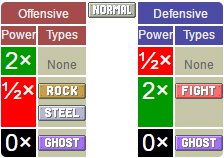
- Normal attacks: no super-effective targets; resisted by Rock and Steel and strongly resisted by Ghost.
- Normal Pokémon are weak to: Fighting.
- Normal Pokémon resist: Ghost very strongly.
2. Fighting
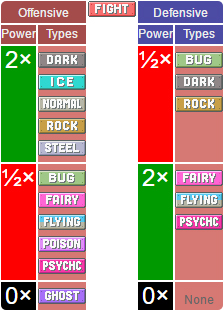
- Fighting attacks are strong against: Normal, Ice, Rock, Dark and Steel.
- Fighting attacks are resisted by: Poison, Flying, Psychic, Bug and Fairy; Ghost resists them especially strongly.
- Fighting Pokémon are weak to: Flying, Psychic and Fairy; they resist Bug, Rock and Dark.
3. Flying
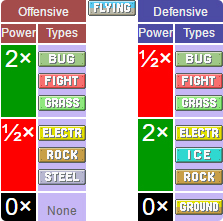
- Flying attacks are strong against: Grass, Fighting and Bug.
- Flying attacks are resisted by: Electric, Rock and Steel.
- Flying Pokémon are weak to: Electric, Ice and Rock; they resist Grass, Fighting and Bug and strongly resist Ground.
4. Poison
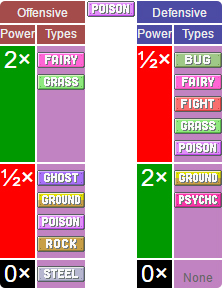
- Poison attacks are strong against: Grass and Fairy.
- Poison attacks are resisted by: Poison, Ground, Rock and Ghost; Steel strongly resists them.
- Poison Pokémon are weak to: Ground and Psychic; they resist Grass, Fighting, Poison, Bug and Fairy.
5. Ground
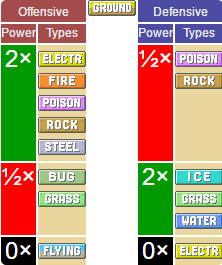
- Ground attacks are strong against: Fire, Electric, Poison, Rock and Steel.
- Ground attacks are resisted by: Grass and Bug; Flying strongly resists them.
- Ground Pokémon are weak to: Water, Grass and Ice; they resist Poison and Rock and strongly resist Electric.
6. Rock

- Rock attacks are strong against: Fire, Ice, Flying and Bug.
- Rock attacks are resisted by: Fighting, Ground and Steel.
- Rock Pokémon are weak to: Water, Grass, Fighting, Ground and Steel; they resist Normal, Fire, Poison and Flying.
7. Bug
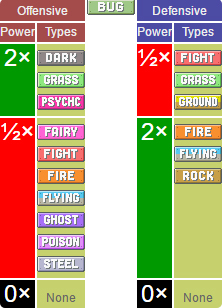
- Bug attacks are strong against: Grass, Psychic and Dark.
- Bug attacks are resisted by: Fire, Fighting, Poison, Flying, Ghost, Steel and Fairy.
- Bug Pokémon are weak to: Fire, Flying and Rock; they resist Grass, Fighting and Ground.
8. Ghost
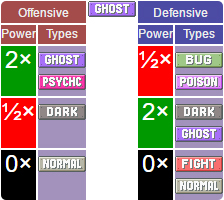
- Ghost attacks are strong against: Psychic and Ghost.
- Ghost attacks are resisted by: Dark; Normal resists them especially strongly.
- Ghost Pokémon are weak to: Ghost and Dark; they resist Poison and Bug and strongly resist Normal and Fighting.
9. Steel

- Steel attacks are strong against: Ice, Rock and Fairy.
- Steel attacks are resisted by: Fire, Water, Electric and Steel.
- Steel Pokémon are weak to: Fire, Fighting and Ground. They resist many types, including Normal, Grass, Ice, Flying, Psychic, Bug, Rock, Dragon, Steel and Fairy, and strongly resist Poison.
10. Fire
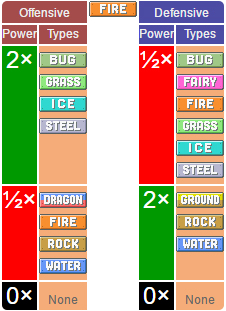
- Fire attacks are strong against: Grass, Ice, Bug and Steel.
- Fire attacks are resisted by: Fire, Water, Rock and Dragon.
- Fire Pokémon are weak to: Water, Ground and Rock; they resist Fire, Grass, Ice, Bug, Steel and Fairy.
11. Water
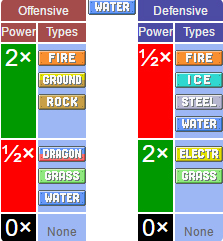
- Water attacks are strong against: Fire, Ground and Rock.
- Water attacks are resisted by: Water, Grass and Dragon.
- Water Pokémon are weak to: Electric and Grass; they resist Fire, Water, Ice and Steel.
12. Grass
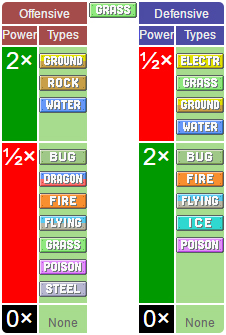
- Grass attacks are strong against: Water, Ground and Rock.
- Grass attacks are resisted by: Fire, Grass, Poison, Flying, Bug, Dragon and Steel.
- Grass Pokémon are weak to: Fire, Ice, Poison, Flying and Bug; they resist Water, Electric, Grass and Ground.
13. Electric
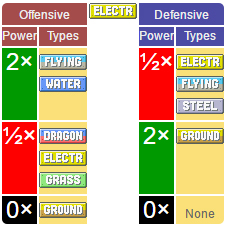
- Electric attacks are strong against: Water and Flying.
- Electric attacks are resisted by: Electric, Grass and Dragon; Ground strongly resists them.
- Electric Pokémon are weak to: Ground; they resist Electric, Flying and Steel.
14. Psychic
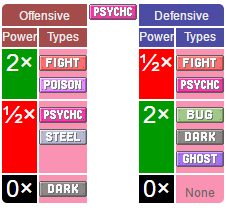
- Psychic attacks are strong against: Fighting and Poison.
- Psychic attacks are resisted by: Psychic and Steel; Dark strongly resists them.
- Psychic Pokémon are weak to: Bug, Ghost and Dark; they resist Fighting and Psychic.
15. Ice
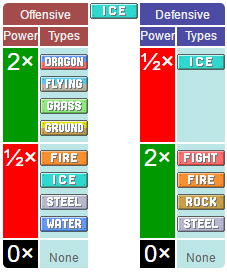
- Ice attacks are strong against: Grass, Ground, Flying and Dragon.
- Ice attacks are resisted by: Fire, Water, Ice and Steel.
- Ice Pokémon are weak to: Fire, Fighting, Rock and Steel; they resist Ice.
16. Dragon
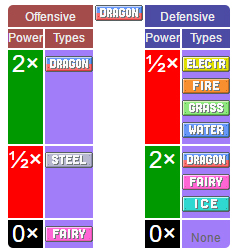
- Dragon attacks are strong against: Dragon.
- Dragon attacks are resisted by: Steel; Fairy strongly resists them.
- Dragon Pokémon are weak to: Ice, Dragon and Fairy; they resist Fire, Water, Electric and Grass.
17. Dark
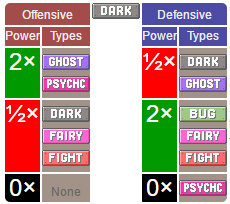
- Dark attacks are strong against: Psychic and Ghost.
- Dark attacks are resisted by: Fighting, Dark and Fairy.
- Dark Pokémon are weak to: Fighting, Bug and Fairy; they resist Ghost and Dark and strongly resist Psychic.
18. Fairy
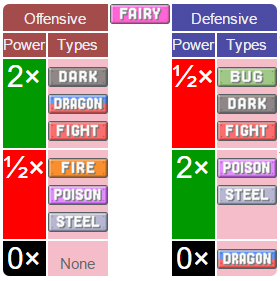
- Fairy attacks are strong against: Fighting, Dragon and Dark.
- Fairy attacks are resisted by: Fire, Poison and Steel.
- Fairy Pokémon are weak to: Poison and Steel; they resist Fighting, Bug and Dark and strongly resist Dragon.
How dual-type matchups combine
A dual-type defender applies both of its types to incoming damage. Two weaknesses create a larger combined weakness, while a weakness and a resistance can cancel to neutral. Two resistances create a stronger combined resistance. Pokémon GO's exact multipliers differ from the traditional 2× and ½× figures printed in many older charts.
Always check the defender's full typing. A move that is usually good against one type may become neutral or resisted because of the second type.
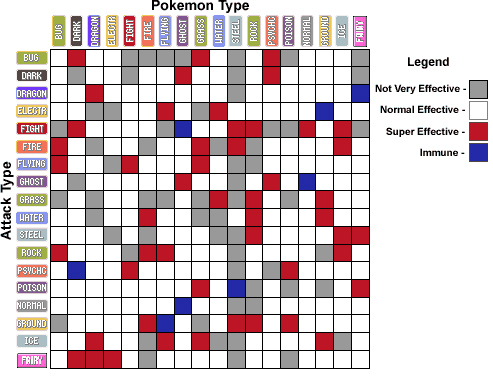
Type matchup reference image
The following chart provides a visual overview. Because small labels can be difficult to read and older charts may use main-series multiplier symbols, use the written list above when a precise Pokémon GO decision matters.
Choosing a battle team
- Identify the opponent's type or types.
- Choose moves that are super effective against both when possible.
- Prefer attackers that resist the opponent's likely moves.
- Confirm the Pokémon actually knows the desired Fast and Charged Attacks.
- For PvP, also consider shields, energy generation, coverage and the league's CP limit.
Typing is the starting point, not the entire result. Move strength, Pokémon level, stats, weather, battle bonuses and format rules also affect performance.
Related Articles
 10 Best Fighting Games on PC Best15 minutes read
 Top 5 Best Free Fighting Games on Mobile5 minutes read
 9 Best Fighting Games on Android and Iphone10 minutes read
 The Incompatibility of the Systems in Pokemon GO10 minutes read
 Top 9 Top Free Fighting Games on Mobile: Recommended Choices9 minutes read
 Top Best Fighting Games of All Time7 minutes read
Reader Comments 0
Sign in with email or Google to join the discussion.