Table of Contents
This article provides a clear overview of The LOWER, UPPER and PROPER Case-conversion Functions in, with the main facts, useful context, and practical details organized for easy reading.
this guide introduces you to three font conversion functions: LOWER (), UPPER () and PROPER ().

1. LOWER.
Description
The LOWER () function converts all the characters in the text string into lowercase, helping you to reformat the text string.
Syntax
= LOWER (text)
Arguments
text is the text you may need to convert to lowercase. Text can be a reference to a text string or a text string.
For Example

2. UPPER.
Description
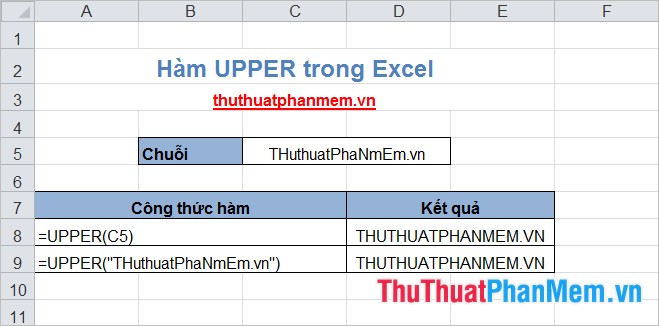
The UPPER () function helps you convert all characters in a text string (text) into uppercase.
Syntax
= UPPER (text)
Arguments
text is a text string you may need to convert all characters to uppercase. Text can be a reference to a string or a string.
For Example
3. PROPER.
Description
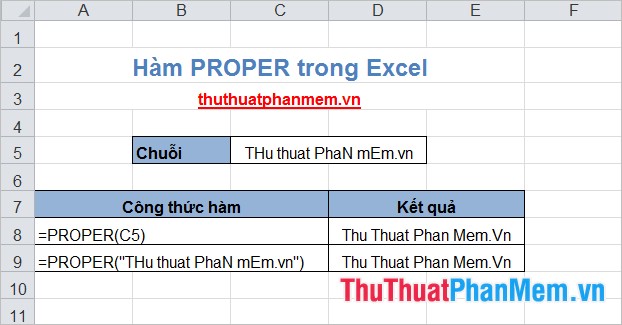
The PROPER () function capitalizes the first letter in a text string if it's a non-letter character (for example, a space) and converts all other letters to lowercase.
Syntax
= PROPER (text)
Arguments
text is the first string to capitalize and is a required parameter. Text can be a text string, a formula that returns text, or a cell reference to the text string in uppercase.
For Example
Thus, when encountering cases that require you to convert the font in a certain style, you can quickly apply these conversion functions appropriately. Good luck!
FAQ
What is the main focus of The LOWER, UPPER and PROPER Case-conversion Functions in?
The article explains the most important facts, context, and practical details related to The LOWER, UPPER and PROPER Case-conversion Functions in.
Who may find this information useful?
It is useful for readers who want a clear overview, practical context, and a better understanding of the subject.
What should readers verify before taking action?
Check current product versions, official requirements, regional availability, and any details that may have changed since the original publication.
Related Articles
 Save Time with These Text Formatting Functions in Microsoft Excel22 minutes read
 Write Exponents in Excel, Write Upper and Lower Indices in Excel: Step-by-Step Guide16 minutes read
 Capitalize in Excel: How to Capitalize the First Letter in Excel4 minutes read
 3 Functions to Help You Stop Wasting Time in Excel8 minutes read
 Summary of Trigonometric Functions in Excel6 minutes read
 How to Fix the SUM Function Doesn't Add up in Excel3 minutes read
Reader Comments 0
Sign in with email or Google to join the discussion.