Table of Contents
Claude Fable 5 is Anthropic's most capable widely released model for long-running agents, advanced coding, scientific work, vision, and complex analysis. It is the first generally available model in Anthropic's Mythos capability tier, but it includes additional safety classifiers that distinguish it from the restricted Claude Mythos 5 deployment.
Fable 5 can be materially better than earlier Claude models on difficult, multi-stage work. That does not make every answer correct or every task worth its higher cost. The useful question is whether it improves accuracy, completion rate, and review effort on your prompts and data.
What is Claude Fable 5?
Anthropic launched Claude Fable 5 on June 9, 2026. The company describes Mythos-class models as a tier above Opus in capability. Fable 5 and Claude Mythos 5 use the same underlying model, but Fable adds classifiers and routing safeguards intended to prevent dangerous cybersecurity, biology, chemistry, jailbreak, and model-distillation uses.
When a request triggers some safeguards, the user can receive a response from Claude Opus 4.8 instead of Fable 5. This makes Fable a safeguarded general-release product rather than unrestricted access to every Mythos-class capability.
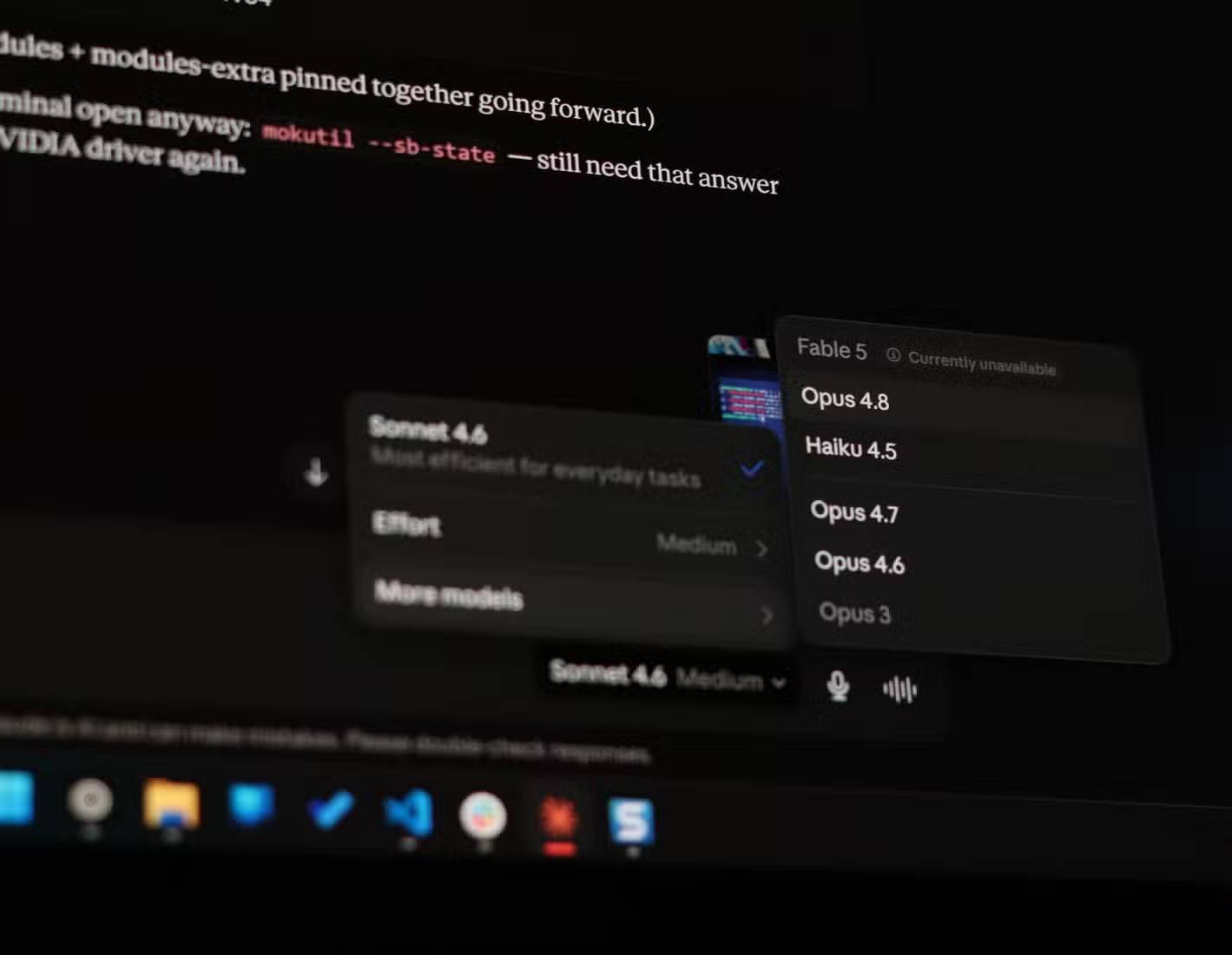
Claude Fable 5 specs, price, and availability
| Item | Claude Fable 5 |
|---|---|
| API model ID | claude-fable-5 |
| Context window | 1 million tokens by default |
| Maximum output | Up to 128,000 tokens |
| Thinking | Always-on adaptive thinking |
| Modalities | Text and image input; text output |
| API price | $10 per million input tokens and $50 per million output tokens before cache adjustments or platform-specific charges |
| General availability | Available through Claude products and the Claude API; plan and usage-credit rules vary |
Fable 5 access was suspended on June 12 after a US export-control directive, then restored globally on July 1 after the controls were lifted and Anthropic updated its classifiers. Any statement that access is 'currently suspended' is now out of date.
Subscription access can depend on usage credits and capacity. Developers should verify current pricing, provider availability, and plan entitlements before estimating a production budget.
Does Claude Fable 5 outperform Opus 4.8?
Anthropic reports that Fable 5 leads its prior models across software engineering, knowledge work, vision, long-context memory, and scientific research. Early customers also reported top results on their own coding, finance, analytics, legal, physics, spreadsheet, and app-building evaluations.
Examples published in the launch materials include:
- Higher scores on difficult production-code evaluations, including long-horizon tasks.
- Strong performance on document reasoning, charts, tables, and finance analysis.
- Vision improvements for extracting values from scientific figures and rebuilding interfaces from screenshots.
- Better use of persistent notes in long-running tasks.
- Spreadsheet evaluations that one early customer said finished 25–30% faster than Opus 4.8.
These results are promising, but they are not one universal score. Many are Anthropic-run or vendor/customer evaluations selected for a launch announcement. Differences in prompts, tools, effort settings, review rubrics, and task mix can change the result.
Best interpretation: benchmarks establish that Fable 5 deserves testing on difficult workloads. They do not prove that it will reduce cost or error on every organization's tasks.
Claude Fable 5 in real-world troubleshooting
A useful model review should test messy situations, not only self-contained puzzles. The test sessions behind this review involved Linux recovery, Docker networking, 3D-printing diagnosis, electronics planning, and ordinary advice. These are anecdotal cases rather than controlled benchmarks, but they reveal the behaviors that matter in day-to-day use.
Linux boot recovery after an NVIDIA driver problem
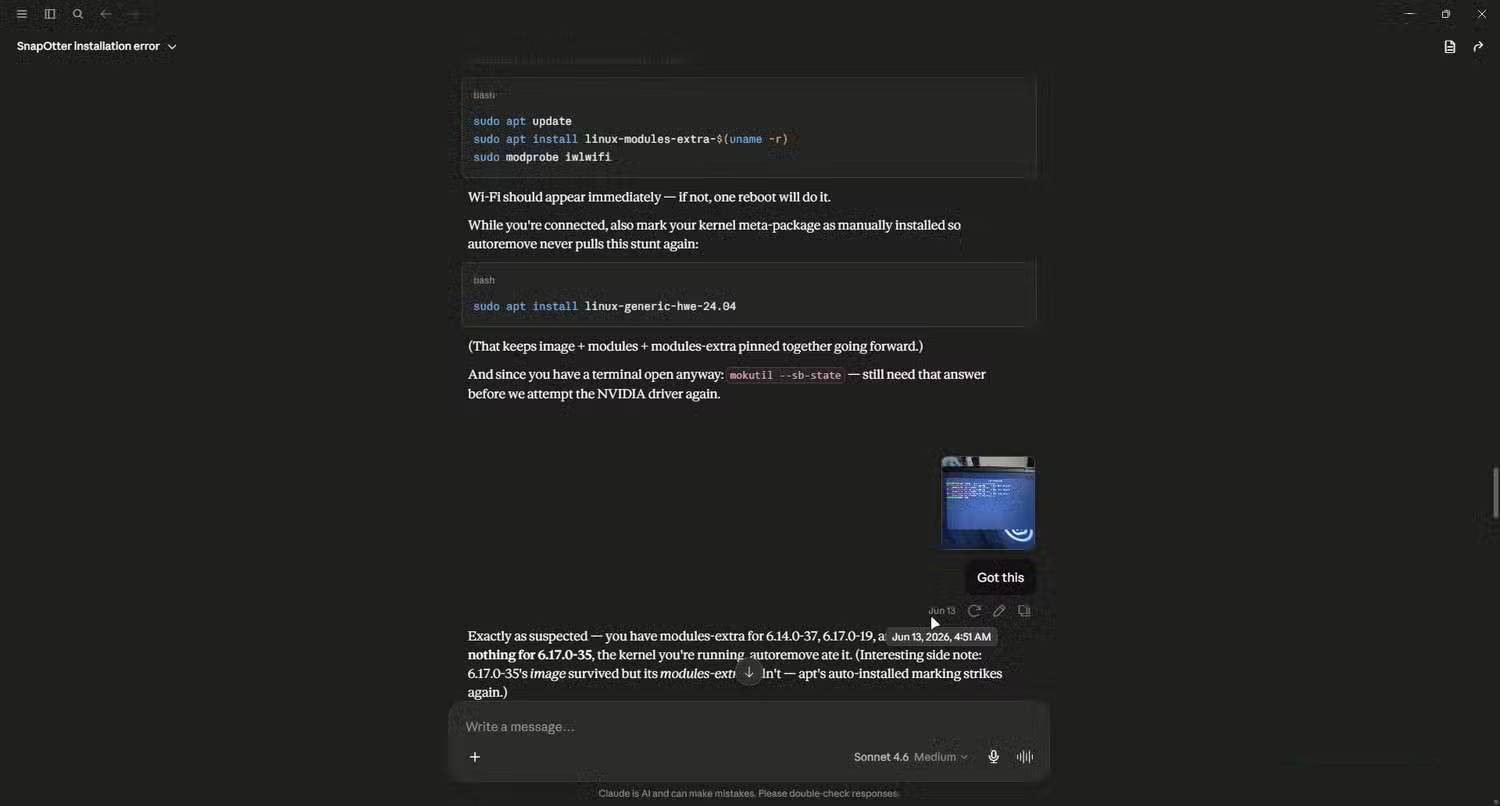
In the reported session, an NVIDIA driver installation damaged the boot path for the newest Linux kernel. The machine entered a kernel panic and hosted self-managed applications were unavailable. Fable 5 used terminal photos and short messages to narrow the fault to an initramfs problem on the affected kernel rather than immediately blaming GRUB or Secure Boot.
The model suggested booting an older working kernel and then repairing the driver state. It also connected a later loss of Wi-Fi to linux-modules-extra-6.17.0-35-generic being removed during cleanup, because that package contained the relevant iwlwifi module. The strongest behavior was not one command; it was maintaining a causal chain across boot, package, kernel, and network symptoms.
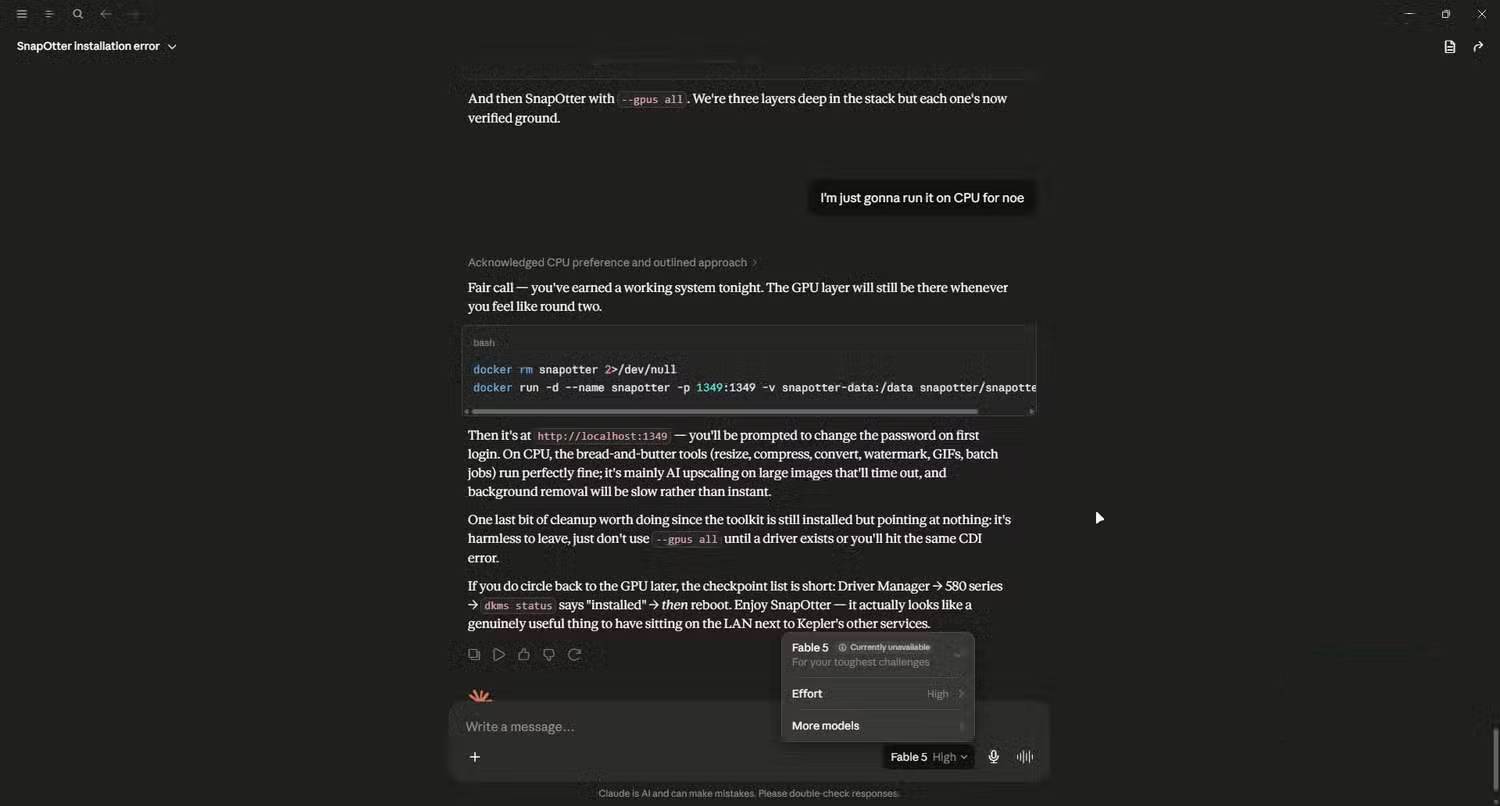


This is exactly the kind of task where AI advice can also cause data loss. A safer workflow requires a current backup, read-only inspection first, exact command review, and a rollback plan. One successful recovery story is not evidence that unverified system commands are safe.
Docker service unreachable on the local network
Another session investigated port bindings, firewall rules, iptables, and socket output for a service that worked locally but not from another machine. The eventual cause was simpler: the wrong IP address was being used. Fable 5 connected the current troubleshooting details with earlier environment context and redirected the investigation.
The lesson is not that the model always finds a hidden network fault. It is that a good assistant should test identity and addressing assumptions before proposing invasive firewall changes.
Building and physical-world problem solving
3D-printer calibration
Fable 5 helped plan a temperature tower for new PLA+ filament, compare extrusion behavior, and adjust pressure-related calibration. In a separate failed print, it flagged that an imported 3MF file contained a generic ABS profile that raised the bed temperature and changed cooling behavior—settings inappropriate for the intended PLA+ workflow.
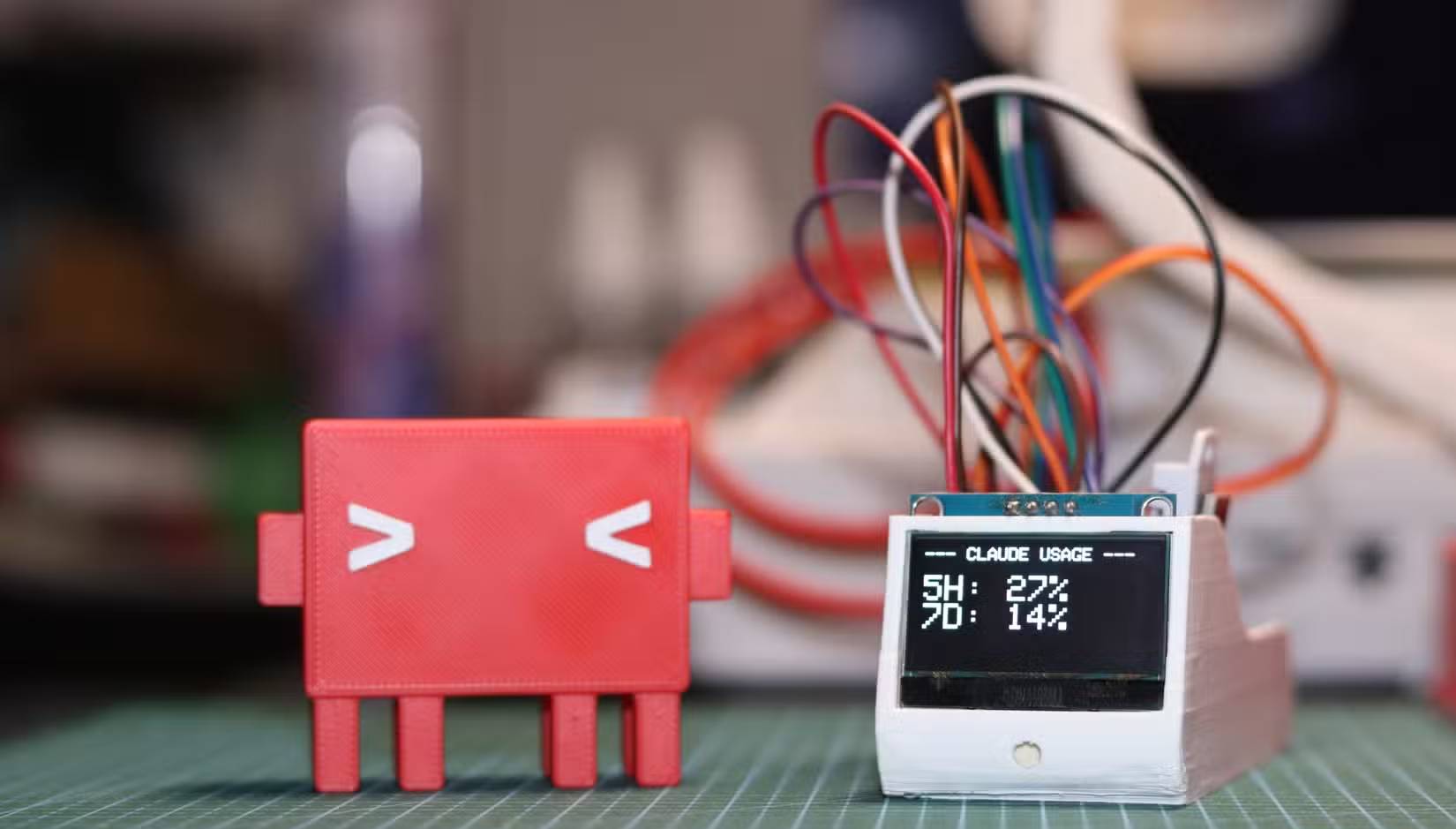
AI cannot measure nozzle temperature, bed adhesion, or mechanical alignment on its own. Treat recommendations as hypotheses and change one variable at a time. Follow the printer and material manufacturer's safety limits.
ESP32 and Home Assistant project planning
A request for a 'three-step potentiometer with a click' became a component-selection discussion after the model identified that an on-off-on switch better matched the desired behavior. The conversation then expanded into an ESP32, DHT22, and Home Assistant telemetry plan.
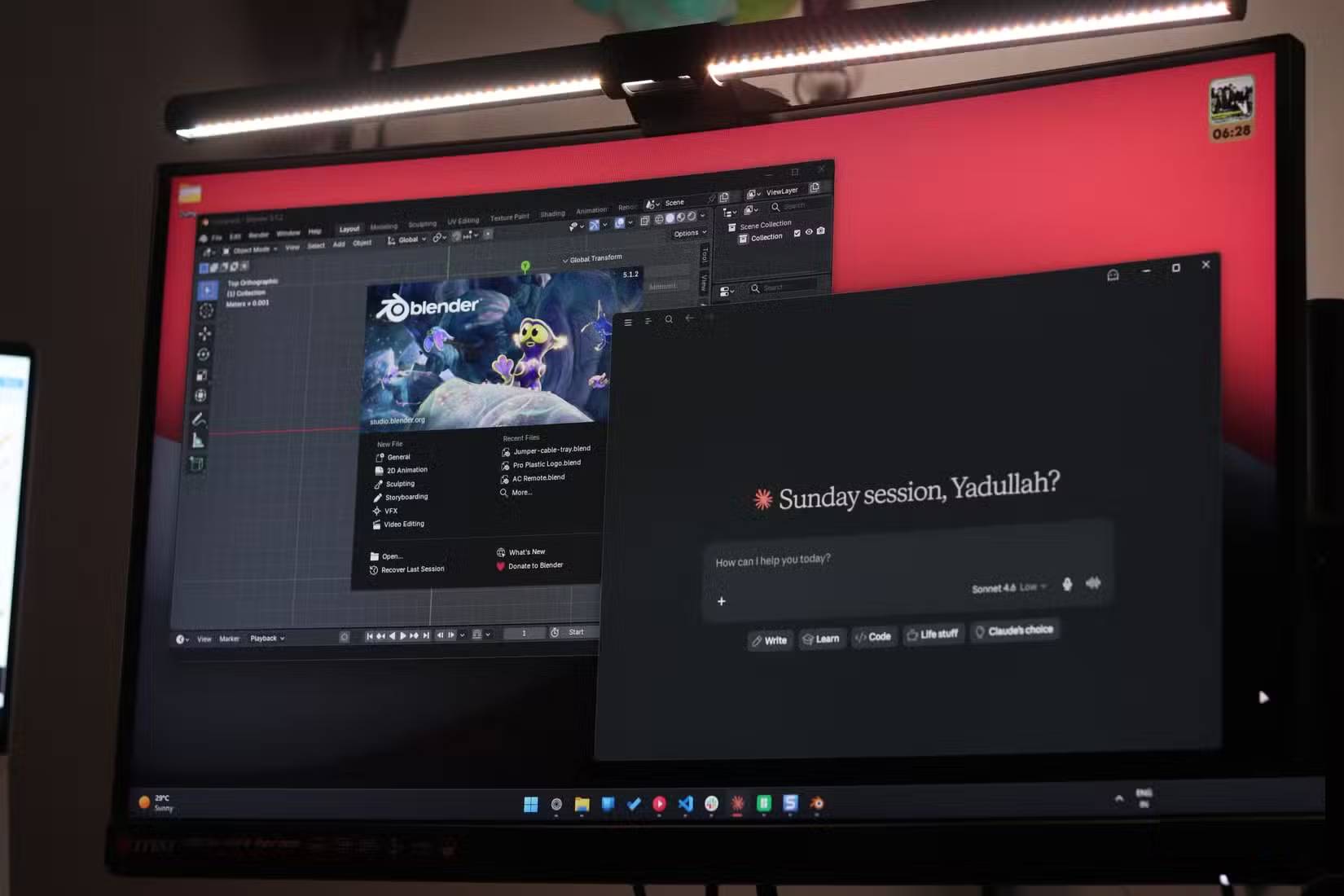
For hardware work, verify voltage levels, pin limits, current draw, grounding, sensor specifications, and isolation requirements against official datasheets. Generated wiring instructions can damage equipment or create a safety hazard.
Claude Fable 5's most useful strengths
- Long-horizon coherence: it can retain goals, failed attempts, and intermediate evidence across extended sessions.
- Tool-oriented execution: it is designed for agents that use terminals, browsers, files, and other tools over many steps.
- Cross-domain synthesis: it can connect software, networking, hardware, documentation, and visual evidence in one investigation.
- Vision: screenshots, diagrams, charts, and terminal photos can supply context that would be tedious to transcribe.
- Hypothesis revision: strong sessions show the model dropping a weak theory when new evidence contradicts it.
- Less scaffolding on hard work: Anthropic reports that Fable needs fewer prompts and helper systems than earlier models on some complex tasks.
The quality gain is most noticeable when the task has dependencies, tools, ambiguity, and a verification loop. For a short rewrite, simple lookup, or routine classification, a cheaper Sonnet or Haiku model may be sufficient.
Claude Fable 5 limitations
- High output cost: long answers and agent traces can become expensive at $50 per million output tokens.
- Safeguard routing: benign security or debugging prompts can trigger classifiers and fall back to Opus 4.8.
- No guarantee of correctness: long context can preserve a bad assumption as easily as a good one.
- Prompt and tool dependence: results depend on permissions, data quality, available tools, and how success is measured.
- Review burden: autonomous output still needs tests, source checks, diffs, simulations, or expert review.
- Availability and capacity: plan inclusion, usage credits, and third-party provider rollout can change.
Fable 5 also uses always-on adaptive thinking. Developers can influence effort but cannot treat it like a deterministic hidden-work budget. Measure total latency and tokens on realistic multi-turn runs.
How to test Claude Fable 5 on your workload
- Create a representative test set. Include normal tasks, edge cases, incomplete inputs, and known failures.
- Define a rubric before running models. Score factual accuracy, completion, tool reliability, citations, security, and unnecessary changes.
- Use the same tools and context. Do not compare a tool-enabled Fable run with a text-only baseline.
- Blind the review. Hide model names from evaluators when possible.
- Track end-to-end cost. Include input, output, cache, retries, latency, and human review time.
- Run multiple trials. One good or bad response can be sampling variance.
- Test safeguard behavior. Include legitimate security and compliance tasks relevant to your organization.
- Compare with simpler models. Evaluate Fable 5 against Opus 4.8, Sonnet 5, or another suitable baseline.
| Metric | Why it matters |
|---|---|
| Task completion rate | Measures whether the model reaches a verified outcome, not merely a convincing explanation |
| First-error rate | Shows how early a wrong assumption enters the workflow |
| Recovery rate | Tests whether the model recognizes and corrects failed actions |
| Unsupported-claim rate | Captures confident statements without adequate evidence |
| Human review minutes | Reveals whether autonomy actually saves work |
| Cost per accepted result | Normalizes token price by useful, approved output |
Verdict: Does Claude Fable 5 live up to expectations?
For difficult, long-running, tool-heavy work, Fable 5 appears to be a meaningful step beyond prior Claude releases. Its strongest advantage is not a single benchmark: it is the ability to maintain a working model of a messy problem, revise hypotheses, and carry an outcome through several domains and failed attempts.
Use Fable 5 when the task is valuable enough that accuracy and autonomy justify premium pricing—large code changes, deep research, complex document analysis, multimodal investigations, or agent workflows. Start with a more economical model when work is short, high-volume, latency-sensitive, or easy to verify.
The final buying decision should come from a controlled evaluation. Anecdotes show what is possible; your own acceptance tests show what is dependable.
Frequently asked questions
Is Claude Fable 5 available now?
Yes. Anthropic restored access on July 1, 2026. Exact plan access, usage-credit requirements, and provider availability can vary.
What is the difference between Fable 5 and Mythos 5?
They use the same underlying model. Fable 5 includes safeguards for general release; Mythos 5 has selected safeguards lifted and is restricted through Project Glasswing and trusted-access programs.
What happens when Fable 5 blocks a request?
Anthropic says some flagged requests are routed to Claude Opus 4.8. The user should be notified when the safeguard blocks Fable 5.
Is Fable 5 always better than Opus 4.8?
No. Fable targets the highest capability and long-running work, while Opus may be cheaper and sufficient for many tasks. Compare accepted results, latency, and total cost.
Can Fable 5 safely repair a computer or electronics project?
It can help diagnose and plan, but it can also be wrong. Back up data, inspect first, verify every command or circuit against authoritative documentation, and involve a qualified technician when failure could cause injury, fire, security loss, or unrecoverable data damage.
Related Articles
 What Is Claude Fable 5?8 minutes read
 minutes read
 Claude vs ChatGPT: Which AI Assistant Should You Use?10 minutes read
 Claude Code vs Codex vs Antigravity: ESP32 Test12 minutes read
 Claude vs Gemini Free Plans: Real-World Comparison14 minutes read
 Instructions for Installing and Using Claude AI's Computer Use Model6 minutes read
Reader Comments 0
Sign in with email or Google to join the discussion.