Table of Contents
Use this guide to understand share files on Windows with Android device and the factors that affect it. The information is organized to make the topic easier to apply in practice.
File sharing configuration on Windows 7
First of all, we need to make sure that the operating system is configured to share files.
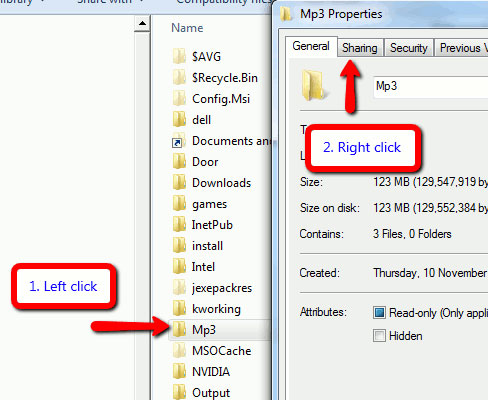
Open Windows Explorer and navigate to the folder you want to share. Right-click the folder and select Properties . In User Properties, select the Sharing Tab and click Share.
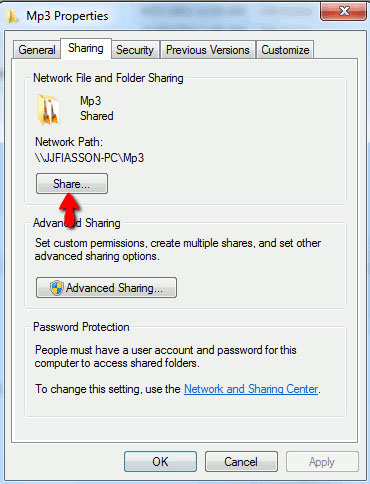
The File Sharing page requires users to select users or groups that want to share the same folder. The simplest solution is to type Everyone In the text box and select Add . Remember that this will allow anyone in the network to access that shared folder, so when needed to be more secure, users can instead enter your username (a password is required).

Note that the default settings for folder sharing are only Read Read permissions. when needed to copy the file from the Android device to the shared folder, users must upload the permission to Read / Write .
Click Share To continue.
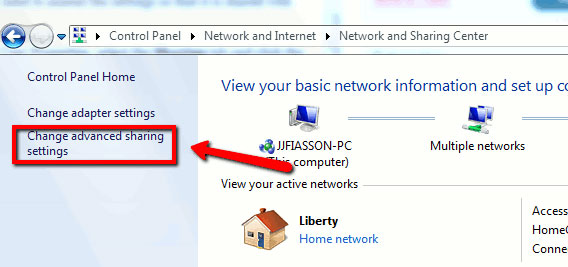
After that, we need to change the shared permissions anonymously. Go to Network and Sharing Center by clicking Start> Control> Panel> Network Internet> Network and Sharing Center . Select Change advanced sharing settings On the left side of the page.
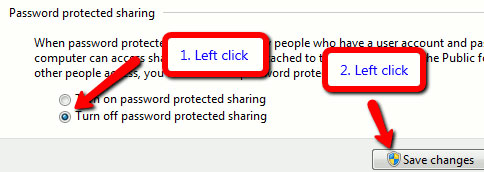
The Password protected sharing page appears and the Turn on password option protected sharing is the default. If you have chosen to share the folder with everyone, you should turn it off. However, if you are worried about safety and just want to share files with certain usernames, you can leave the setting turned on. However, make sure to set a password for your username or you won't be able to create a connection.
Check IP address
In the next section, we need to know the IP address of the machine. Open a command Prompt And type Ipconfig . The IP address appears. Please remember this address.
Access shared folders with Android device
There are several applications on the market that you can configure to access shared folders on Android devices. Here, we will use ES File Explorer, a free application compatible with Android 1.6 installation devices.
To configure ES File Explorer, perform the following steps:
- Install ES File Explorer. Run the app after installation is complete.
- The home screen will display all files and folders on the SD memory card. At the top left, users will see a small Local drop-down box. Click here and a dialog box appears. Choose the LAN Option.
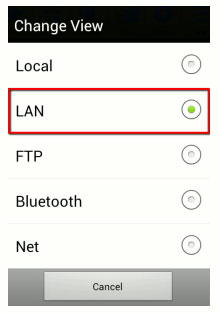
Note that Android devices and computers must be connected to the same network to be able to access the PC, ie we must turn on Wi-Fi on the Android device.
Now, after in the LAN, select New From the toolbar at the top of the screen and two options appears: Scan and Server.
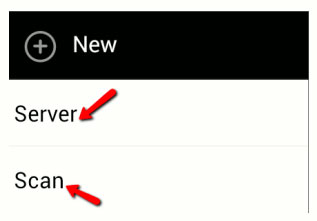
Scan options
Select Scan to search for PCs on the network that have shared folders. At this point, the IP address is very important. After seeing your computer appear, users can stop the scan by clicking on the screen. Select your computer and if you choose to turn off the password protection, the device will automatically connect to the PC. If not, a screen appears as follows:
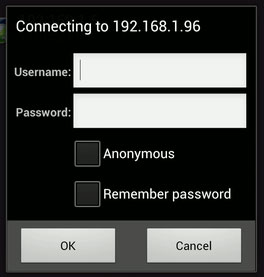
In this case, users will need to enter the username and password of the shared account folder on the PC.
Server options
Select Server when needed to manually enter the machine IP address.
New / Edit page Samba Server appears. If you have chosen to enable password protection, enter the machine's IP address, Windows login username and password and enter the Display name display name. Don't tick the anonymous Anonymous option.
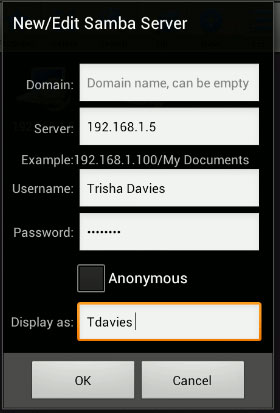
If you have disabled password protection, enter the IP address, check Anonymous And enter a display name.
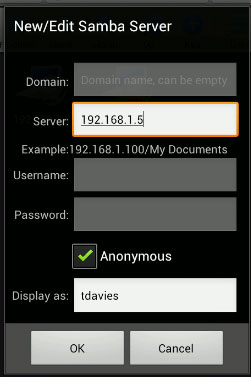
Once completed, shared files or folders will be listed in the LAN screen. That's all the steps to do. Good luck!
FAQ
What is the main benefit of share files on Windows with Android device?
The main benefit is a clearer understanding of the topic and a practical way to apply the information covered in this guide.
What should I check before using share files on Windows with Android device?
Confirm compatibility, review the required settings, protect important data, and use the latest supported version whenever possible.
What should I do if the result is different?
Repeat the steps carefully, verify permissions and version differences, and consult the product's official support documentation for changes not shown in the article.
Related Articles
 How to Use Quick Share on Windows to Send Files5 minutes read
 Share Files Between Your PC and Smartphone Android Effectively with7 minutes read
 How to Access Android Device from Computer: Complete Guide10 minutes read
 How to Transfer Files from Mac to Android Without Android File Transfer7 minutes read
 Microsoft Applications on iOS and Android Help to Share Files to Computers Quickly4 minutes read
 How to Share Files Between Android and Ubuntu Online5 minutes read
Reader Comments 0
Sign in with email or Google to join the discussion.