Table of Contents
This guide covers protect your laptop with practical context and easy-to-follow details. Use it to understand the subject and apply the information confidently.
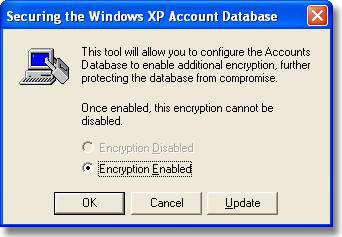 Figure 1: SYSKEY is enabled by default on newer Windows operating systems
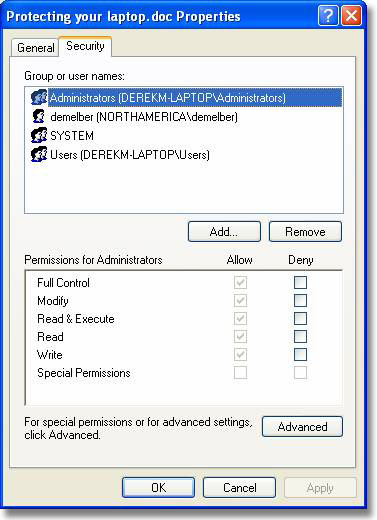 Figure 2: NTFS has an access control list (ACL) related to each file
This is not a very secure security operation for a lost laptop, but it is also a barrier to strangers trying to access files. FAT does not have permission and should not be used due to lack of security. Third , always encrypt using the Encrypting File System (EFS). EFS was first introduced in Windows 2000 and is a method of data encryption as it was placed on the hard drive. This protection method combines with private key pair and public key with data, so if the private key is not available then the user will not be able to access the data. There are many methods around this protection issue, but they are not really easy to apply. Fourth , I talked about another level of encryption that can be used for a third solution, which is combined with a USB drive to encrypt the storage of the private key. This encryption is much better than the built-in encryption, which is thanks to the USB key when accessing data, not just the username but the same password as the EFS option built upon. To finish, I mentioned that all data needs to be backed up in case the laptop data is corrupted, lost or deleted. Not really a security issue but it is a data integrity issue. I can't talk about data with someone without mentioning data backup for any reason. Maybe safety has eaten into my blood. Conclude As I talked about how to secure my laptop with my friend, he realized that the risk of data loss and laptop is a fact. He can see clearly that the physical protection method for laptops is really necessary, which seems to be the most important aspect when he spent 4 days trying to trace it. His concern is about the access issue of strangers picking up the machine when he doesn't have a pre-preparation to protect the operating system and data. There are many options, to perform a protective action before it's too late. For you, what you should do, a sincere advice for laptop users is to follow these tips before it's too late. Good luck.
FAQ
What should I check before following these steps?
Confirm device and software compatibility, save important data, and make sure you have the required permissions, files, and account access.
Why might the process not work?
Common causes include outdated software, missing permissions, incompatible hardware, an unstable connection, or completing a step in the wrong order.
Can I undo the changes if necessary?
That depends on the tool or setting. Use built-in restore options when available, keep a backup, and record the original configuration first.
Related Articles
 How to Protect Your Laptop Before Going Back to School8 minutes read
 How to Properly Protect Your Laptop Against Any Malware or7 minutes read
 10 Tips to Protect Laptops8 minutes read
 Learn to Use Lesson Computer 16 - Protect Your Computer8 minutes read
 10 Tips to Protect Laptops in Winter6 minutes read
 13 Ways to Protect Laptops That Everyone Needs to Know7 minutes read
Reader Comments 0
Sign in with email or Google to join the discussion.