Table of Contents
Password Protection Before a Thief is easier to understand when the core ideas are paired with practical examples. The sections below explain the topic clearly, highlight useful steps, and point out details that can prevent common errors.
A password will certainly help against information infringement, pretend and withdraw money from your account by intentional hackers and thieves. Some of the following tips will help you improve your computer's security. How are passwords considered to be sure? A solid and good password should include the following 3 criteria: 1. There are over 8 characters in length. Short passwords are easier to crack (detect) than long passwords. 2. Include letters, numbers and characters like: - Do not continuously or repeat or adjacent letters on the keyboard. Examples are ' 12345678 ', ' 222222 ', ' abcdefg '. - There are no common words with the letters replaced by numbers or characters such as ' M1cr0 $ 0ft ' or ' P @ ssw0rd '. Unfortunately, hackers also know these tricks. - Easy for you to remember, but difficult for others and:
-
Unlike your username, your spouse's name or your date of birth.
-
Not found in the dictionary, in any language. Hackers use sophisticated tools that can quickly guess the password used from the bases in the dictionary in different languages.
-
Not hard to remember. Random combinations of letters, numbers and characters must be written to remember easily for yourself.
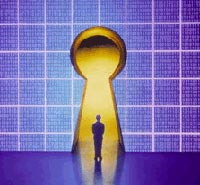 Create sure passwords in 4 steps 1. Think of it as a sentence that you can remember as ' My son was born in 2000 '. It is an easy to remember phrase for you. 2. Take the first letter of each word of the sentence to create a new word. Using the example above you will get: ' cttsn2 '. 3. Certainly by mixing them by using a combination of uppercase and lowercase letters with the same numeric characters. For instance,: ' CtTsN2 '. 4. Finish, you can replace special characters like letters, to make the password more solid. For instance, a -> @, o-> 0, s -> $. Keep your password secret 1. Do not give them to friends or family members (especially young children) who can give passwords to other unreliable individuals. 2. Do not record passwords on the desk. If detected, others will easily access your computer to steal. 3. Never provide your password on email, even if a real company or individual requests it. 'Phishing' scammers can use a phishing email to entice you to reveal your username and password and criminals can access your account, steal your identity and many things. other. 4. Change passwords regularly. Ideally, you should create new strong passwords for you every month. 5. Do not use the same password for many different accounts. You should create a new, secure password every time you open a new account. 6. Never activate password memory (Save Password). Phan Anh Chuyen
FAQ
What is Password Protection Before a Thief?
A password will certainly help against information infringement, pretend and withdraw money from your account by intentional hackers and thieves.
Why is Password Protection Before a Thief important?
A clear understanding of Password Protection Before a Thief helps you make informed decisions, avoid common mistakes, and use the relevant tools or techniques more effectively.
How should beginners approach Password Protection Before a Thief?
Start with the fundamental concepts, follow the examples step by step, and test each change in a safe environment before applying it to important systems or data.
Related Articles
 Thief Simulator: Tips to Become a Professional Thief6 minutes read
 Use Images Instead of Passwords - Should I Use Them?5 minutes read
 Online Password Protection5 minutes read
 How to Set USB Passwords for Data Protection10 minutes read
 Champions Will Carry a Good Team If They Have the Gloves of Thief7 minutes read
 Line: How to Add a Password to a. Bat File4 minutes read
Reader Comments 0
Sign in with email or Google to join the discussion.