Table of Contents
This guide provides a clear, practical overview of Microsoft confirms the 21H1 update on Windows 10, with useful context, important details, and straightforward takeaways for everyday readers.
Notable change in updating Windows 10
Microsoft is currently following a roadmap to release two feature updates for Windows 10 in a year. In particular, the larger release, containing more background changes, is usually released between April and May. While the smaller release, mainly aimed at tweaks aimed at Improved user experience and stability, usually launched in the second half of the year (around October-November).
However, starting next year, Microsoft will completely change its plan to roll out major Windows 10 updates during the year. The minor feature update will be released in April or May, while a larger update with brand new features will be released in the fall (around October - November) - i.e. is the opposite of the current roadmap.
In a newly released support document, Microsoft confirmed for the first time that the next major update after version 20H2 will be "Windows 10 21H1". So in theory, Windows 10 21H1 released in early 2021 will be a minor update, followed by Windows 10 21H2 - a major feature update - to be released in the fall.
What's new in Windows 10 21H1?
The Redmond Company has also 'revealed' some of the major additions that will be featured in this update.
First is the Transportation Layer Security (TLS) 1.3 support that reduces latency, improves the performance and security of web connections made for Windows 10. Comes with a few improvements and features. other small functions. For example, the dark background interface for results pages in Windows Search. Especially the emergence of DNS over HTTPS (DoH) that enhances privacy and security.
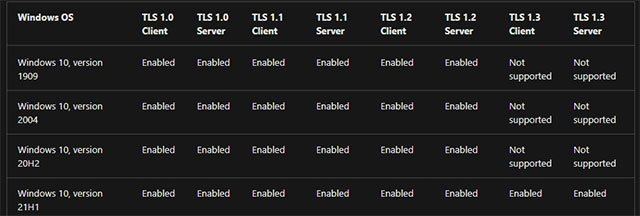
DoH is disabled by default in Windows 10, but you can configure it via the Networks tab in the Settings app. Or you can also enable the feature directly in your web browsers, such as Chrome, Edge, or Firefox.
Currently, Windows 10 test builds are no longer tied to specific feature updates. Therefore, it will be difficult to know when and what features will inevitably appear on Windows 10 in the next 12 months.
According to sources, Microsoft will begin testing Windows 10 21H1 (Build 19043) with Insider users in the Release Preview Channel in January or February 2021. Although plans can always change, version 21H1 is currently is expected to start rolling out as a support pack in May 2021.
Key Takeaways
Use the information above as a practical reference for Microsoft confirms the 21H1 update on Windows 10. Review each step carefully, confirm any requirements, and choose the option that best fits your situation.
FAQ
What does this guide explain about Microsoft Confirms the 21H1 Update on Windows 10?
It explains the main concepts, practical considerations, and useful steps related to Microsoft confirms the 21H1 update on Windows 10 without requiring advanced knowledge.
Who can benefit from learning about Microsoft Confirms the 21H1 Update on Windows 10?
This information is useful for readers who want a clear overview, practical guidance, and reliable steps related to Microsoft confirms the 21H1 update on Windows 10.
What should I check before applying this information?
Review the requirements, confirm that your device, software, or situation matches the instructions, and back up important data before making major changes.
Related Articles
 Microsoft Starts Automatically Updating Windows 10 2004 to3 minutes read
 How to Download Windows 10 21H1 Installer to USB4 minutes read
 How to Download Windows 10 21h14 minutes read
 Windows: Complete Guide: Windows 10 21H2 Is Now Widely Available4 minutes read
 Microsoft Released the Windows 10 Iron 21H1 Update on the Windows Insider3 minutes read
 Windows Insider: How to Get the Windows 10 21H1 Update3 minutes read
Reader Comments 0
Sign in with email or Google to join the discussion.