Table of Contents
See how a sewing machine locks two threads together, how Panama Canal locks lift a ship, and why a dog’s tongue pulls up a column of water. Each image or animation shows something to look for, from a hidden part in a machine to the movement that creates a traffic jam.
Tools and manufacturing
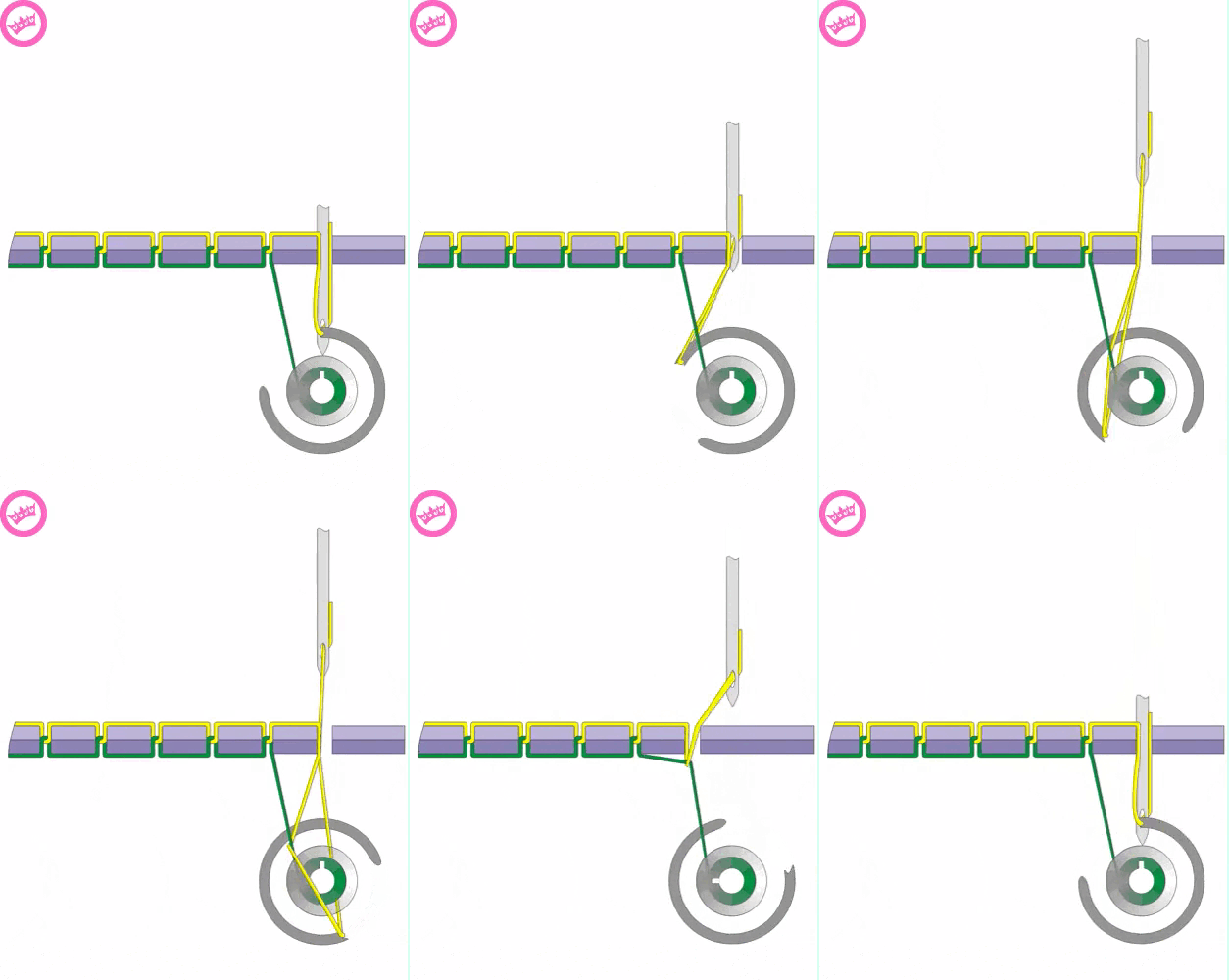
A sewing machine’s lockstitch
Watch below the fabric. A hook catches the loop made by the needle thread and carries it around the bobbin thread. The two threads lock together in the fabric.
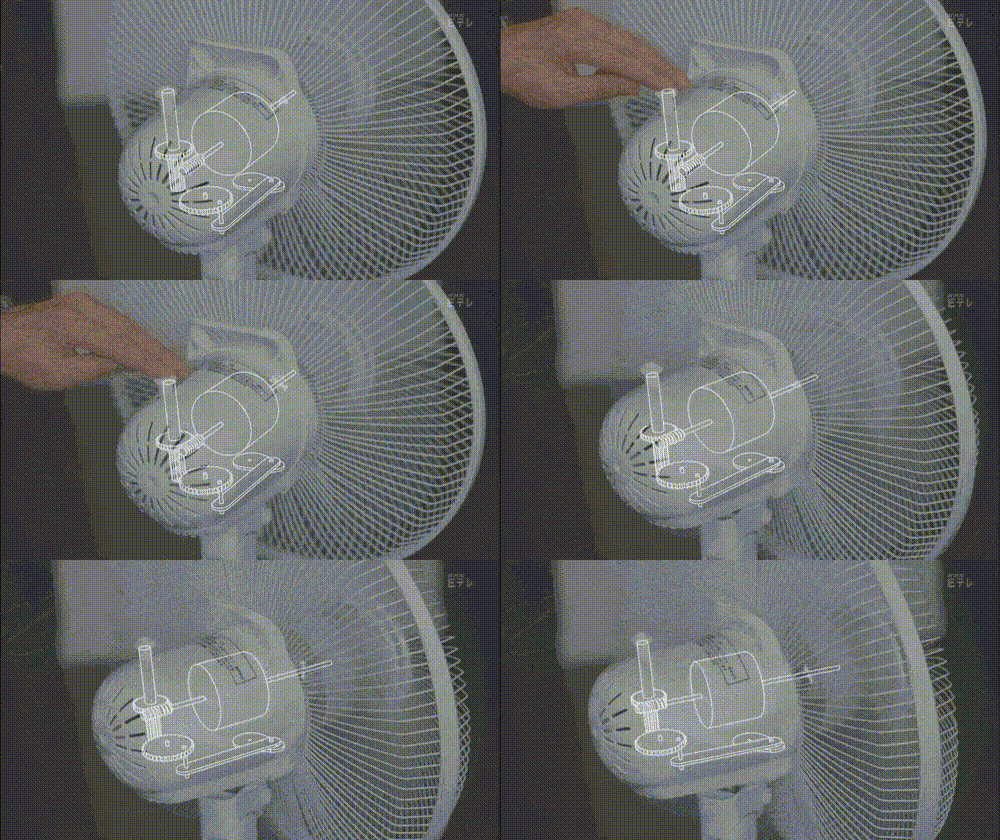
A fan’s oscillating head
The oscillation mechanism turns continuous motor rotation into a repeated sweep. The fan head reverses direction at each end of the sweep.
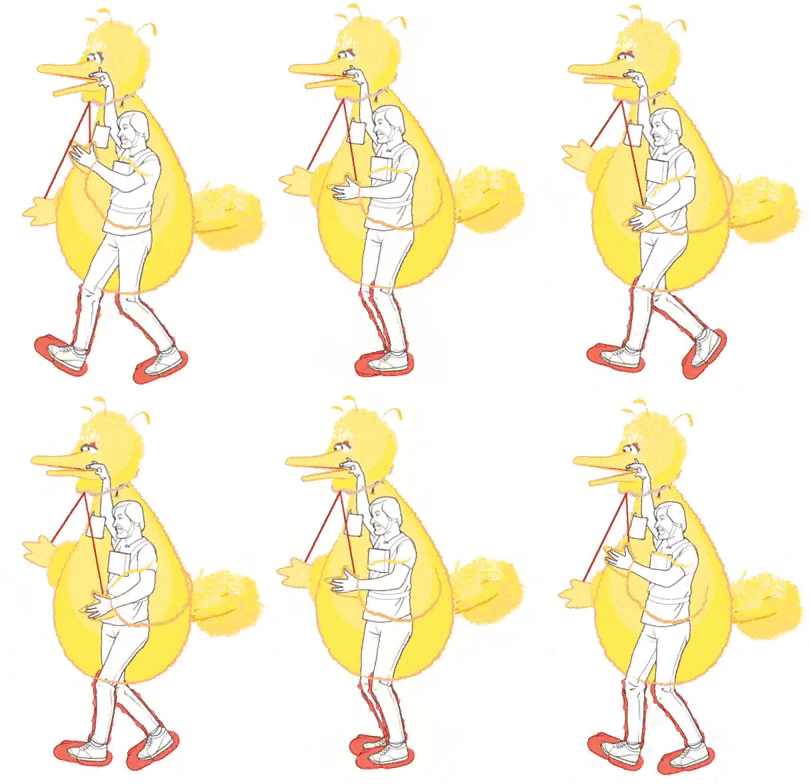
A bird puppet
The puppeteer uses small movements to make the head and body react separately. Look at the way those movements combine to make the bird appear to respond.
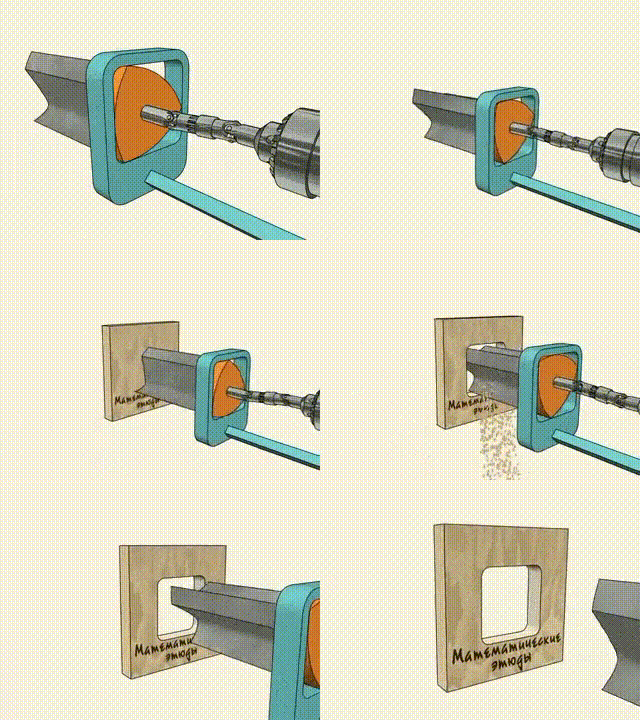
A drill that cuts an almost-square hole
A shaped cutter turns while its center moves within a guide. That motion traces four sides with slightly rounded corners. See an engineering explanation of the geometry.
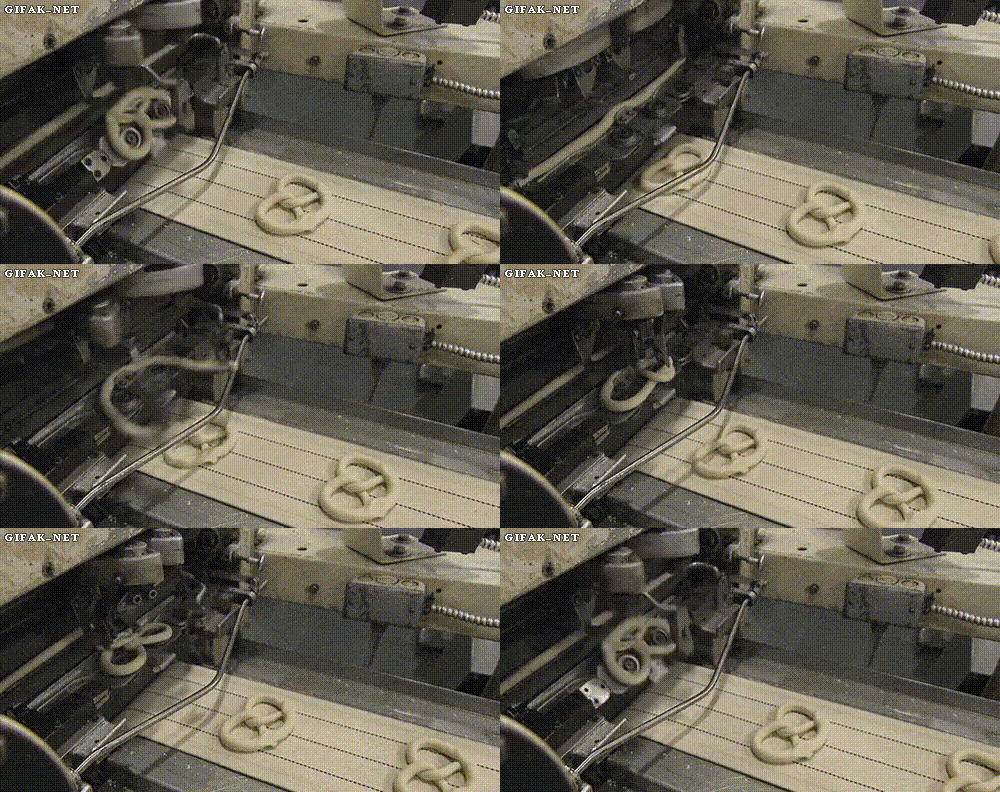
A machine twists a pretzel
The mechanism repeats the same twist for each length of dough. The starting length and position help determine whether the two ends meet in the right place.
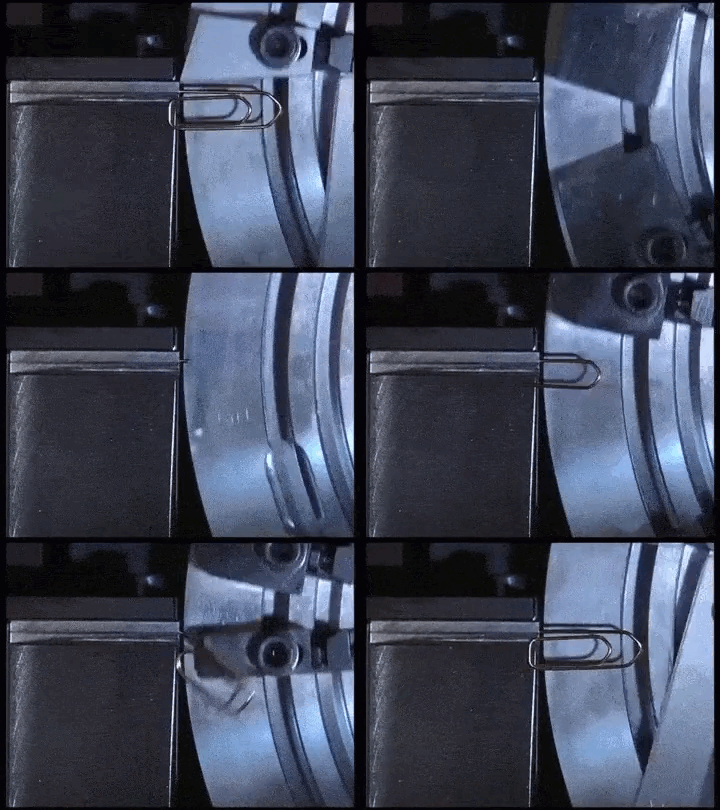
Wire becomes a paper clip
The machine feeds a length of wire through successive bends. Each bend forms a different part of the clip before the finished piece is released.
A soft-serve swirl
The soft serve comes out in a continuous ribbon. The position and movement of the cone determine how the ribbon stacks and tapers.
Forming a clothes hanger
Watch how the wire is bent to produce the shoulders and the hook. Repeating the same sequence gives the hangers a consistent shape.
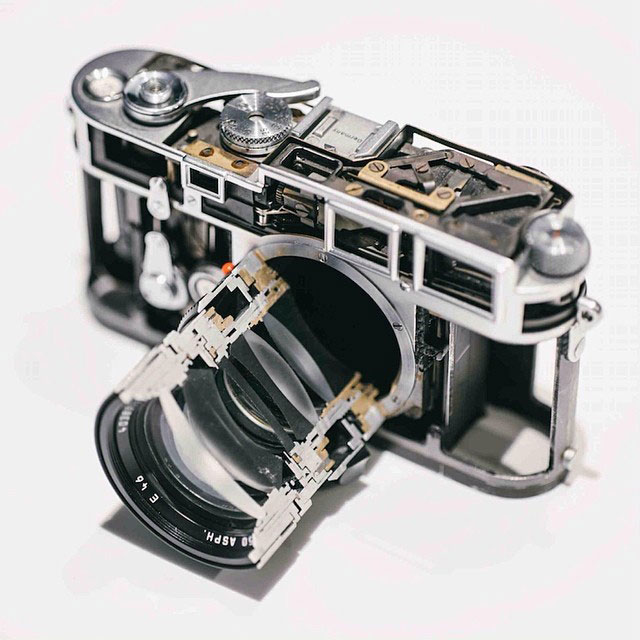
Inside a film camera
The lens focuses light onto the film. The shutter controls when the film is exposed, and the transport mechanism advances it to the next frame.
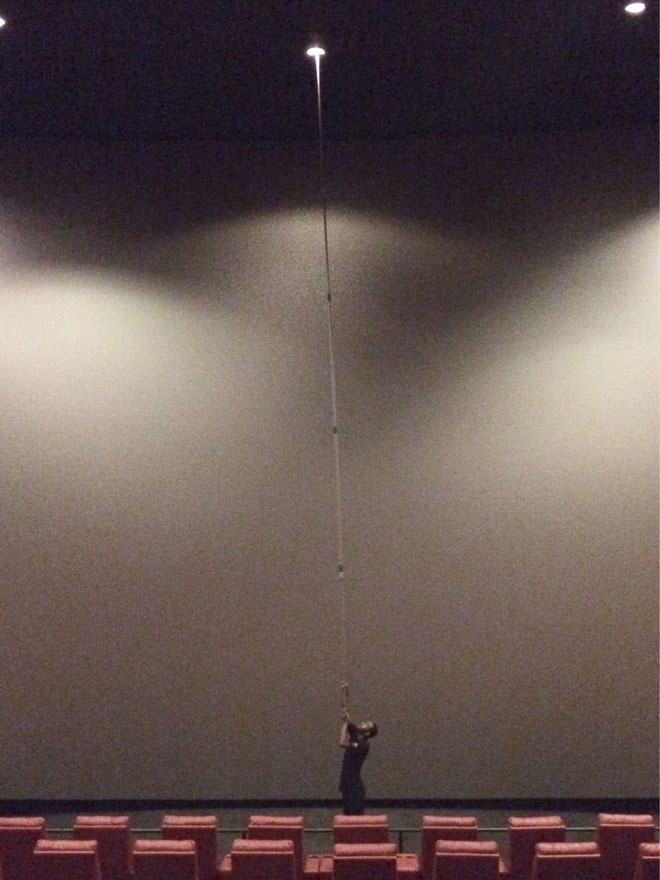
Cinema projector maintenance
Large-format projection equipment can require dedicated access and trained staff. The photo shows the scale of maintenance behind a cinema screen.
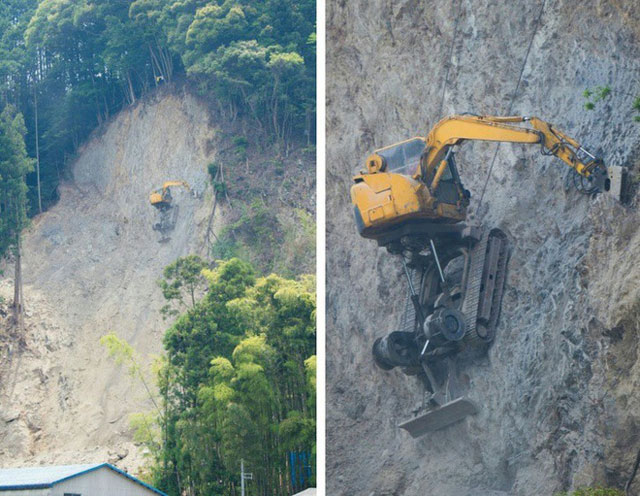
Where an excavator gets leverage
Hydraulic cylinders move the arm and tilt the bucket around joints. The bucket’s force changes as the arm extends and the linkage angle shifts.
How a key turns a cylinder lock
The cuts in the matching key position components inside the cylinder so the plug can turn. That rotation moves the lock mechanism.
How woven cloth is made
Lengthwise warp threads are held in place. A crosswise weft thread passes through gaps in the warp, interlacing the threads into fabric.
Cutting pasta to length
Once a machine forms the pasta, a cutter divides the continuous output into portions. The timing of the cut helps keep the pieces the same length.
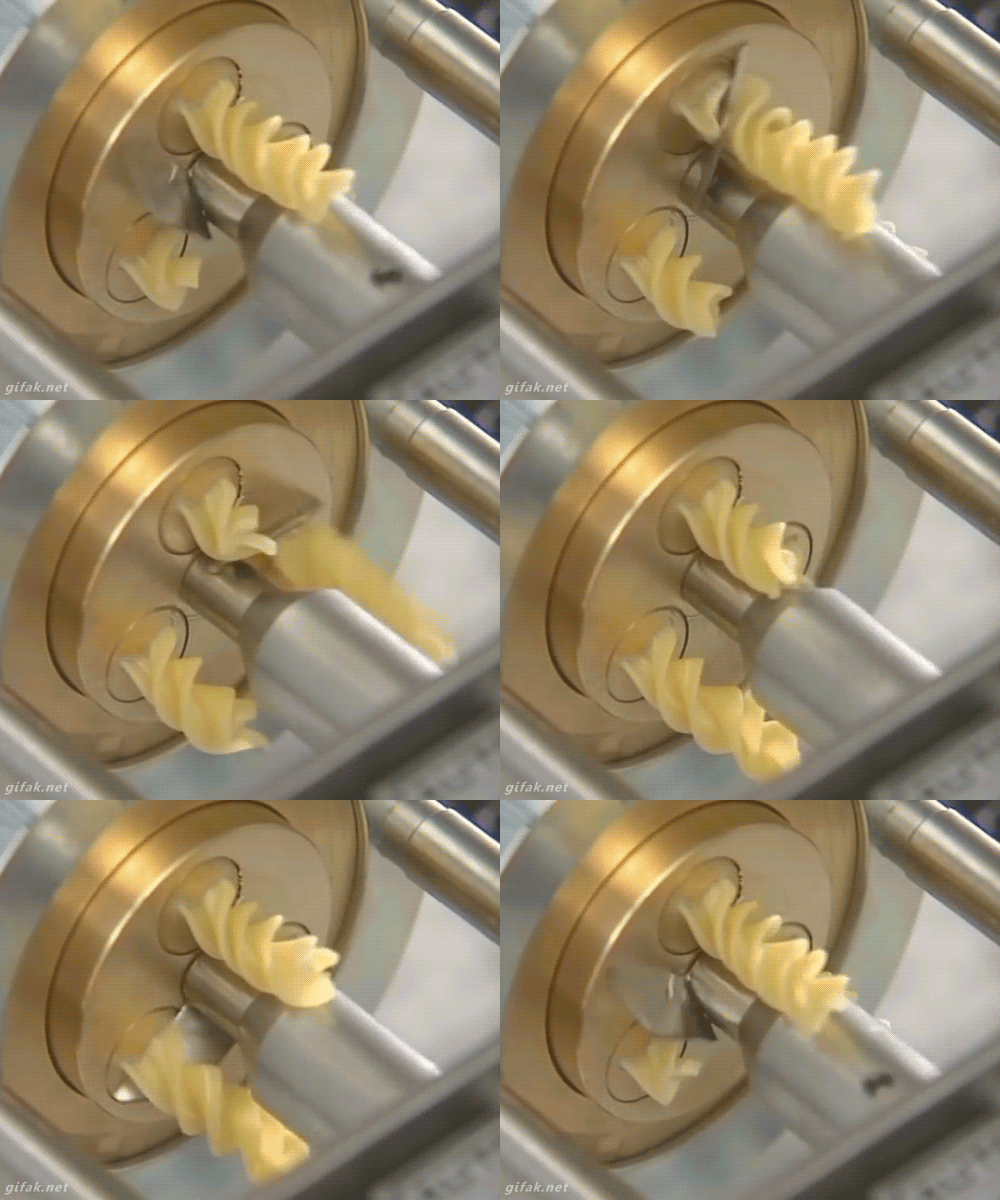
How pasta gets its shape
Dough can be rolled and cut or pushed through a shaped opening. The forming step determines the profile, and the cutting step determines the length.
Shaping plates in repeatable batches
A form or mold gives each plate a consistent outline. Watch how the shape emerges before the finished surface is added.
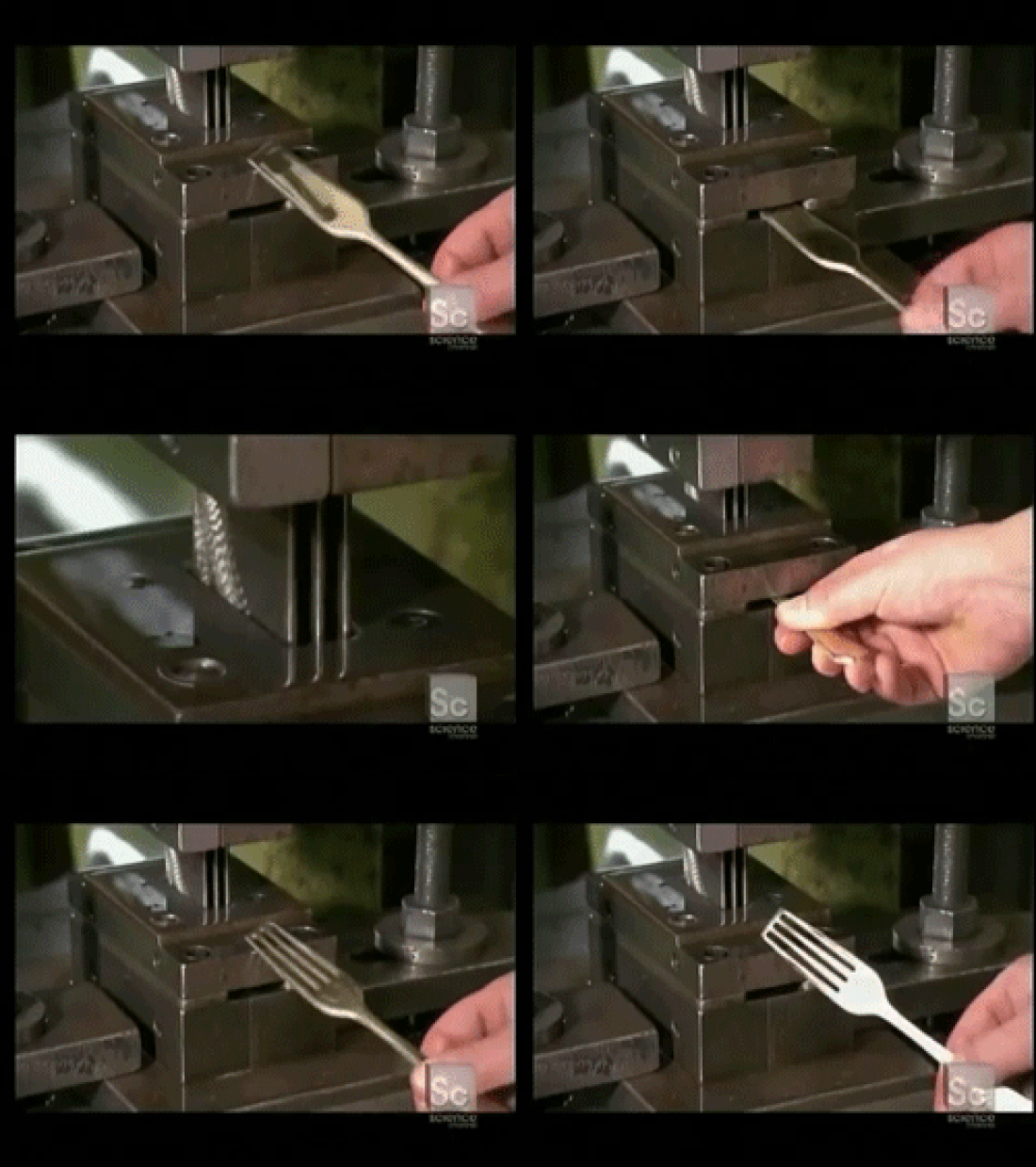
Maps, transport and infrastructure
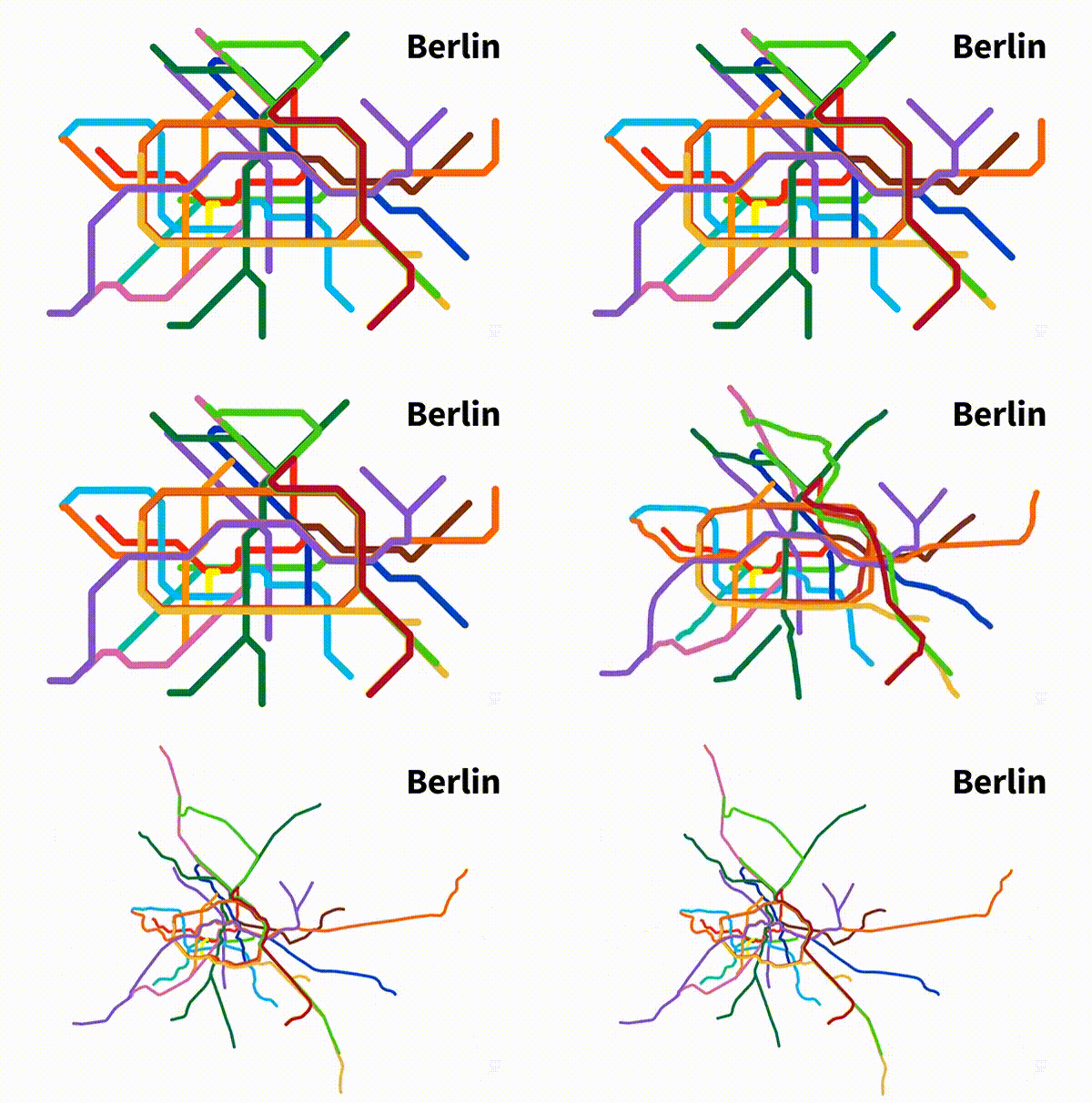
Berlin’s transit map
The diagram straightens routes and simplifies distances. Use it to follow station order and transfers. Use a geographic map when you need to know how far two stations are apart.
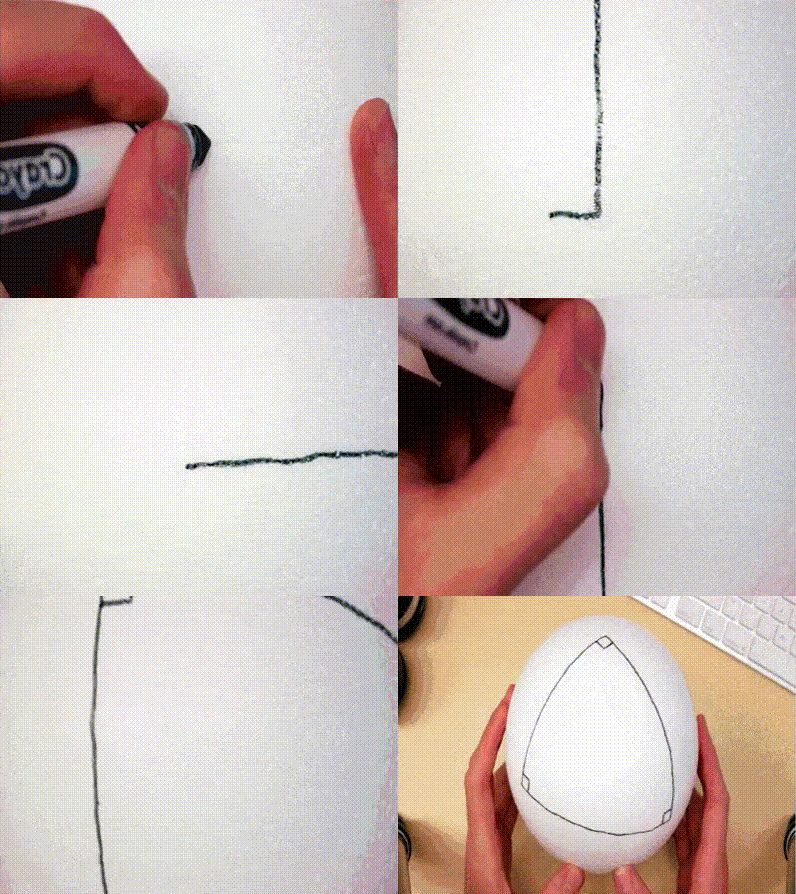
Right angles on a globe
Follow two meridians a quarter turn apart and join them along the equator. The resulting spherical triangle has three right angles.
Wi-Fi coverage in a home
Signal strength changes with distance, walls and router placement. To find weak spots in your own house, map the signal room by room before testing a different router location.
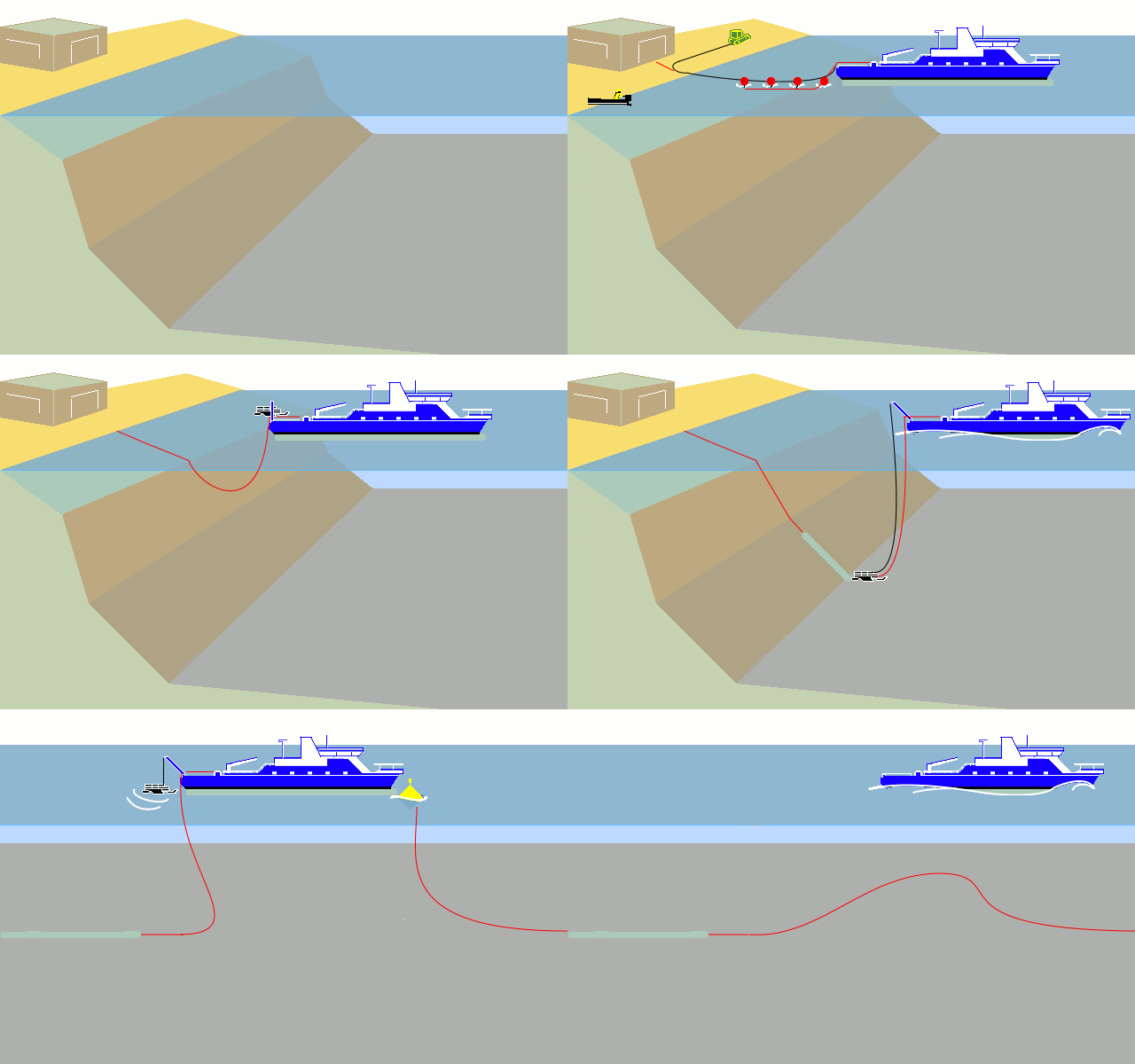
Laying an undersea cable
A cable ship pays out cable as it moves along a planned route. How the cable is protected depends on the seabed and whether ships or fishing gear could disturb it.
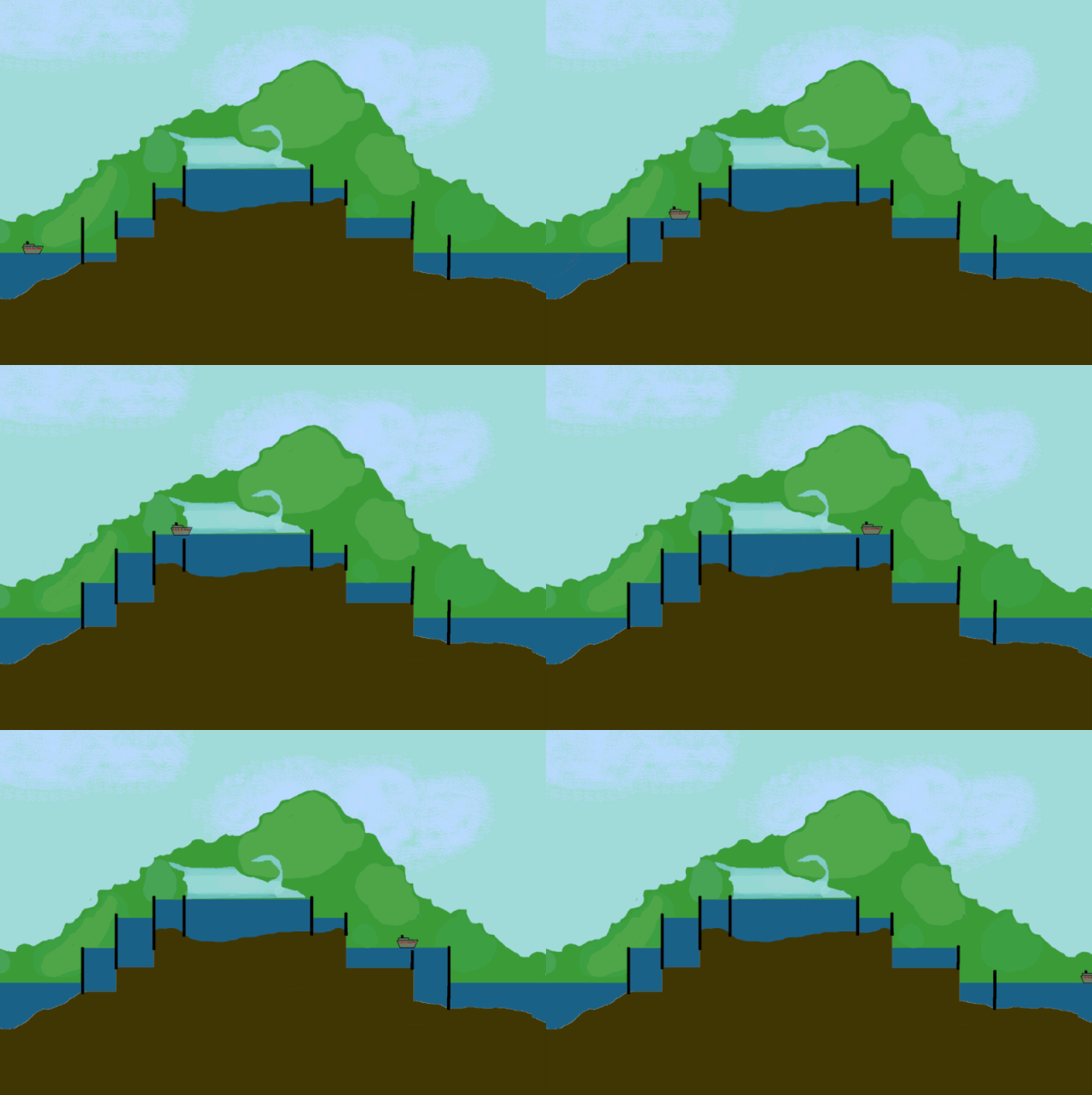
A ship crosses the Panama Canal
A lock raises or lowers a floating ship by changing the water level inside a chamber. The Panama Canal Authority explains how the locks connect the oceans with Gatun Lake.
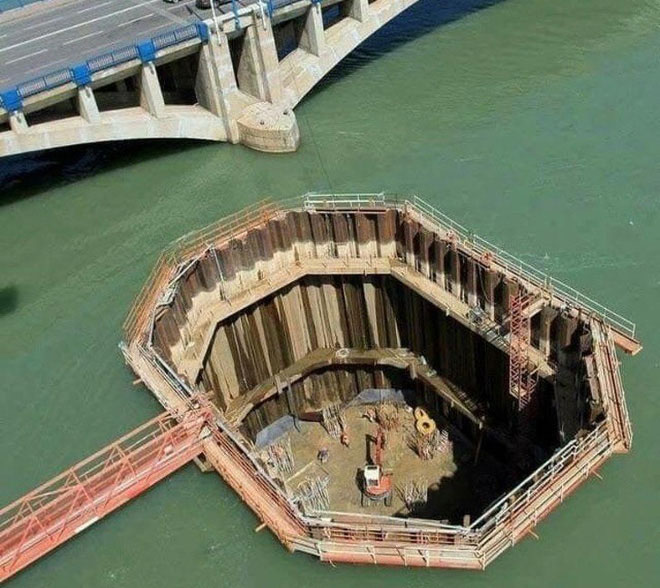
Work around a river structure
The photo brings an often hidden part of river work into view. Look at how the supports sit in relation to the waterline.
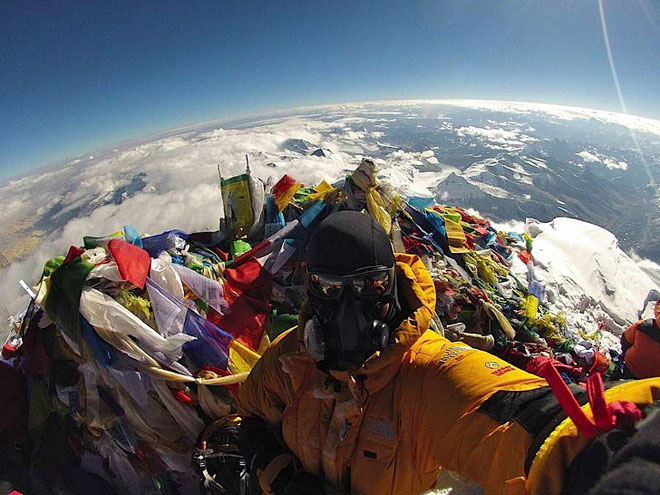
Everest and the waste left on climbing routes
Supplies must be brought up and waste carried down. The difficulty of moving gear at altitude helps explain why removing waste takes a separate effort.
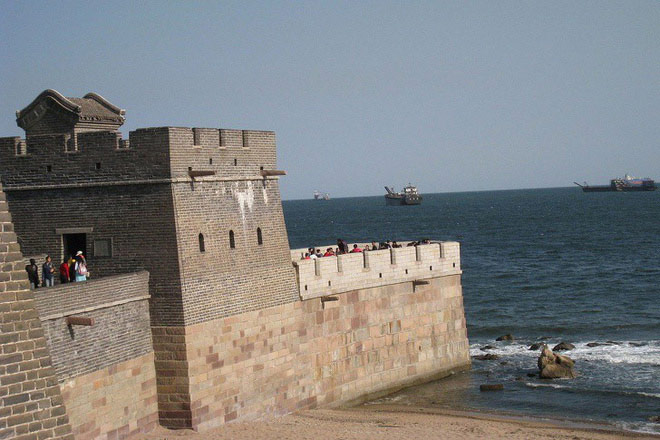
The Great Wall meets the sea
The Great Wall includes multiple stretches. The coastal section at Shanhaiguan meets the Bohai Sea at a place known as Old Dragon’s Head.
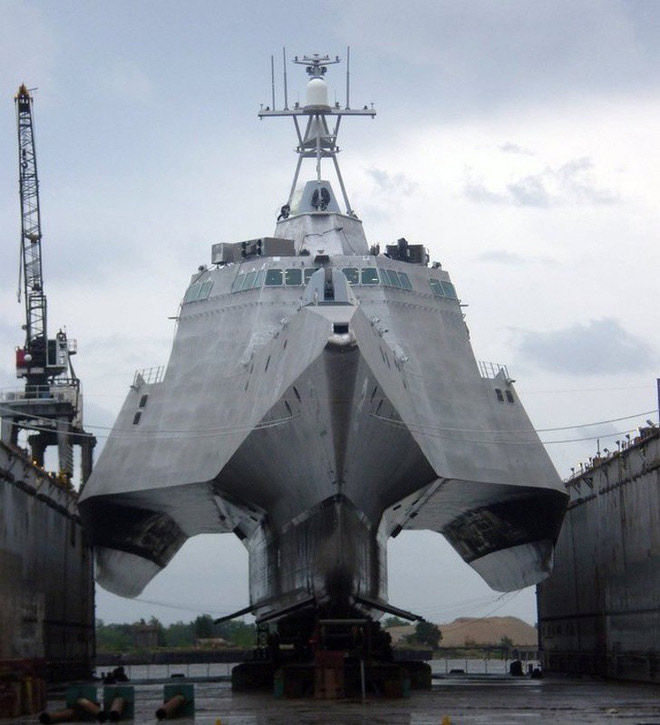
A ship before launch
A vessel can look very different while it is supported ashore or in dry dock. Launching gets the hull afloat. Fitting out and trials can continue afterward.
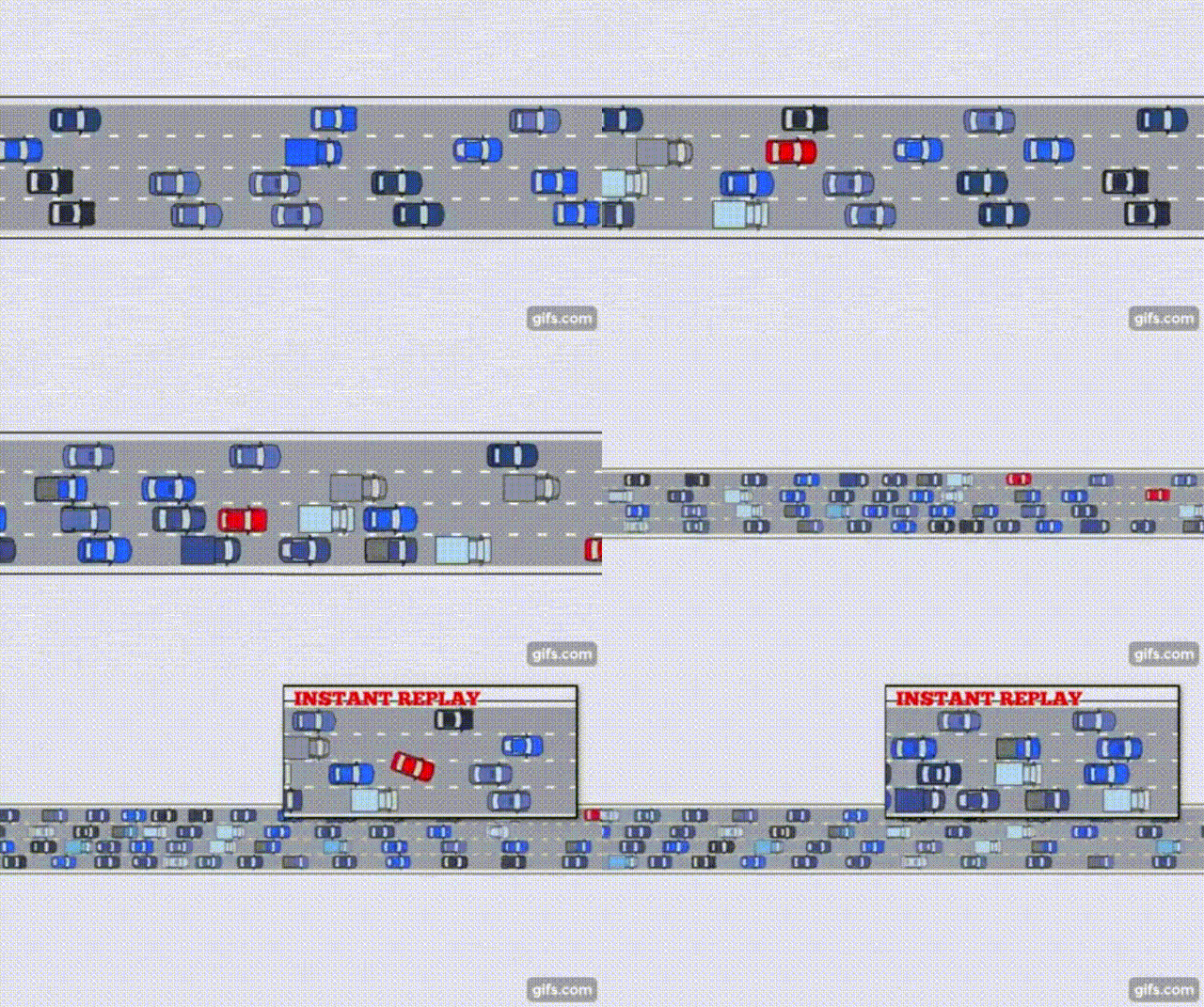
How braking can create a traffic jam
When one driver slows and those behind brake in response, the slowdown can travel backward through a line of cars. A queue can form even without a crash or blocked lane.
What changing gear does
A gearbox selects different ratios between the engine and the driven wheels. Lower gears provide more wheel torque for starting. Higher gears let the engine turn more slowly at a given road speed.
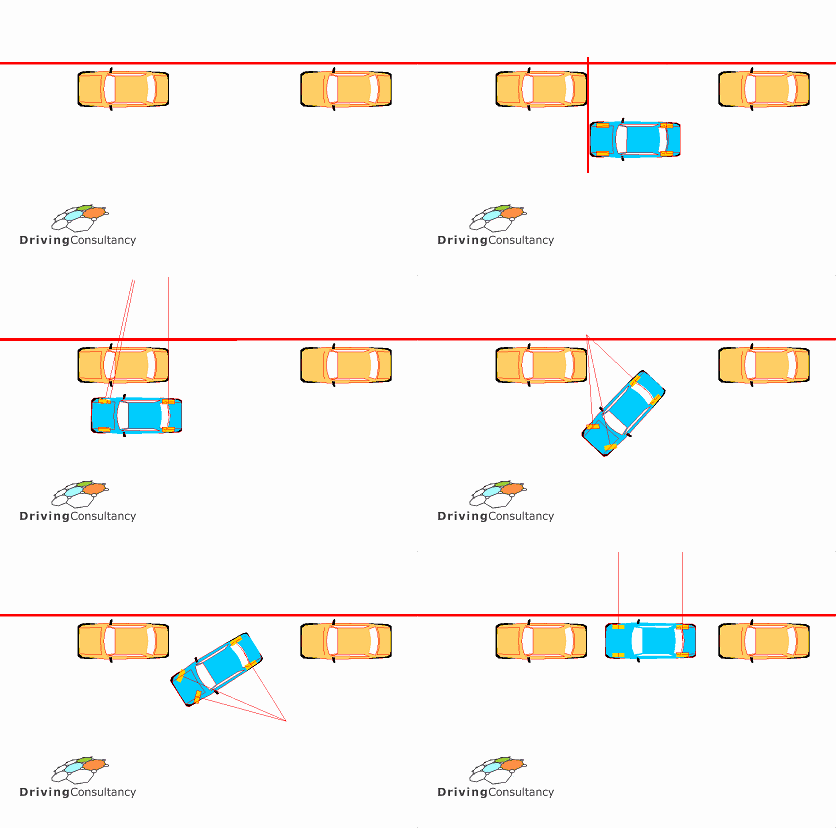
How a car swings while parking
The animation helps show why the front of a car swings outward as the rear moves into a space. Leave room for the front corners and check for people and traffic around the car.
Bodies, animals and plants
A tattoo needle in motion
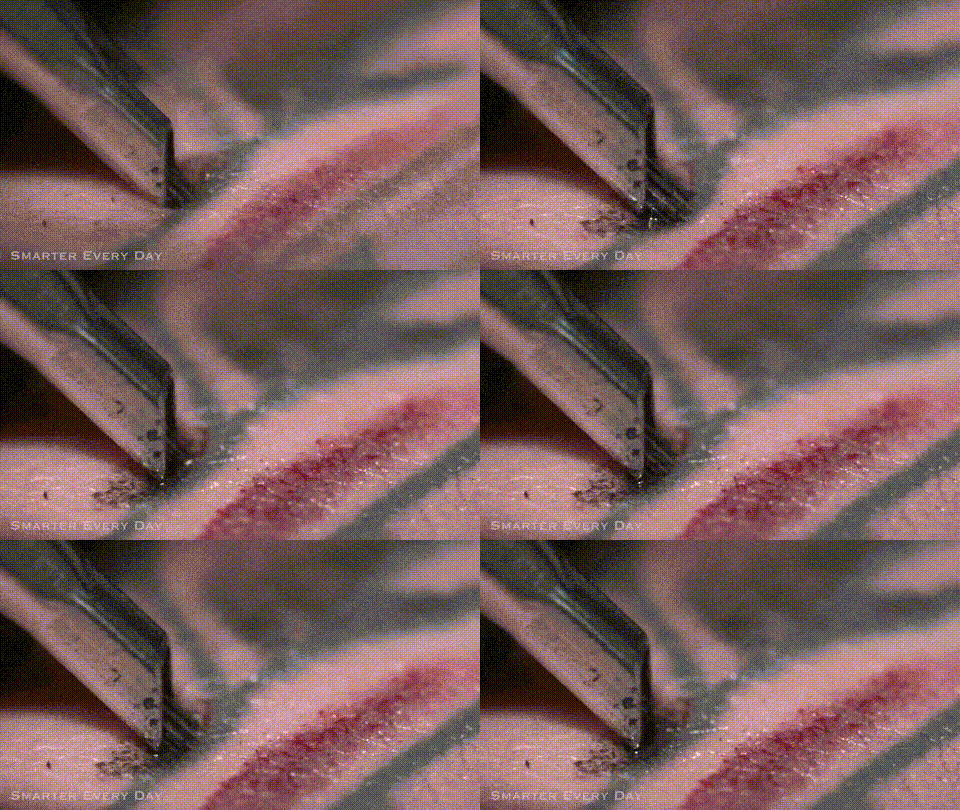
The close-up shows repeated needle movements as pigment is deposited under the skin. The movement is much faster than the artist’s hand moves over the design.
Tooth movement in time-lapse
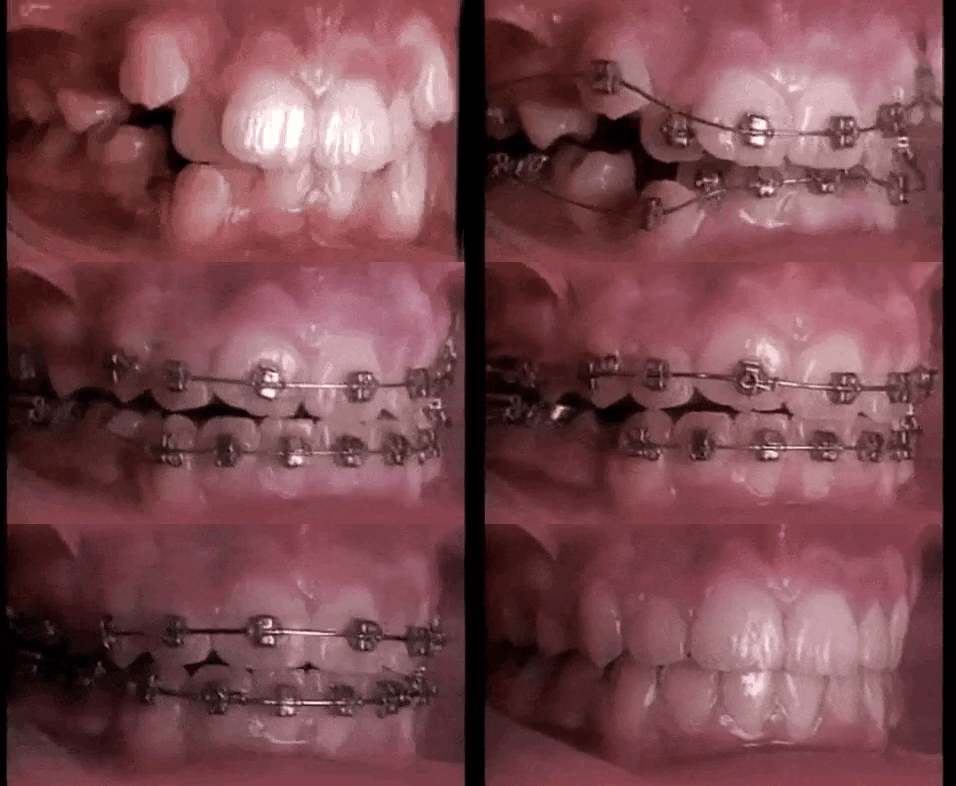
The sequence compresses a gradual change into a few seconds. The speed of the animation should not be taken as a treatment timeline.
How an ant walks
Look at which legs remain on the ground as the others move. The pattern gives the ant several points of support while it advances.
The legs beneath an owl’s feathers
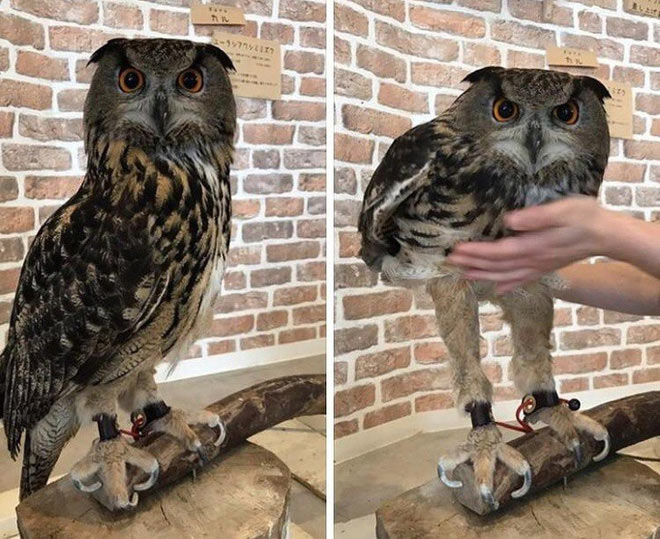
Feathers hide much of an owl’s legs, and a perched posture can make them look shorter still. How much is visible depends on the species and posture.
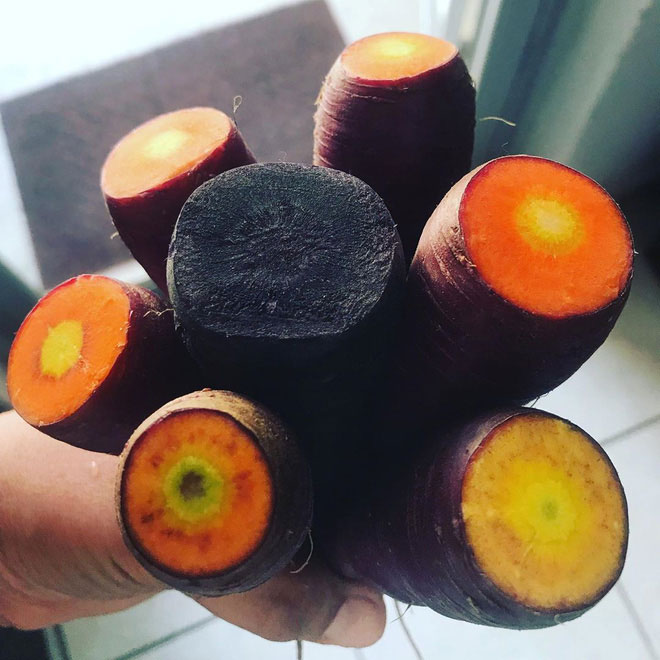
Carrots of different colors
Carrot flesh can be orange, white, yellow, red or purple depending on the variety. A purple carrot can have a lighter core, but its center is not always orange.
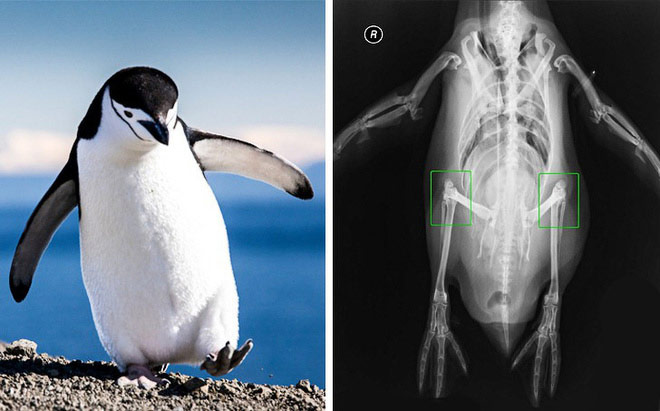
A penguin’s hidden knees
A penguin has knees. Much of each leg sits within the outline of its feathered body, so the lower leg and foot are the parts you usually see.
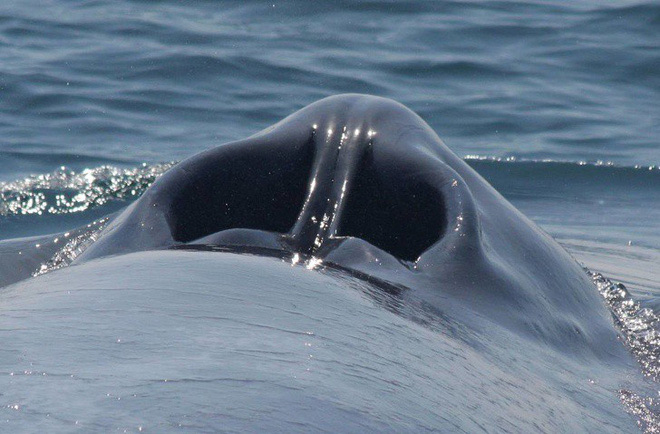
A whale’s blow
A whale exhales through its blowholes when it surfaces. The visible plume includes droplets and condensed moisture. It is a breath, rather than a jet of seawater from the lungs.
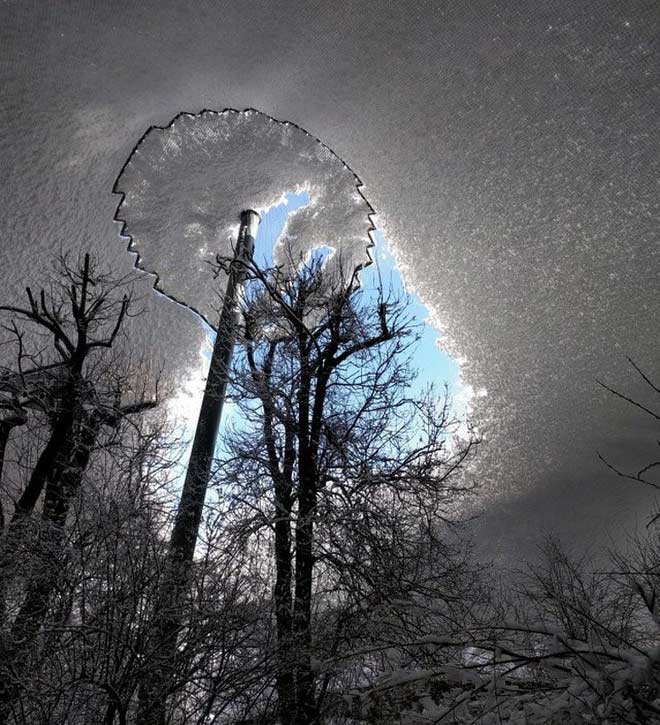
Snow resting on treetops
Snow collects where branches can hold it. Temperature, wind and the weight of new snow determine how long it stays in place.
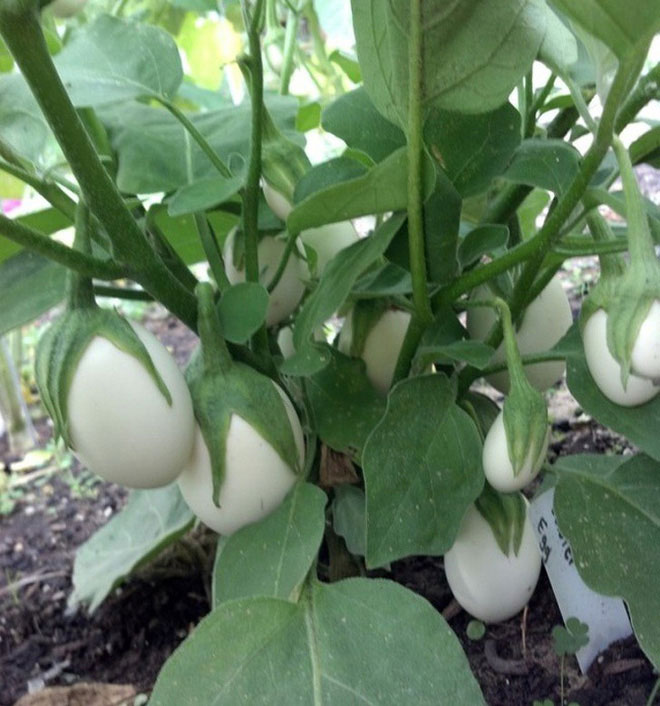
Why an eggplant can look like an egg
Some eggplant varieties bear round, pale fruits. Their shape makes the English name easier to understand, even if you usually see long purple varieties.
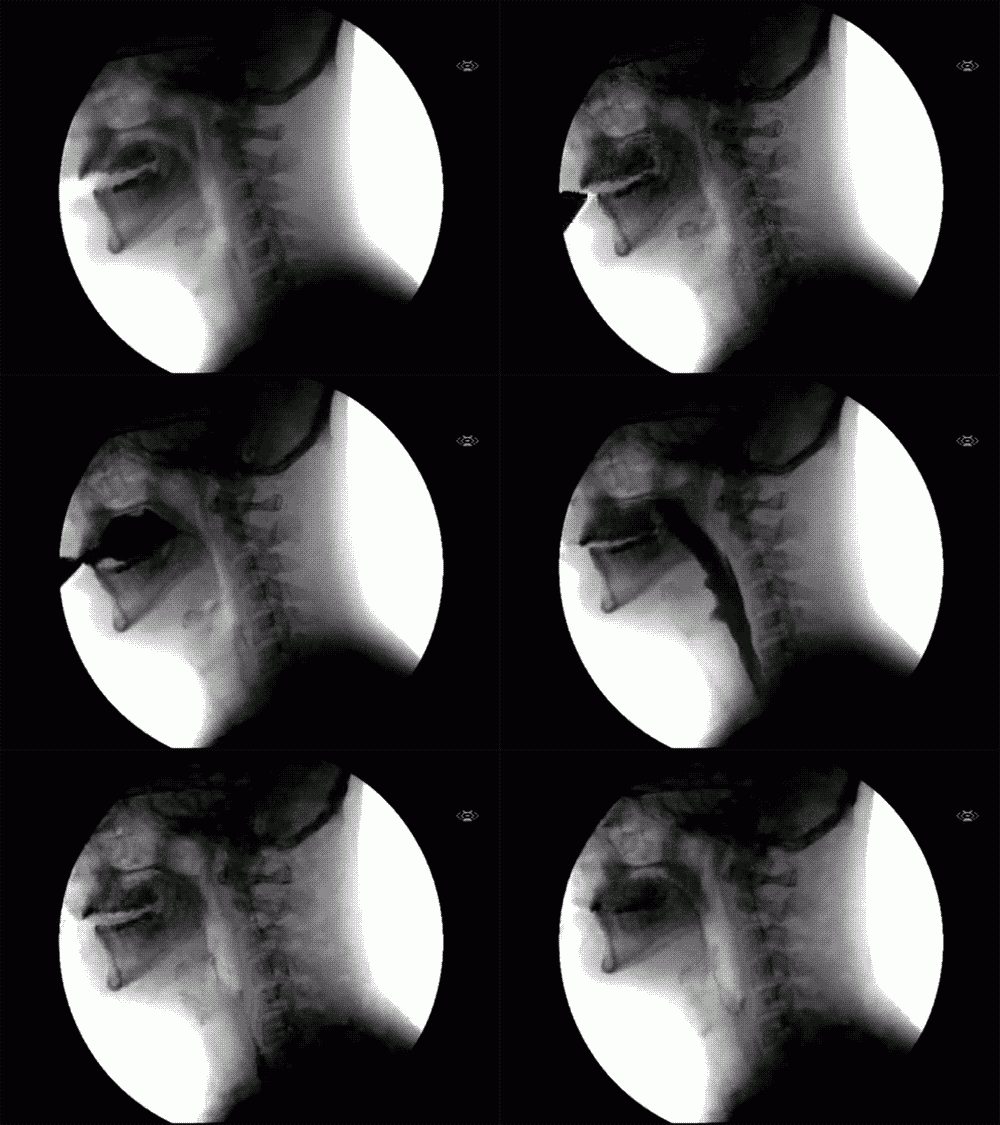
How a swallow reaches the stomach
Muscles in the esophagus contract in sequence to move swallowed material downward. This coordinated motion is called peristalsis.
How a dog lifts water with its tongue
A dog pulls its tongue upward and draws up a short column of water. The jaws then close around part of that column.
Lapping seen on X-ray
The second view shows motion inside the mouth. High-speed studies of dog lapping explain how the timing of tongue movement and the bite helps trap water.
Everyday comparisons
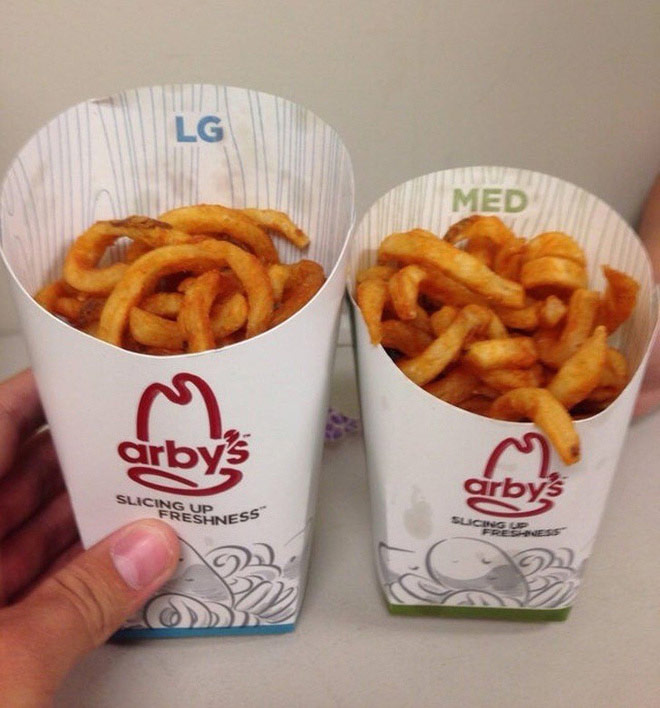
Comparing takeaway portions
An image of two packages cannot establish that all medium and large portions are the same. Compare the actual weight or volume if you want to know whether the upgrade adds food.
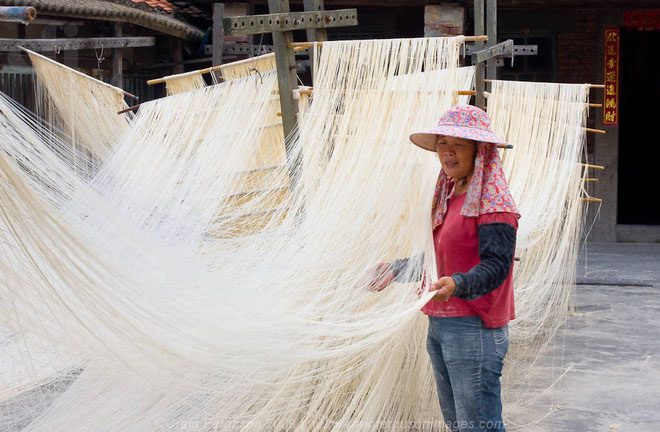
Thin noodles before cooking
Fine strands can resemble a bundle of threads before they are portioned or dried. Compare the strands’ shape and thickness rather than relying on how they look at first glance.
Related Articles
 23 interesting images of the bedroom space of people all over the world
 Interesting facts few people know about famous buildings around the world
 90% of the world population does not know the mysteries in these famous works
 This bread cutter and photo splitting procedure will show you how the digital photo is edited
 30 surprising facts in the world surprise both 'smartest' people
 Top 20 most interesting websites in the world
Reader Comments 0
Sign in with email or Google to join the discussion.