Table of Contents
Learning how to overclock GPU to optimize computer performance doesn't have to be complicated. This updated guide presents a clear workflow, practical checks, and troubleshooting advice you can use while completing the process.
Key Takeaways
- Review prepare before overclocking GPU.
- Explore GPU overclocking guide.
- Understand GPU overclocking test.
Prepare Before Overclocking GPU
1. Determine the specifications
First, you need to determine the specifications of the GPU. You can use Speccy software to check the specifications of the graphics card. => Download Speccy to your computer here. This helps you do this.
2. Update GPU driver
Once you have determined your specifications, you will need to update your GPU drivers. Depending on the graphics card you are using, you can choose one of the following software:
- Use GeForce Experience for Nvidia GPUs. - Use AMD Driver Autodetect for AMD GPUs.
GPU Overclocking Guide
Parameters:
- Core Voltage: This parameter measures the GPU voltage. Increase this value before overclocking, it can be increased to the maximum level, as long as the PSU (computer power supply) is capable of handling it.
It's time to replace the power supply with a larger capacity if the initial GPU voltage is close to the maximum PSU voltage.
- Core / Shader Clock: These parameters are often linked together, affecting system performance. This guide recommends that you adjust this parameter after overclocking to +25. - Memory Clock: Each adjustment increases the value by +50 until the system starts to have problems, and do it before the core clock. - Fan Speed: Finally, adjust the fan speed. You can customize the Fan Speed on the Afterburner software by clicking the Auto button.
Finally click Save and save as Profile 1. In case something goes wrong, you can go back and adjust the values.
Overclock, then click Save and save as Profile 2. Do not close Afterburner yet and continue overclocking.
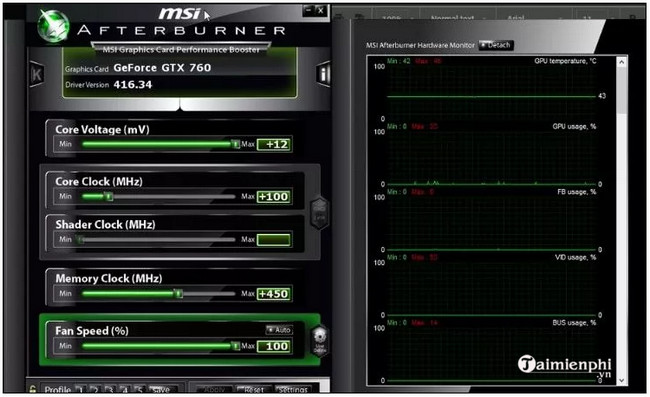
GPU Overclocking Test
There are two ways to test GPU overclocking, the first is to stress test the GPU and see what happens. The other is to try to start a game and see if there are any problems, if the game runs smoothly on the system.

You can reduce the Core Voltage and Memory Clock values until your computer is stable if your system is unstable after overclocking. Then, adjust the parameters step by step to find the optimal GPU overclocking configuration.
Don't forget that overclocking isn't just limited to the GPU. You can also try overclocking your computer's RAM to improve overall system performance, helping your computer handle tasks faster.
Final Thoughts
The most reliable way to handle overclock GPU to optimize computer performance is to follow the process in order, verify each important setting, and test the result before moving on. Use the guidance above as a practical reference, then adjust the details for your device, software version, or specific goal.
FAQ
What should I check before I overclock GPU to optimize computer performance?
Use the latest available software, confirm that your device meets the requirements, and make sure you have the necessary permissions, account access, or backup before changing anything.
Why might I be unable to overclock GPU to optimize computer performance?
Common causes include outdated software, missing permissions, incompatible settings, incomplete setup steps, or a temporary network problem. Recheck the process from the beginning and restart the app or device if needed.
Is it safe to overclock GPU to optimize computer performance?
It is generally safe when you use official tools, review every permission, and back up important data before making system-level or account-level changes.
Related Articles
 Overclock CPU, GPU and RAM Easily and Safely8 minutes read
 GPU Overclock: Complete Guide4 minutes read
 Should Overclock to Increase Performance for Gaming PC?10 minutes read
 How to Safely Overclock Your CPU6 minutes read
 How to Overclock Computer RAM4 minutes read
 Increase Computer Gaming Performance - Speed up Your Computer to Improve5 minutes read
Reader Comments 0
Sign in with email or Google to join the discussion.