Table of Contents
This updated guide examines How to Open Csv Files and organizes the essential facts, background, and practical takeaways in clear American English.
Method 1
Microsoft Excel
 Launch Microsoft Excel on your computer.
 Click the 'File' menu and select 'Open'. This menu is in the upper left corner and will open a window to browse for files on your computer.
- You can also pressCtrl+O(Windows) or⌘Cmd+O(Mac) to perform the same action.
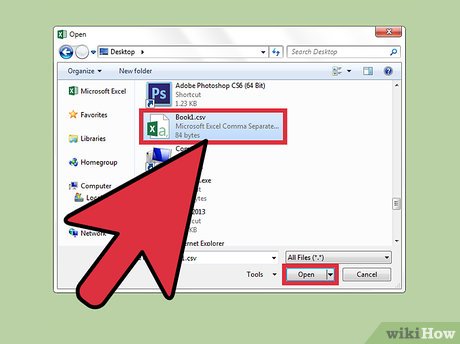 Select a CSV file and press 'Open'. The file will open and display in a new Excel spreadsheet.
 Click on the 'Data' tab to access the 'Text to Columns' wizard (optional). If Excel displays all text from the CSV file in a single column, this will allow excel to better parse the data. The Data tab is located in the top menu bar and will display a set of data-specific options.
- If you only want to split certain columns, click and drag the cursor to highlight the columns you want split.
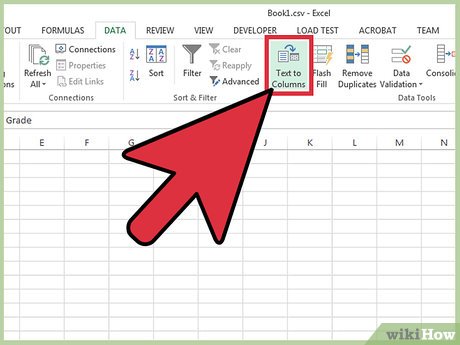 Click 'Text to Columns'. This button is one of the options in the data tab and will open the 'Text to Columns' wizard.
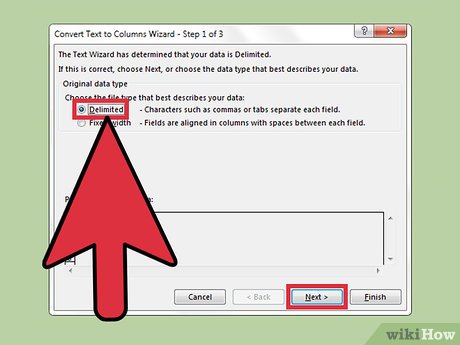 Select the 'Delimited' option, then click on 'Next. ' A delimiter sets a boundary between data points in a text file (in this case, the comma).[1]XResearch source
 Select the 'Comma' checkbox then click on 'Finish. ' All the text that was previously separated by commas will now be placed in separate, individual columns.[2]XResearch source
Method 2
OpenOffice Calc
 Download and openOpenOffice Calc. Select your operating system from the dropdown menu and press 'Download'. Run the installer and select which office The OpenOffice products you want to include in the installation. The only one you will need to open CSV files is OpenOffice Calc.
- OpenOffice is free software.
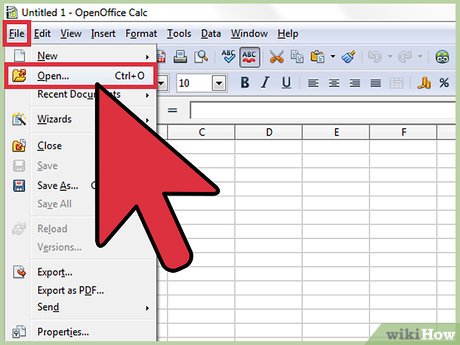 Click on the 'File' menu and select 'Open. ' This menu is in the upper left corner and will open a window to browse for files on your computer.
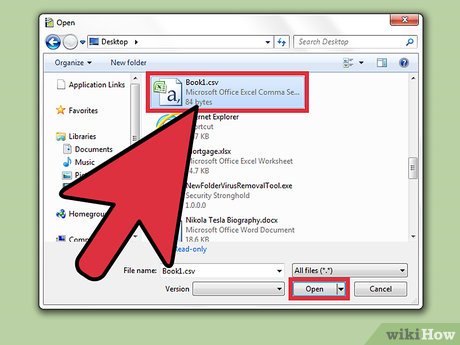 Select a CSV file and press 'Open'. The file will open in spreadsheet program OpenOffice Calc.[3]XResearch source
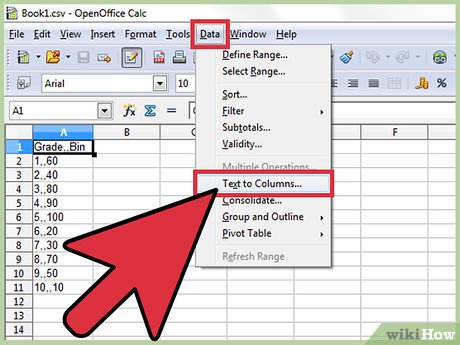 Click on the 'Data' menu and select 'Text to Columns' (optional). If OpenOffice calc is not properly separating the data, then you can set the delimiter yourself[4]XResearch source. The Data menu is located in the top menu bar.
- If you only want to split certain columns, click and drag the cursor to highlight the columns you want split.
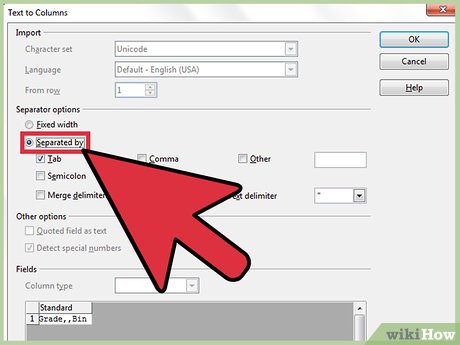 Select the 'Separate By' radio button. This is located under the 'Separator Options' header.
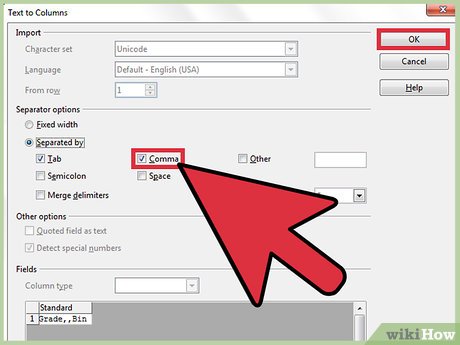 Select the 'Comma' checkbox then click 'OK'. All the text that was previously separated by commas will now be placed in separate, individual columns.[5]XResearch source
Method 3
Google Sheets
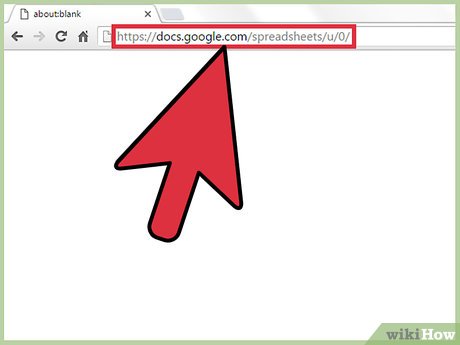 Go toGoogle Sheetsin your web browser and sign in with your Google account. Enter your username and password and press 'Sign in'.
- Google Sheets is free, but you must have a Google account to it. If you don't have a Google account, click on 'Create Account' and follow the on-screen prompts to create a Google username and password.
- Google Sheets can also be utilized through its parent product, Google Drive.
 Click on 'Open File Picker'. This button is represented by a folder icon and appears in the top right corner of the page. This will open the 'Open a File' window.
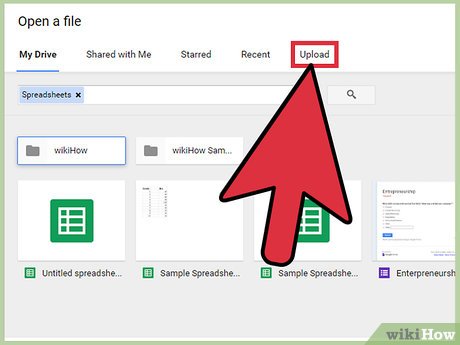 Click the 'Upload' Tab. This will take you to an interface to upload your CSV file.
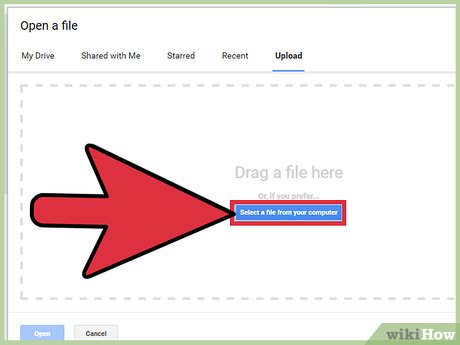 Drag and drop the CSV file into the upload window. A progress bar will appear once the upload has started.
- Alternately, you can click the 'Select file to upload' button in the middle of the upload window and browse for the CSV file on your computer.
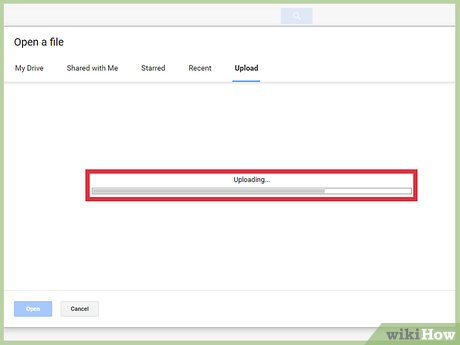 Wait for the CSV file to upload. When complete, the file will be automatically opened by Google Sheets.
- This process may take a few seconds to a few minutes depending on the size of the file.
- Google Sheets will automatically separate all data from CSV files with the comma delimiter.
FAQ
What is How to Open Csv Files about?
It provides a structured overview of file, explains the main context, and highlights practical takeaways for readers.
Why does this topic matter?
Understanding the main concepts helps readers evaluate the issue, avoid common mistakes, and make better-informed decisions.
How should readers use this information?
Use the guidance as a practical starting point, confirm details that may have changed, and follow current product, safety, or security recommendations.
Related Articles
 How to Open SWF Files: Clear Instructions6 minutes read
 How to Open RAR Files on Android Phones: Practical Guide5 minutes read
 How to Open Rar Files10 minutes read
 What Is a DAT File? How to Open DAT Files, How to Read DAT12 minutes read
 How to Open DAT Files: Practical Guide10 minutes read
 How to Fix Photoshop Error Can't Open RAW Files3 minutes read
Reader Comments 0
Sign in with email or Google to join the discussion.