Table of Contents
ChatGPT is the stronger choice for research, writing, coding, document analysis, and multi-step work, while Meta AI is especially convenient for quick help inside WhatsApp, Instagram, Facebook, and Messenger. Both can answer questions and create content, but the better option depends on where and how you plan to use an AI assistant.
Features, limits, and availability vary by country, device, account, and plan. Check the controls shown in your own app before choosing a service for a specific workflow.
Meta AI and ChatGPT at a glance
| Area | Meta AI | ChatGPT |
|---|---|---|
| Best fit | Fast assistance within Meta's social and messaging apps | General-purpose work, learning, research, coding, and content creation |
| Web information | Can retrieve current information where search is supported | Can search and cite web sources in supported modes |
| Images | Image generation and editing are integrated into supported Meta experiences | Image generation and editing are available, with limits depending on the plan |
| Voice | Voice features are available in supported apps and regions | Voice conversations are available, with capabilities depending on the app and plan |
| Files and data | Support varies by product and rollout | Strong support for documents, spreadsheets, images, and structured analysis |
| Custom workflows | Primarily designed around Meta products | Offers specialized tools, custom assistants, apps, and workspace features |
| Access | Built into several Meta apps and also offered as a standalone experience | Available on the web, desktop, and mobile |
Reasoning, writing, and complex tasks
For work that requires several steps—such as comparing sources, revising a long document, explaining code, or analyzing a file—ChatGPT generally provides the more complete workspace. Its file tools and specialized modes make it easier to keep source material, instructions, and revisions together.
Meta AI handles common questions, summaries, captions, and brainstorming well. Its main advantage is speed of access rather than a separate, feature-heavy work environment.
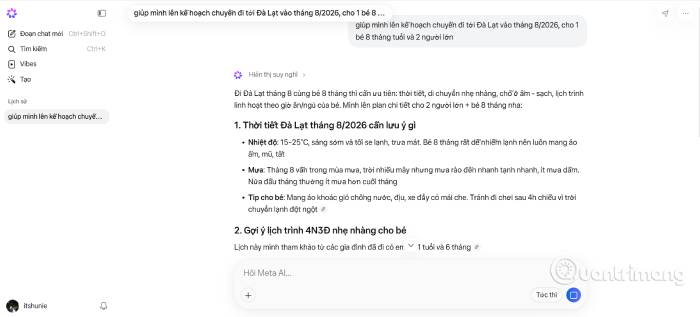
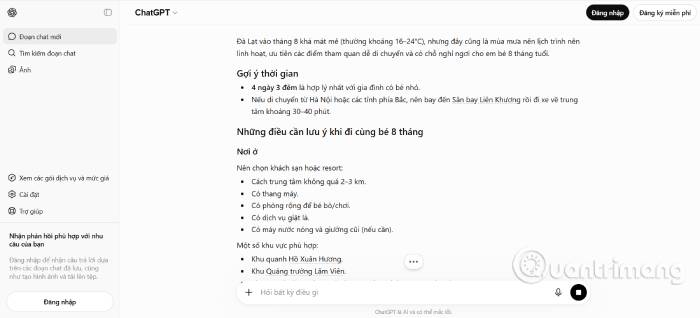
Model names and rankings change frequently, so a permanent “winner” based on one benchmark is not useful. Test both assistants with a task that resembles your real work and judge the accuracy, clarity, source handling, and amount of correction required.
Research, files, and data analysis
ChatGPT is better suited to workflows involving uploaded PDFs, presentations, spreadsheets, or datasets. It can help extract information, reorganize it, explain patterns, and create structured outputs. Users should still check calculations, citations, and high-stakes conclusions.
Meta AI's file capabilities depend more heavily on the particular app and rollout. It is practical for quick questions and lightweight content, but it may not provide the same end-to-end environment for a long report or data project.
Features and extensibility
ChatGPT extends beyond basic chat through tools for web research, coding, document editing, image work, voice, and task-oriented workflows. Some features require a paid plan or may be limited by account type.
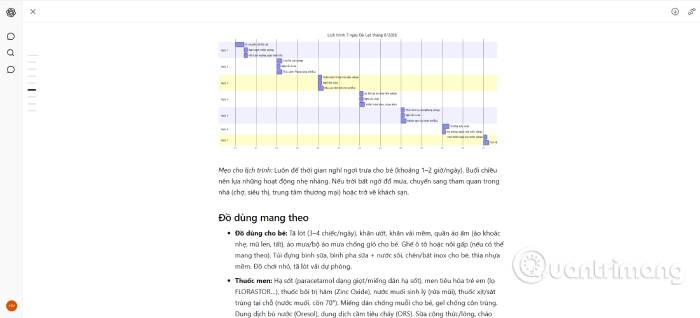
Meta AI is more closely tied to Meta's own ecosystem. That narrower focus can be an advantage when the goal is to create, edit, or share something without leaving a social or messaging app.
Where Meta AI is more convenient
Meta AI is often the simplest choice when you are already using WhatsApp, Instagram, Facebook, or Messenger. Depending on the app and region, common uses include:
- Drafting a caption or rewriting a message.
- Answering a quick question within a conversation.
- Generating or editing an image for a post or chat.
- Using an AI assistant in a supported group conversation.
- Finding information without switching to a separate app.
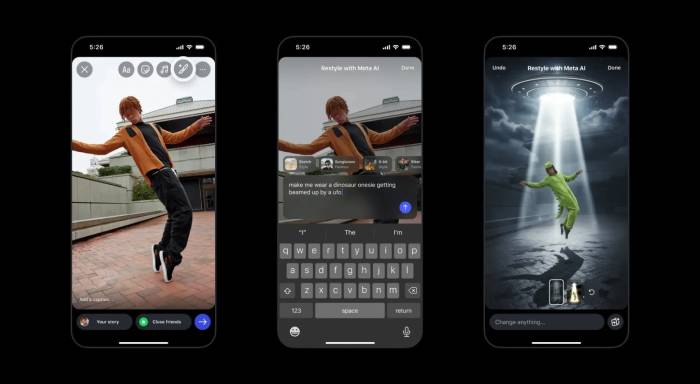
Image creation and free access
Both assistants can generate images, but the practical comparison depends on current limits and the editing controls available to your account. Meta AI may be more convenient for social content, while ChatGPT is often better when image work is part of a longer conversation involving research, writing, or iterative instructions.
Do not assume that either service offers unlimited generation. Usage caps and paid features can change, so review the plan details displayed at the time you use the tool.
Which one should you choose?
- Choose ChatGPT for document-heavy work, coding, research, data analysis, long-form writing, and projects that need several connected tools.
- Choose Meta AI for quick assistance inside Meta apps, social captions, group-chat questions, and lightweight image creation or editing.
- Use both if convenience matters in social apps but you also need a dedicated assistant for deeper work.
For important decisions, do not select an assistant solely from a feature list. Run the same representative prompt in both, verify the answers against reliable sources, and choose the one that requires less correction for your task.
Related Articles
 Claude vs ChatGPT: Which AI Assistant Should You Use?10 minutes read
 Is Chatgpt Plus or Perplexity the Better AI Chatbot?9 minutes read
 Meta AI Is Testing a Shopping Assistant, Directly Competing with ChatGPT and Gemini6 minutes read
 4 Ways AI Claude Chatbot Outperforms Chatgpt6 minutes read
 Which Is Better, Meta AI or ChatGPT?12 minutes read
 How to Use Meta AI Chatbot on Messenger3 minutes read
Reader Comments 0
Sign in with email or Google to join the discussion.