Table of Contents
There is no single “best” large language model for every task. A model that excels at long-running coding work may be unnecessarily slow or expensive for classification, while an open-weight model may be preferable when deployment control matters more than a polished consumer app.
The models below are noteworthy options from major providers. They are not arranged as an absolute ranking: model releases, pricing, quotas, and benchmark results change too quickly for a fixed top-ten order to remain useful. Choose by testing your own prompts, documents, languages, tools, latency target, and security requirements.
LLM comparison at a glance
| Model or family | Strong fit | Access model |
|---|---|---|
| OpenAI GPT-5.6 | Complex research, coding, and tool-driven work | Hosted ChatGPT/API products |
| DeepSeek V4 | Cost-conscious reasoning and long context | Hosted service plus released weights for some versions |
| Claude 5 | Coding, document work, and long-running agents | Hosted Claude/API and cloud partners |
| OpenAI Instant models | Fast everyday chat and high-volume assistance | Hosted ChatGPT/API products |
| Gemini 3.x | Multimodal input and Google-based workflows | Gemini app, AI Studio, Vertex AI, API |
| Qwen 3.8 | Coding, agents, and multilingual development | Qwen services; availability varies by model |
| Mistral 3/Medium/Small | Multilingual work and flexible deployment choices | Hosted API and selected open-weight releases |
| Llama 4 | Customizable open-weight multimodal systems | Download or third-party hosting |
| Grok 4.5 | Coding, agents, and xAI product integrations | Grok products and xAI API |
| Amazon Nova 2 | AWS-native enterprise applications | Amazon Bedrock |
1. OpenAI GPT-5.6: demanding reasoning and agent work
GPT-5.6 is OpenAI’s frontier model for complex research, coding, analysis, and tasks that use software tools. It is a better fit for a difficult multi-step assignment than for a simple rewrite where a faster model would be sufficient.
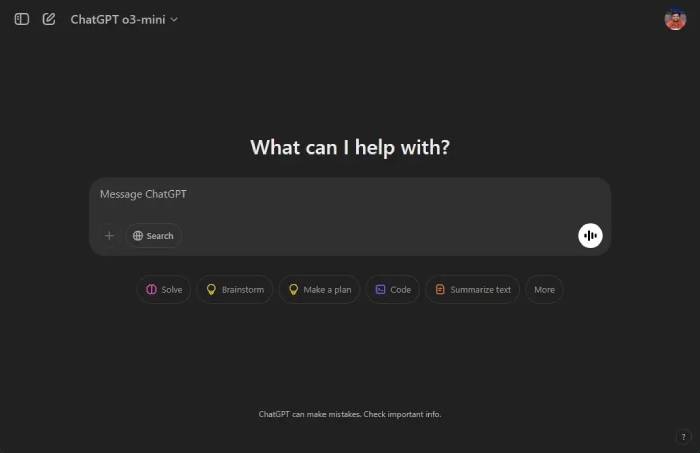
The advantage is integration: the model can be used inside products that supply browsing, files, a coding environment, or other tools rather than as a text generator alone. The trade-offs are hosted processing, plan-dependent availability, latency, and cost at higher reasoning settings. Consult OpenAI’s GPT-5.6 announcement for current availability and documented capabilities.
2. DeepSeek V4: efficient reasoning with long context
DeepSeek V4 extends the provider’s reasoning-oriented line with Flash and Pro variants. V4 Flash emphasizes speed and cost, while the higher-capability offering is intended for harder work. Thinking and non-thinking modes let developers choose between a quick response and additional inference for a difficult prompt.
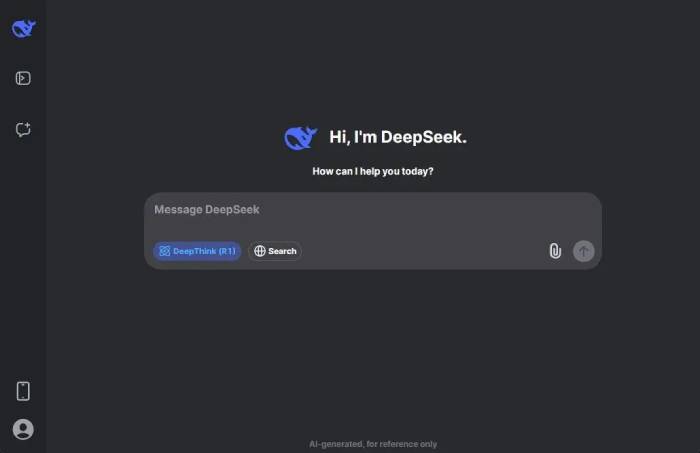
DeepSeek is attractive to teams that want a lower-cost hosted API or access to released model weights. Availability can differ between the chat app, API, and downloads, and older API aliases may be retired. Verify the exact model ID in the DeepSeek API documentation before deployment. As with any hosted provider, evaluate data location, retention, acceptable-use terms, and organizational policy.
3. Claude Opus 5 and Sonnet 5: coding and knowledge work
Anthropic’s Claude 5 generation includes a higher-end Opus tier and the more cost-conscious Sonnet tier. The family is designed for professional work involving codebases, documents, planning, and tool use. Opus is the option to test for the hardest long-running task; Sonnet is usually the more practical starting point for frequent production use.
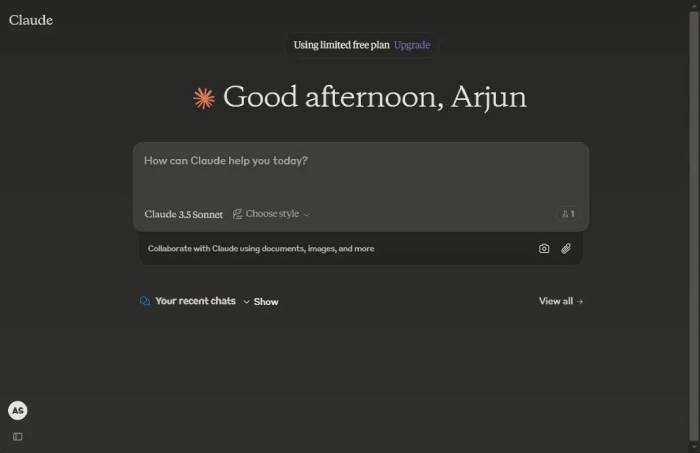
Claude’s quality still depends on the surrounding agent, context selection, and verification. Compare total task completion rather than judging only the first answer. Anthropic’s Claude Opus 5 announcement and Claude Sonnet 5 announcement describe the current tiers.
4. OpenAI Instant models: fast everyday assistance
OpenAI also provides faster models for routine conversation, summarization, drafting, extraction, and interactive use. An Instant model is often the sensible choice when response time matters and the task does not need the deepest reasoning setting.
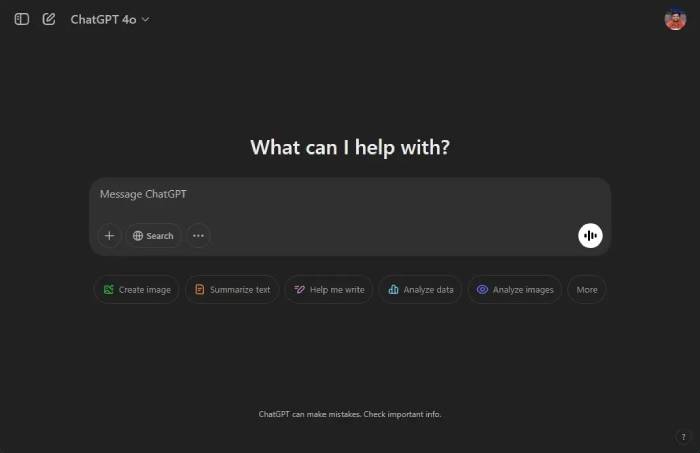
Do not assume a consumer product name maps directly to one API model. ChatGPT may route work among system components, while the API exposes specific model IDs and controls. Check the current model selector or API documentation before building a workflow around a name. Escalate only the difficult cases to a frontier model; this can reduce both delay and cost.
5. Google Gemini 3.x: multimodal and high-volume options
Google’s Gemini family provides several capability and efficiency tiers. Gemini 3.1 Pro targets complex reasoning and agentic work, while newer Flash models emphasize speed and cost. Gemini 3.6 Flash is positioned for code generation, tool-driven execution, and rapid agent loops.
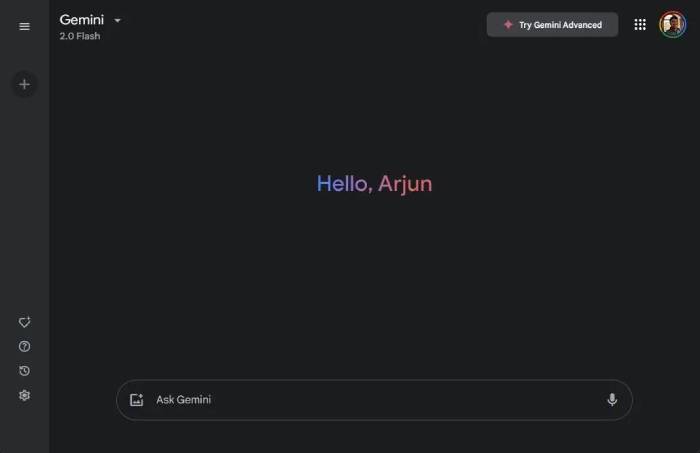
Gemini is especially relevant when the input includes combinations of text, images, audio, video, or PDFs, or when an application already uses Google AI Studio or Vertex AI. Stable, preview, latest, and experimental model names have different lifecycle expectations. Use Google’s Gemini model directory to confirm status, input types, limits, and deprecation notices.
6. Qwen 3.8-Max: coding and agent workflows
Alibaba’s Qwen family includes general, coding, multimodal, image, and translation-oriented models. Qwen 3.8-Max is the provider’s current high-capability model for coding and computer-based work, while other Qwen variants may be more suitable for vision, local use, or a lower operating cost.
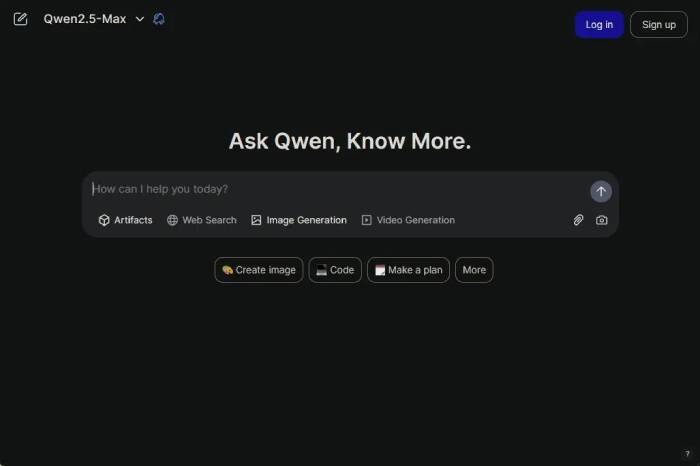
The family’s breadth is useful, but it makes model selection important: a specialized Qwen model may outperform the flagship for a narrow job. Check the Qwen 3.8-Max release information, the license for any downloadable weights, and the region and terms of the service used to host them.
7. Mistral: multilingual models and deployment flexibility
Mistral offers several useful tracks rather than a single default. Mistral Large 3 is an open-weight mixture-of-experts model with multimodal and multilingual capabilities; Mistral Medium 3.5 targets practical hosted work; and Mistral Small 4 combines reasoning, vision, and coding features in a smaller model.
This lineup is worth testing for European deployment needs, multilingual applications, customization, or a balance between model size and capability. “Open weight” does not automatically mean unrestricted open source: read the license for the exact model and use. Mistral’s official release index is the safest place to identify the current general, coding, speech, and document models.
8. Meta Llama 4: customizable open-weight multimodal models
Llama 4 Scout and Maverick are natively multimodal, mixture-of-experts models released for developers who want more control over deployment and customization. Scout is the smaller option; Maverick uses more experts and generally targets more demanding work.
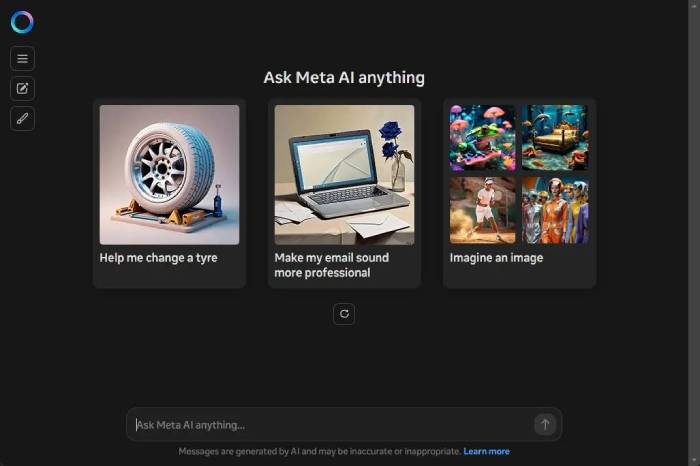
Llama is not a one-click local model at every size. Memory, quantization, inference software, throughput, and operating expertise all affect whether self-hosting is economical. Review Meta’s Llama 4 release, license, acceptable-use policy, and hardware needs before choosing it over a hosted API.
9. Grok 4.5: coding and agentic work
xAI’s Grok 4.5 is aimed at coding, knowledge work, and tasks that use tools over multiple steps. It is available through Grok products and developer services, making it relevant to users already invested in that ecosystem.
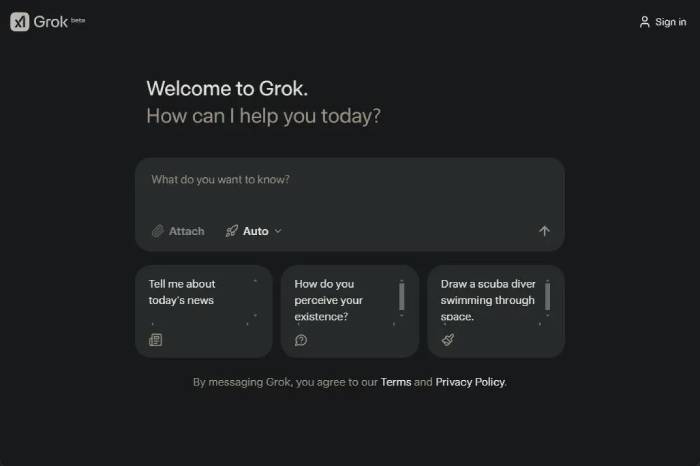
Safety behavior, web access, product integrations, and usage rules should be tested rather than inferred from the brand’s reputation. For business use, evaluate output reliability, source attribution, data controls, and refusal behavior with your actual prompts. The Grok 4.5 announcement identifies the current flagship and its intended workloads.
10. Amazon Nova 2: AWS-native applications
Amazon Nova is primarily a developer and enterprise model family delivered through Amazon Bedrock. Nova 2 Lite provides a cost-conscious reasoning option for everyday agent applications, while other Nova models cover speech, multimodal work, and specialized generation.
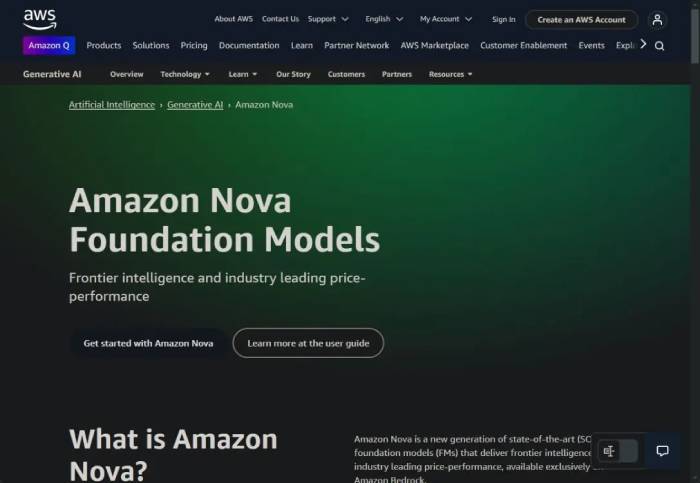
Nova is a logical candidate when an organization already uses AWS identity, networking, monitoring, and Bedrock governance. It is less relevant to someone simply choosing a public chatbot. AWS’s Amazon Nova release page lists current model and platform updates.
How to choose an LLM
Start with the task, not the leaderboard
- Everyday writing and support: test fast, lower-cost models first.
- Complex reasoning: compare frontier or thinking modes, but include latency and token use in the score.
- Coding: test within the actual repository and agent harness, not with isolated algorithm questions.
- Documents and media: verify each required file type, maximum size, OCR quality, and output format.
- Self-hosting: calculate hardware, engineering, monitoring, and upgrade costs, not only the model download.
- Regulated data: check contracts, retention, data location, training choices, access controls, and auditability.
Run a small evaluation set
Create 20 to 50 representative tasks with expected outcomes and important failure conditions. Remove confidential data unless the candidate service is approved. Score correctness, instruction following, citations, structured output, tool calls, latency, cost, and the amount of human correction required.
Use the same system instructions, tools, temperature, and output limits for a fair comparison. Repeat variable tasks more than once. Provider benchmark charts are useful background, but they do not predict performance in a unique repository, language, policy environment, or customer-support workflow.
Plan for model changes
Use explicit production model IDs, record prompts and evaluation results, and test a new version before switching aliases. Preview models can change or disappear faster than stable models. Keep a fallback model for critical workflows and monitor quality as well as uptime.
The best LLM is the one that meets the required quality at an acceptable total cost and risk level. A smaller model with reliable structured output can be a better production choice than a frontier model that is slower, more expensive, or harder to govern.
Related Articles
 20 Free 3D Modeling Software12 minutes read
 5 Best Laptops for 3D Modeling11 minutes read
 What Is the Large Language Model (LLM)?9 minutes read
 5 Key Research Papers to Help You Understand How LLM Works9 minutes read
 How Large Language Models Work: Tokens, Context, and Errors7 minutes read
 How to Use Scikit-LLM to Analyze Text with Large Language Models: Practical11 minutes read
Reader Comments 0
Sign in with email or Google to join the discussion.