Table of Contents
This guide provides a clear overview of connectors, including AT to PS/2 Keyboard, PS/2 to USB Mouse. Use it to understand the topic, compare the available options, and make a more informed decision.
AT to PS/2 Keyboard

This is an adapter to use a keyboard with a PS/2 plug for older (AT) machines that use a large plug.
PS/2 to USB Mouse

Use this adapter to plug a mouse using the USB interface into the PS/2 port on your computer.
USB to PS/2
 USB to PS/2
If unfortunately the keyboard, mouse (PS/2) connector on your computer is damaged or your laptop does not have a PS/2 connector for the keyboard and mouse, you can use a different one. the plug is called USB to PS/2. This end will be plugged into the computer's USB port and outputs 2 PS/2 ports to connect to the keyboard and mouse.
USB to Parallel
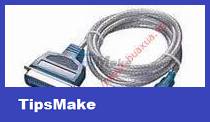 USB to Parallel
Use this adapter to plug parallel devices into a USB port on your computer.
USB Extension
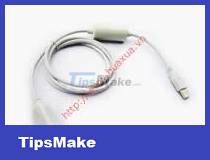 USB Extension
If the USB cord is too short, this cable can be used to extend the USB cord.
USB Hub
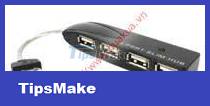 USB Hub
If there are many devices using USB ports that are not enough on the computer, use this device to expand more USB ports.
PCI USB Card
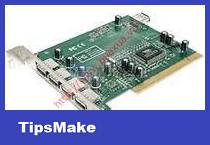 PCI USB Card
Some older computers that do not have a USB port can add this card to the PCI standard slot to have USB ports. Note that there are USB 1.1 and 2.0 cards and there are types with an additional Firewire port.
VGA Extension
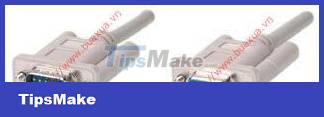 VGA Extension
If the signal wire of the monitor is too short, this cable can be used to extend it further.
VGA to DVI
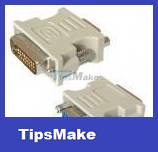 VGA to DVI
 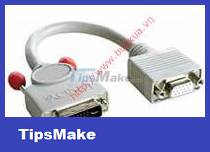 VGA to DVI
This connector is used to connect from a graphics device (VGA Card) with a DVI port to a monitor with a VGA port.
DVI to VGA
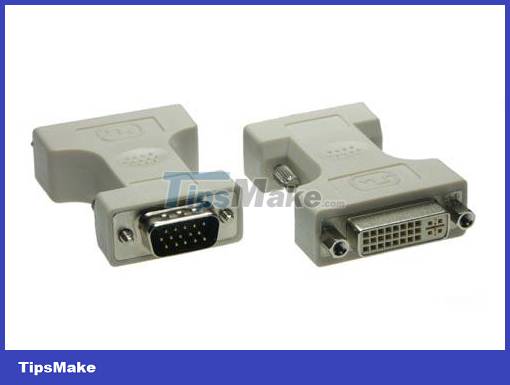 DVI to VGA
This connector is used to connect a graphics device (VGA Card) with a VGA port to a monitor with a DVI port.
Note that this device does not support digital signal transmission, will not be used for screens that require a digital signal.
DVI-a to D-Sub Cable
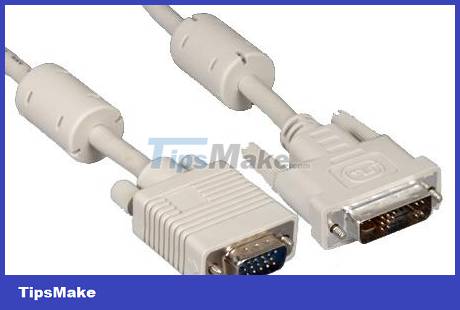 DVI-A to D-Sub cable
This connector is used to connect a graphics device (VGA Card) with a VGA port to a monitor with a DVI port.
In this cable, there is usually an electronic chip used to convert analog signals to digital signals. Suitable for displays that require a digital signal.
PCI SATA Card
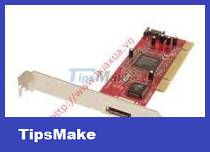 PCI SATA Card
Insert this card into the PCI slot if you want old computers to use newer drives with SATA interface.
RCA Jack Stereo ""y"" Adapter

Use this cable to bring audio from your computer's Audio Out port to the audio player.
Stereo Splitter
Use this splitter to split the sound from an Audio Out port of your computer (Sound card) into two paths that come to the speaker (Speaker) and the headset (Headphone).
Conclusion
Understanding Connectors makes it easier to compare options, avoid common mistakes, and apply the information in this guide more effectively. Review the relevant requirements before making changes or choosing a solution.
FAQ
What is Connectors?
AT to PS/2 Keyboard This is an adapter to use a keyboard with a PS/2 plug for older (AT) machines that use a large plug.
Why is Connectors important?
Understanding Connectors helps you evaluate features, compatibility, performance, and potential limitations before you choose a product or follow a procedure.
What should you consider when using or choosing Connectors?
Consider your specific goal, compatibility requirements, available features, cost, security, and the practical recommendations described in this guide.
Related Articles
 How to Assemble Expansion Cards for Computers3 minutes read
 How to Open a Molex Connector7 minutes read
 RAM Plus: Complete Guide3 minutes read
 How to Use Claude's Connectors Feature to Summarize Emails7 minutes read
 Top 7 Best Text Expansion Tools for Windows7 minutes read
 What Connection Ports Do Projectors Usually Have?6 minutes read
Reader Comments 0
Sign in with email or Google to join the discussion.