Table of Contents
The right ad network depends on your traffic, audience location, content type, technical setup, and tolerance for ads—not on a universal “highest RPM” list. New sites often begin with Google AdSense or delay ads while they build an audience; growing publishers can compare Journey by Mediavine or Monumetric; larger sites may qualify for Raptive, Mediavine, Nitro, or Ezoic.

Eligibility and commercial terms change. Confirm every threshold, contract, payment method, and exclusivity clause on the provider's own site before applying.
Quick comparison
| Option | Best fit | Current entry signal | Key trade-off |
|---|---|---|---|
| Google AdSense | Smaller policy-compliant sites seeking self-service ads | No universal public traffic minimum | Easy control, but the publisher handles placement and optimization |
| Journey by Mediavine | Growing original-content sites | Mediavine says Journey starts at 1,000 sessions | Managed technology with provider-specific integration |
| Monumetric | Sites in a defined mid-growth range | Propel is listed for 10,000–80,000 monthly pageviews | Review onboarding costs, contract, and support details |
| Raptive | Established long-form content sites with traffic from key markets | Raptive lists a 25,000-pageview minimum plus other criteria | Selective approval and deeper management relationship |
| Mediavine | Established sites already generating meaningful ad revenue | Mediavine lists at least $5,000 in annual ad revenue | Stricter qualification, with a managed setup |
| Nitro | Larger gaming, technology, and enthusiast publishers | Nitro describes a 100,000-monthly-view minimum | Not designed as an entry-level option |
| Ezoic | Large sites comfortable with a broad platform integration | Ezoic says new sites generally need 250,000+ monthly active users | High current entry bar and more technical complexity |
1. Google AdSense
AdSense is Google's self-service publisher program. It can be a practical first network for an original, policy-compliant site because it does not publish a universal pageview minimum. Approval is not automatic: Google reviews the site, account, content, traffic quality, and policy compliance.

Good fit when
- You want direct control over ad units or Auto ads.
- The site is smaller and does not qualify for a managed network.
- You can maintain a privacy policy, consent controls, and Google publisher-policy compliance.
- You are willing to test placement without overwhelming readers.
Important corrections to older advice
A custom domain, Google Analytics integration, and a six-month waiting period are not universal AdSense approval rules for every publisher. Account eligibility can vary by product and location. Payment thresholds also vary by reporting currency, so use Google's current payment threshold table rather than assuming every account uses US dollars or the same payout method.
2. Journey by Mediavine
Journey is Mediavine's self-service ad-management option for growing sites. Mediavine's current requirements page says Journey starts at 1,000 sessions, but traffic alone does not guarantee acceptance. Original content, real readers, site quality, policy compliance, and a compatible technical setup still matter.
Check before applying
- The required Grow integration and how it affects your stack.
- Contract duration, termination process, and whether ads are exclusive.
- Consent management and privacy-policy requirements.
- How many ads appear on mobile and in long articles.
- Reporting access and payment schedule.
Review the provider's current Mediavine and Journey requirements before planning a migration.
3. Monumetric
Monumetric divides publishers into programs based partly on traffic. Its site currently lists Propel for 10,000–80,000 monthly pageviews and other tiers for larger properties.
Good fit when
- You want help with ad operations rather than configuring everything alone.
- Your site falls within a published program range.
- You can evaluate any setup fee, contract term, and expected implementation work against actual revenue.
Ask for a written explanation of fees, ad formats, exclusivity, payment timing, performance reporting, and how quickly ads can be removed if user experience declines. Verify details on Monumetric's program page.
4. Raptive
Raptive is aimed at established content creators. Its current FAQ lists a minimum of 25,000 monthly pageviews, a domain age requirement, correctly configured analytics, original long-form content with meaningful human involvement, and audience-location criteria. Sites near the minimum should read all requirements rather than focusing only on pageviews.
Good fit when
- The site has stable, verifiable traffic and substantial original content.
- A significant share of readers comes from Raptive's listed key countries.
- You want managed ad operations and can meet the technical and contract requirements.
Check the latest Raptive publisher FAQ; acceptance remains discretionary.
5. Mediavine for established sites
Mediavine's main program now uses annual ad revenue as a headline qualification signal rather than the old traffic threshold commonly repeated in comparison articles. The provider currently states that a site should generate at least $5,000 in annual ad revenue. It also evaluates content and site quality.
This makes a direct application more relevant to publishers with a proven advertising business. Sites below that level can evaluate Journey instead. Do not move solely because another publisher posts a high RPM screenshot: geography, season, device mix, content category, viewability, and ad density all affect the result.
6. Nitro
Nitro focuses on larger independent publishers, with particular experience in gaming, technology, and enthusiast communities. Its own comparison material lists a 100,000-monthly-view minimum for Nitro, while its publisher guidelines require a functional, content-based site and prohibit pop-up, pop-over, or pop-under site structures.
Ask how the service handles Google MCM, consent, direct deals, video units, community pages, and ad-blocking audiences. Review Nitro's publisher guidelines before applying.
7. Ezoic
Ezoic now publishes a much higher entry requirement than many older articles report: new sites are generally required to have at least 250,000 monthly active users. Its monetization policies also call for original content, clear authorship, About and contact pages, a comprehensive privacy policy, and consent compliance.
Because integration can touch performance, caching, consent, and ad layout, test carefully and document baseline Core Web Vitals, revenue, page views per session, and reader complaints before migrating. See Ezoic's current requirements.
What about Media.net and PropellerAds?
Media.net
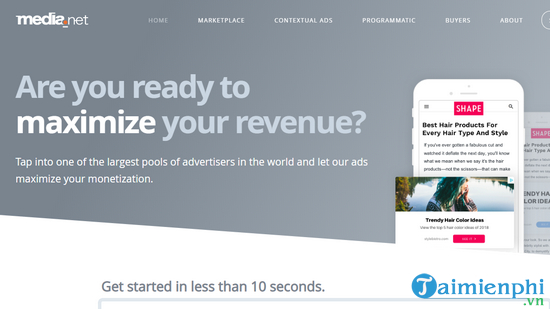
Media.net remains a contextual-ad option, but approval, payment terms, language and traffic expectations can change. It may suit publishers whose content and audience align with its demand. Request current terms directly, verify the entity named in the contract, and compare a controlled test against your existing setup.
PropellerAds
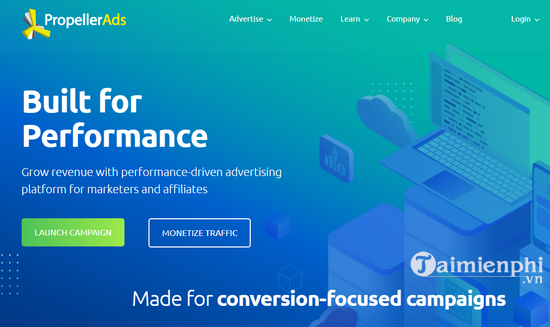
PropellerAds offers formats that can include push, interstitial, and pop-style advertising. These may monetize some traffic, but aggressive formats can harm trust, accessibility, navigation, and search performance. Never assume a fixed CPM or revenue share from an old review; obtain current written terms and test reader impact.
Networks to remove from outdated shortlists
Older lists often include Conversant Media and Technorati Media as simple options for bloggers. Brand ownership, publisher products, and availability have changed, and those descriptions no longer support a current recommendation. Do not apply through an old link or assume legacy payment terms still exist. Start from the present company's official publisher site and verify the contracting entity.
How to compare ad networks properly
1. Measure net revenue, not a headline RPM
Use the same definition and date range. Account for network fees, revenue share, invalid-traffic deductions, chargebacks, currency conversion, and any setup fee. Separate page RPM, session RPM, and ad-impression RPM.
2. Protect user experience
Check layout shift, page speed, video autoplay, sticky units, ad density, accidental clicks, and mobile navigation. A revenue lift is not useful if returning visitors, email signups, or search traffic fall.
3. Read the contract
- Exclusivity and contract length
- Notice period and removal process
- Payment schedule and threshold
- Data ownership and reporting access
- Consent and privacy responsibilities
- Liability for invalid traffic or policy violations
- Ability to block categories, advertisers, and formats
4. Verify privacy and consent
Display advertising can involve cookies, identifiers, location, and personalized ads. Your obligations depend on where you and your readers are located. Use a suitable consent platform where required, keep the privacy policy accurate, and avoid installing multiple conflicting consent tools.
5. Run a controlled test
Record at least several weeks of baseline data, including revenue, Core Web Vitals, bounce or engagement measures, pages per session, and reader complaints. Consider seasonality and compare equivalent periods. Remove or reposition formats that obstruct content.
Prepare a site before applying
- Publish substantial original content with clear authors and dates.
- Create About, Contact, Privacy, Terms, and correction pages appropriate to the site.
- Remove copied, thin, doorway, or mass-generated pages.
- Use clean navigation and ensure the site works on mobile.
- Verify analytics and investigate suspicious traffic sources.
- Fix intrusive pop-ups and excessive affiliate blocks.
- Build direct reader value before maximizing ad slots.
For site-building decisions, compare Wix and WordPress; then use TipsMake's basic SEO checklist. Display ads are only one option among the legitimate online income models a publisher can test.
Which option should you choose?
A small site should prioritize useful content, direct audience growth, and a light ad setup. A growing site can compare Journey and Monumetric after it reaches their current entry signals. An established site should request proposals from more than one managed provider and compare net revenue, reader experience, contract terms, and support. Recheck official requirements immediately before applying, because today's threshold can make an older “best network” article obsolete.
Related Articles
 5 Ways to Kill Websites (and SEO) by Advertising14 minutes read
 17 Impressive Advertising Ideas on Social Networks4 minutes read
 20 Most Impressive Advertising Ideas on Social Networks in 20164 minutes read
 Top 24 Content Marketing Blogs Need to Read6 minutes read
 3 Types of Blogs to Help You Make Money8 minutes read
 How to Find Blogs: Step-by-Step Guide5 minutes read
Reader Comments 0
Sign in with email or Google to join the discussion.