Table of Contents
This guide provides a clear overview of nvidia made headlines when it announced a new generation of image processing, including the main concepts, practical steps, and common questions. Use it to understand the topic, compare the available options, and make a more informed decision.
NVIDIA first introduced ULMB technology in 2015. At that time, the gaming monitors on the market generally had a much lower average refresh rate than today. ULMB was then claimed to reduce the screen's backlight time by 75%, a phenomenon known as backlight flicker. Although the image is clearer, this feature also inadvertently reduces the overall brightness and causes the screen's refresh rate to decrease accordingly. Professional PC gamers always wanted a bright screen with a high refresh rate, so the first generation ULMB feature was rarely used and gradually fell into oblivion.
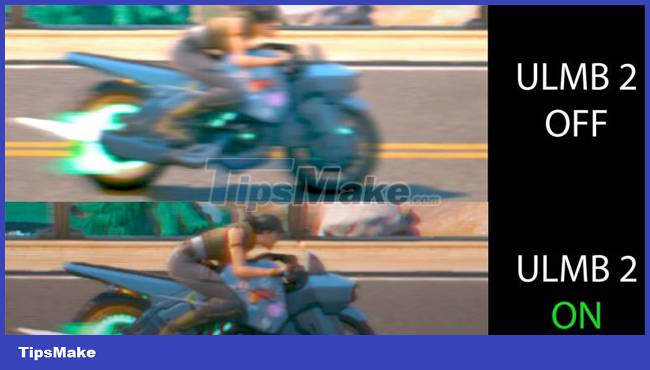
Now, with the new generation of ULMB technology, backlight flicker will be greatly reduced, while the screen can still keep good brightness and have a high refresh rate. Talking about this feature, NVIDIA states:
With ULMB 2, gamers will get effective motion clarity above 1000Hz thanks to new enhancements. This parameter is calculated as the monitor's refresh rate multiplied by one per duty cycle [Effective Motion Clarity = Refresh Rate * (1 / Duty Cycle)].
For example, for a 360 Hz display with ULMB 2, the effective motion clarity is actually 1440 Hz. That means to get the same level of motion clarity without ULMB 2, gamers will need a monitor capable of refreshing at 1440 Hz.
The bad news for gamers is that currently, there are only a handful of gaming monitors on the market that can support ULMB 2. Two typical products include Acer Predator XB273U F 27 inch 1440p 360 Hz and ASUS ROG Swift 360Hz PG27AQN 27 inches. Both will require a firmware update to enable the ULMB 2 feature.
The upcoming 25-inch ASUS ROG Swift Pro PG248QP and the upcoming 27-inch AOC AGON AG276QSG G-SYNC G-SYNC will also support ULMB 2.
Conclusion
Understanding NVIDIA Made Headlines When It Announced a New Generation of Image Processing makes it easier to compare options, avoid common mistakes, and apply the information in this guide more effectively. Review the relevant requirements before making changes or choosing a solution.
FAQ
What is NVIDIA Made Headlines When It Announced a New Generation of Image Processing?
Although the image is clearer, this feature also inadvertently reduces the overall brightness and causes the screen's refresh rate to decrease accordingly.
Why is NVIDIA Made Headlines When It Announced a New Generation of Image Processing important?
Understanding NVIDIA Made Headlines When It Announced a New Generation of Image Processing helps you evaluate features, compatibility, performance, and potential limitations before you choose a product or follow a procedure.
What should you consider when using or choosing NVIDIA Made Headlines When It Announced a New Generation of Image Processing?
Consider your specific goal, compatibility requirements, available features, cost, security, and the practical recommendations described in this guide.
Related Articles
 3 Ways to Add Motion Blur Effects to Photos (No Software Needed)6 minutes read
 How to Create Motion Blur on Capcut3 minutes read
 Nvidia Uses AI to Create Slow Motion Video 240fps from Smooth4 minutes read
 How to Use Photoshop CS5 - Part 14: Create Motion Effects6 minutes read
 Apple Is About to Launch a Feature to Help Users Reduce3 minutes read
 New Research Reveals a Simple Solution to Reduce Motion Sickness5 minutes read
Reader Comments 0
Sign in with email or Google to join the discussion.