Table of Contents
The June 2026 TOP500 list ranks LineShine in Shenzhen as the world's fastest publicly benchmarked supercomputer, with an HPL result of 2.1984 exaflops. El Capitan, Frontier, Aurora, and JUPITER Booster complete an unprecedented top five in which every system has reached at least one exaflop on the High Performance Linpack benchmark.
This ranking is a snapshot of systems that submitted an accepted HPL result. It is not a complete inventory of every government or commercial machine, and the fastest HPL system is not automatically the fastest for every scientific or AI workload.
Top 10 supercomputers in the June 2026 TOP500
| Rank | System and location | HPL Rmax | Cores | Reported power |
|---|---|---|---|---|
| 1 | LineShine — NSCS, China | 2.1984 EFLOP/s | 13,789,440 | 42,220 kW |
| 2 | El Capitan — LLNL, United States | 1.8090 EFLOP/s | 11,340,000 | 29,685 kW |
| 3 | Frontier — ORNL, United States | 1.3530 EFLOP/s | 9,066,176 | 24,607 kW |
| 4 | Aurora — ANL, United States | 1.0120 EFLOP/s | 9,264,128 | 38,698 kW |
| 5 | JUPITER Booster — Jülich, Germany | 1.0000 EFLOP/s | 4,801,344 | 15,794 kW |
| 6 | HPC7 — Eni, Italy | 571.50 PFLOP/s | 3,461,472 | 8,735 kW |
| 7 | Eagle — Microsoft Azure, United States | 561.20 PFLOP/s | 2,073,600 | Not listed |
| 8 | HPC6 — Eni, Italy | 477.90 PFLOP/s | 3,143,520 | 8,461 kW |
| 9 | Fugaku — RIKEN R-CCS, Japan | 442.01 PFLOP/s | 7,630,848 | 29,899 kW |
| 10 | Alps — CSCS, Switzerland | 434.90 PFLOP/s | 2,121,600 | 7,124 kW |
The values come from the 67th TOP500 list, published in June 2026. TOP500 publishes a new edition twice a year, so positions can change after this snapshot.
What FLOPS and HPL measure
FLOPS means floating-point operations per second. One petaflop is 1015 operations per second; one exaflop is 1018. TOP500 orders systems by Rmax, the measured performance achieved on the HPL benchmark. Rpeak is a theoretical peak calculated from hardware specifications and is normally higher.
HPL solves a large, dense system of linear equations using 64-bit arithmetic. It is useful because many systems can run the same benchmark, but it favors architectures that keep processors busy on dense numerical work. Memory-bound simulations, graph analysis, weather codes, storage workloads, and AI training may produce a different order.
Other lists add context:
- HPCG emphasizes communication and memory-access patterns that resemble many scientific applications.
- HPL-MxP uses mixed precision and can better reflect hardware designed for lower-precision AI and accelerated computing.
- Green500 ranks energy efficiency rather than absolute performance.
For a broader introduction to architecture and workloads, see TipsMake's guide to the basics of supercomputers.
1. LineShine, China
LineShine debuted at No. 1 with 2.1984 EFLOP/s on HPL and 13,789,440 cores. It is installed at the National Supercomputing Centre in Shenzhen and was built on the custom LingKun platform. TOP500 lists 304-core LX2 processors at 1.55 GHz, a proprietary LingQi interconnect, and Kylin OS.
The system is CPU-only in the submitted configuration. It also led the June 2026 HPCG ranking at 22.00 PFLOP/s, while its mixed-precision HPL-MxP result of 7.92 EFLOP/s ranked fourth. Those results show why one benchmark does not describe every workload.
2. El Capitan, United States
El Capitan at Lawrence Livermore National Laboratory recorded 1.809 EFLOP/s on HPL. The HPE Cray EX255a system combines fourth-generation AMD EPYC processors with AMD Instinct MI300A accelerated processing units and a Slingshot-11 network.
It remained first on HPL-MxP at 16.7 EFLOP/s. El Capitan supports National Nuclear Security Administration workloads, including stockpile stewardship, and its access is not comparable to a public cloud service.
3. Frontier, United States
Frontier at Oak Ridge National Laboratory holds 1.353 EFLOP/s on HPL. Its HPE Cray EX235a architecture uses third-generation AMD EPYC CPUs, AMD Instinct MI250X accelerators, and Slingshot-11 networking.
Frontier was the first system to lead TOP500 with a sustained exascale HPL result. Its research workloads include materials, energy, climate, and other large simulations.
4. Aurora, United States
Aurora at Argonne National Laboratory achieved 1.012 EFLOP/s. Intel built the system around HPE Cray EX compute blades, Intel Xeon CPU Max Series processors, Intel Data Center GPU Max Series accelerators, and Slingshot-11 networking.
Aurora's HPL-MxP score was 11.6 EFLOP/s, second on that benchmark. Its design supports simulation, data analysis, and AI workflows, but the benchmark result should not be described as a universal 2-EFLOP application speed.
5. JUPITER Booster, Germany
JUPITER Booster at the Jülich Supercomputing Centre reached exactly 1.000 EFLOP/s on HPL, making it the first European system to post an exascale result in TOP500. The direct-liquid-cooled Eviden BullSequana XH3000 system uses NVIDIA Grace Hopper Superchips and high-speed InfiniBand networking.
Its relatively lower reported power compared with the higher-ranked systems illustrates the importance of system design and energy efficiency as facilities approach exascale.
6. HPC7, Italy
HPC7 is operated by energy company Eni and recorded 571.50 PFLOP/s. It uses HPE Cray EX255a hardware, fourth-generation AMD EPYC processors, AMD Instinct MI300A accelerators, Slingshot-11 networking, and Red Hat Enterprise Linux.
The machine supports computationally intensive industrial workloads. A private-sector system's placement also shows that TOP500 includes more than national laboratories and universities.
7. Eagle, United States
Eagle is a Microsoft Azure system with an HPL result of 561.20 PFLOP/s. TOP500 lists Intel Xeon Platinum 8480C processors, NVIDIA H100 accelerators, and NVIDIA InfiniBand NDR networking.
Cloud placement does not mean any customer can reserve the entire ranked configuration. Access, partition size, region, pricing, and available hardware depend on Microsoft's service offerings.
8. HPC6, Italy
Eni's earlier HPC6 system remains in the top ten with 477.90 PFLOP/s. It uses HPE Cray EX235a hardware, third-generation AMD EPYC processors, AMD Instinct MI250X accelerators, and Slingshot-11 networking.
HPC6 and HPC7 appearing together illustrates how organizations add new generations without immediately retiring useful older capacity.
9. Fugaku, Japan
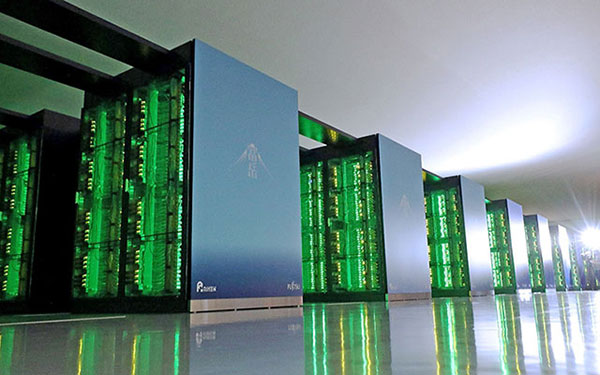
Fugaku at the RIKEN Center for Computational Science records 442.01 PFLOP/s on HPL. Fujitsu built it with A64FX processors and the Tofu interconnect D. Unlike most systems near the top, Fugaku's submitted architecture does not depend on discrete GPU accelerators.
It led TOP500 from June 2020 through November 2021 and remains notable for its application performance and Arm-based processor design.
10. Alps, Switzerland
Alps at the Swiss National Supercomputing Centre reached 434.90 PFLOP/s. The HPE Cray EX254n system uses NVIDIA Grace Hopper Superchips and Slingshot-11 networking. It supports research that combines simulation, data analysis, and machine learning.
Former top-ten systems still matter
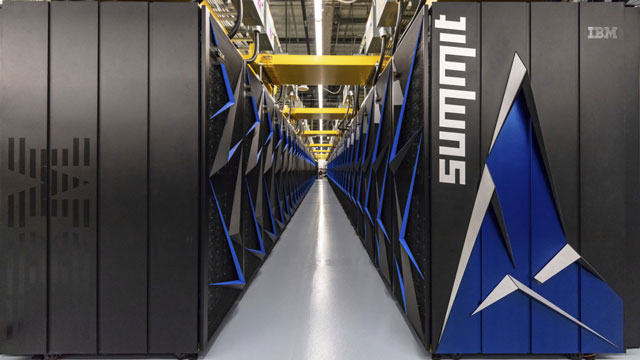
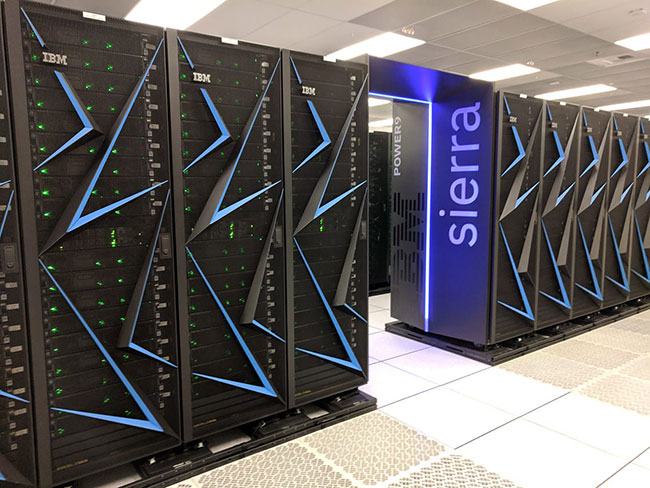
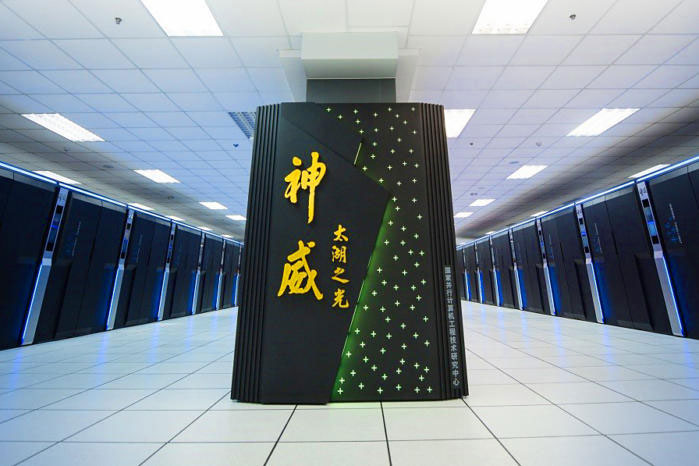
A machine leaving the top ten does not become obsolete overnight. Summit, Sierra, Sunway TaihuLight, LUMI, Leonardo, and Perlmutter have all supported substantial research even as newer systems pushed them down the ranking.
How to read future rankings
Check the edition date, benchmark, measured Rmax, and whether the configuration represents a complete system or a submitted partition. Then compare power, memory, interconnect, software, and real application results. “Fastest supercomputer” is precise only when it means “highest accepted HPL Rmax in this TOP500 edition.”
Related Articles
 TOP 10 Supercomputers with Fastest Processing Speed in the7 minutes read
 The Fastest Supercomputers in the World10 minutes read
 10 Fastest Supercomputers in the World 2024: Recommended Choices11 minutes read
 Used Since the 1990s, Nearly 30-year-old 'Supercomputers' Are Still Running 'Ferry Ferries' and Play10 minutes read
 Learn the Basics of Supercomputers, Complex and Powerful Machines22 minutes read
 This Is the Fastest Dog in the World, Only to Lose the Grouse4 minutes read
Reader Comments 0
Sign in with email or Google to join the discussion.