Table of Contents
Green tea is not established as the “best” tea for bloating. A cup may feel pleasant if you tolerate it, but that does not show that its catechins remove gas, repair the gut, or treat a digestive disorder.

What the evidence can tell us
Green tea contains polyphenols, including the catechin EGCG. Studies of these compounds examine several biological effects, but a laboratory finding is not proof that drinking tea relieves bloating in people.
The National Center for Complementary and Integrative Health says firm conclusions cannot be drawn for most uses of green tea. Its review does not establish green tea as a treatment for bloating. Human cancer findings are also inconsistent, so cancer prevention is not a reason to recommend it for this symptom.
Claims that catechins selectively remove “bad” gut bacteria or replace pain medicine for menstrual cramps go beyond what the evidence here establishes. Bloating has multiple possible causes; inflammation is not an explanation for every episode.
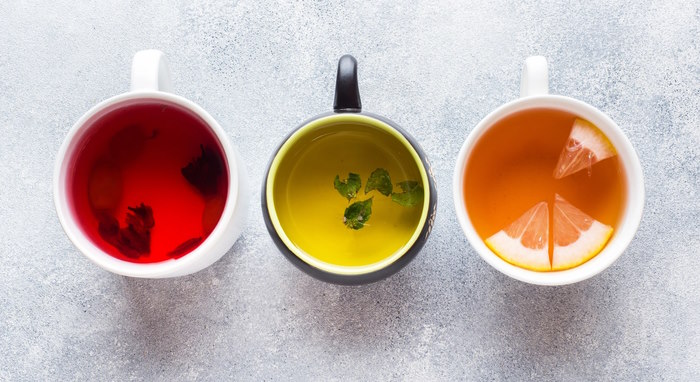
If you want to drink green tea
Treat it as a beverage rather than a prescribed remedy. Start with a small amount that you find comfortable and note whether your symptoms change. Green tea contains caffeine, and large amounts of caffeinated drinks may worsen symptoms for some people.
Pay attention to additions too. Milk can be a trigger for someone with lactose intolerance, and some sugar-free sweeteners can increase gas. A drink’s label matters as much as its name.
Concentrated green-tea extracts are different from brewed tea. NCCIH reports digestive side effects, medicine interactions, and uncommon liver injury associated mainly with extracts. Do not assume that a stronger extract will be more helpful. TipsMake’s guide to buying dietary supplements discusses the limits of marketing claims.

Practical steps for gas-related bloating
The National Institute of Diabetes and Digestive and Kidney Diseases recommends considering eating habits and individual food triggers:
- Eat slowly and try smaller meals if large meals make symptoms worse.
- Reduce fizzy drinks, chewing gum, and drinking through a straw if these cause you to swallow more air.
- Keep a record of meals, drinks, bowel movements, and symptoms to identify a recurring pattern.
- Discuss persistent symptoms or a restrictive diet with a clinician or registered dietitian.
Constipation can contribute to bloating. TipsMake’s article on bowel-movement frequency provides related background. There is no single food or drink that resolves every cause, and large dietary changes may make it harder to identify your trigger.
When bloating needs medical assessment
According to the NHS guidance on bloating, recurring or persistent symptoms, unexplained weight loss, or blood in stool should be assessed. Seek prompt care for bloating with vomiting, fever, a new abdominal lump, or inability to pass urine, stool, or gas.
Sudden severe abdominal pain, vomiting blood or material resembling coffee grounds, or severe difficulty breathing requires emergency care. Trying a different tea should not delay that assessment.
Related Articles
 11 simple solutions to eliminate bloating bloating
 Ways to prevent the stomach from making too loud noises
 Can Pokemon Go be played on a computer? The answer is yes!
 Summary - How to play Pokemon GO, virtual reality game catch Pokemon on smartphone
 Poké Ball Types Explained: Generations III–V (Part 2)
 How to Earn and Use Stardust in Pokémon GO
Reader Comments 0
Sign in with email or Google to join the discussion.