Table of Contents
This updated guide examines Instructions: How to Creating a Home HTTP Server Model and organizes the essential facts, background, and practical takeaways in clear American English.
At the same time, we need to have a broadband Internet connection and a Windows-based computer. First, create your own folder on any partition of the hard drive, as the example here is E: my server. Then, continue to download the latest Apache installation for Windows 32 bit here, install and set parameter parameters as usual:

After installing Apache, open the folder C: Program FilesApache Software FoundationApache2.2conf and find the httpd file as shown below, open this file with Notepad:


At this step, go to the #DocumentRoot 'C: / Program Files / Apache Group / Apache2 / htdocs' code and replace it with #DocumentRoot 'E: my server' . Besides, look for the next # and replace it with.Here,E: my serveris the directory where the files will be displayed on the server later.And finally find#AllowOverride Noneto replace it withAllowOverride All.

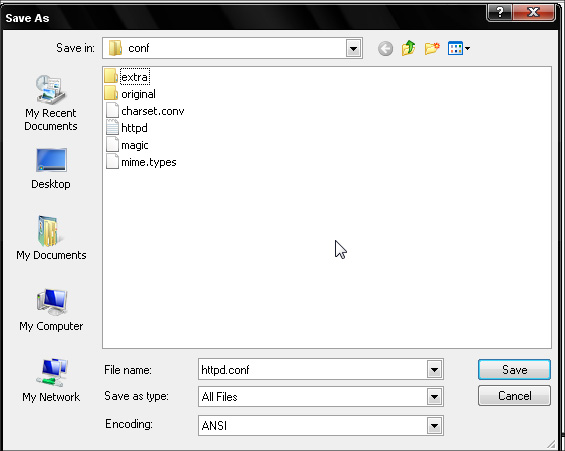
Then, save the httpd file changes:
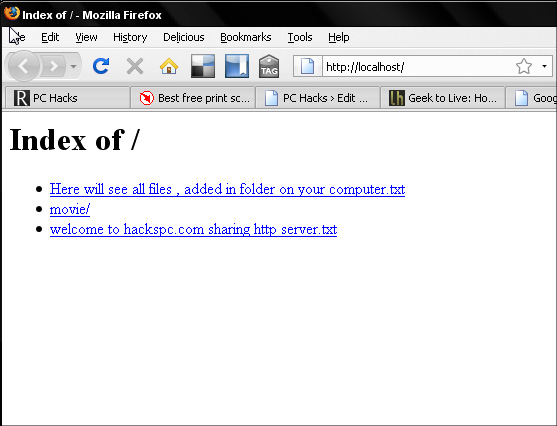
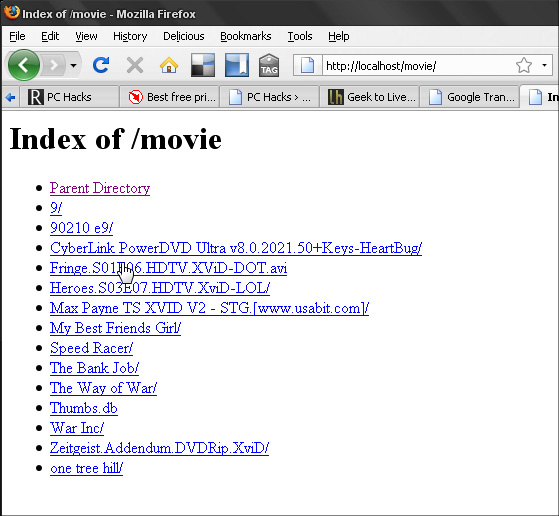
To test, just type http:/// localhost / or replace localhost with the computer's IP address, our result will look like this:
Good luck!
FAQ
What is Instructions: How to Creating a Home HTTP Server Model about?
It provides a structured overview of instructions, explains the main context, and highlights practical takeaways for readers.
Why does this topic matter?
Understanding the main concepts helps readers evaluate the issue, avoid common mistakes, and make better-informed decisions.
How should readers use this information?
Use the guidance as a practical starting point, confirm details that may have changed, and follow current product, safety, or security recommendations.
Related Articles
 Message in HTTP: Explained6 minutes read
 Configure Isa Server 2006 HTTP Filter9 minutes read
 Request Line in HTTP: Request (HTTP) in HTTP8 minutes read
 What Is HTTP Flood?4 minutes read
 Feedback in HTTP: Response (Response) in HTTP5 minutes read
 5 Ways to Improve Website Speed with HTTP / 24 minutes read
Reader Comments 0
Sign in with email or Google to join the discussion.