Table of Contents
This updated guide explains how to Recover Data from Memory Cards through clear steps, practical examples, and important checks that help prevent common errors.
Method 1 of 3:
Using CardRecovery
-
 Navigate to the CardRecovery downloads page at http://www. cardrecovery. com/download. asp. CardRecovery is a program that helps you recover lost data from memory cards. The full version of CardRecovery currently retails for $39.95, but you can proceed with the download to run the free evaluation version, which informs you whether your data can be fully recovered from the memory card.
 -
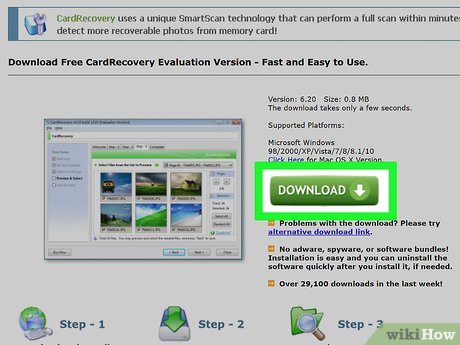 click the 'Download' button below the Windows or Mac software versions.
 -
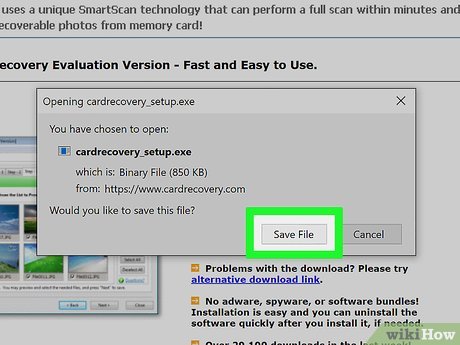 Select the option to 'Save' the installation file to your desktop.
 -
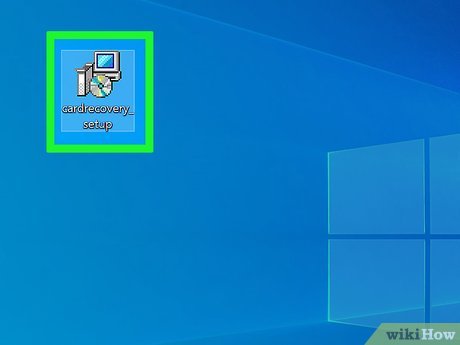 Navigate to your desktop and double-click the CardRecovery installation file.
 -
 Follow the on-screen prompts to install CardRecovery, then launch the program when installation is complete.
 -
 Connect the memory card to your computer via USB. You must use a memory card reader or adapter with USB.
 -
 click 'Next' in CardRecovery, then select the drive letter of your memory card from the dropdown menu. On most computers, the default drive letter for your memory card is the D:/ drive.
 -
 Select the file types you want recovered, as well as the destination folder on your computer to which you want the files saved.
 -
 Click 'Next.' CardRecovery will perform a full scan of your memory card to determine whether your data can be recovered. This process normally takes less than three minutes to complete. When the scan is complete, CardRecovery will display a list of files that can be safely recovered.[1]XResearch source
 -
 Follow the on-screen prompts to select the files you want recovered and purchase the full version of CardRecovery. When complete, CardRecovery will save the recovered files to the destination folder you specified.[2]XResearch source
Method 2 of 3:
Using EaseUS Data Recovery
-
 Navigate to the EaseUS downloads landing page at http://www. easeus. com/download. htm. EaseUS Data Recovery is free software that allows you to recover data from memory cards.
 -
 click the 'Data Recovery' tab.
 -
 Select the option to download 'Data Recovery Wizard Free' for your Windows or Mac computer.
 -
 Select the option to 'Save' the installation file to your desktop.
 -
 Navigate to your desktop and double-click the EaseUS Data Recovery installation file.
 -
 Follow the on-screen prompts to install the software, then launch the program when installation is complete.
 -
 Connect the memory card to your computer via USB. You must use a memory card reader or adapter with USB.
 -
 Select the file types you want recovered from your memory card in the EaseUS window, then click 'Next.'
 -
 Select your memory card from the hard disk menu, then click 'Scan.' EaseUS will scan the memory card to find all files, including those that were deleted. When the scan is complete, EaseUS will display a list of all recovered files.
 -
 Select the files you want recovered, then click 'Recover.' EaseUS Data Recovery will recover your data, and prompt you to save the files to another location on your computer.[3]XResearch source
Method 3 of 3:
Using Recuva (Windows Only)
-
 Navigate to the official Recuva website at http://www. piriform. com/recuva. Recuva is a Piriform product, and is only compatible with Windows-based PCs.
 -
 click 'Free Download,' then select the option to save the installation file to your Windows desktop.
 -
 Navigate to your desktop and double-click the Recuva installation file.
 -
 Follow the on-screen instructions to install Recuva, then launch the software when installation is complete.
 -
 Connect the memory card to your computer via USB. You must use a memory card reader or adapter with USB.
 -
 Select the file types you want recovered from your memory card, then click 'Next.'
 -
 Select the drive letter of your memory card from the dropdown menu. On most computers, the default drive letter for your memory card is the D:/ drive.
 -
 click 'Scan.' Recuva will scan your memory card and display a list of all files that can be recovered.
 -
 Select all the files you want recovered, then click 'Recover.'
 -
 Select the location on your computer to which you want the recovered files saved. Recuva will save the files to the destination specified.[4]XResearch source
FAQ
What is the easiest way to Recover Data from Memory Cards?
Start with the requirements in this guide, then follow each step in order. Check the result after every major change so problems are easier to identify.
Can beginners follow these instructions?
Yes. The process is organized into practical steps, and you can repeat any step before moving forward.
What should I check if the method does not work?
Confirm your software or device version, permissions, settings, file format, and internet connection when the task depends on online services.
Related Articles
 20 Best Data Recovery Software for Hard Drives, USB, and Memory Cards14 minutes read
 How Professional Companies Recover Data on Memory Cards3 minutes read
 Invite Any Data Recovery - Software That Helps Recover Lost Data on4 minutes read
 Back Up Data: Select Memory Card or Cloud to Save Data?6 minutes read
 Instructions for Fixing Memory Card Errors Are Corrupted11 minutes read
 Causes That SD Memory Cards Work 'Sluggish'2 minutes read
Reader Comments 0
Sign in with email or Google to join the discussion.