Table of Contents
This updated guide examines How to Prepare Subwoofers, Simple Bass Speakers at Home and organizes the essential facts, background, and practical takeaways in clear American English.
Making subwoofer from paint bucket and old computer speaker bass
From the old paint casing and bass computer speakers, we can make subwoofers at super cheap prices. Although not as 'luxurious' as the speakers bought from the store, but the device you make yourself will be extremely 'unique, strange and creative'.
Items needed
To make subwoofers from old bass and paint cans, you need the following equipment:
- 1 pcs of bass (can get bass taken from old computer speakers)
- 1 new paint bucket cover
- Speaker cable
- Cotton (can be taken from pillows)
- 1 piece of plastic spiral pipe, glue gun (can use glue Apollo A300), drilling, knives.
Steps to make subwoofer yourself
Making subwoofers from paint cans is very simple. Just follow the instructions below plus a bit of dexterity and understanding of the circuit, you will definitely succeed:
Step 1 : On the installation, paint a circle in the middle with the diameter of the bass.

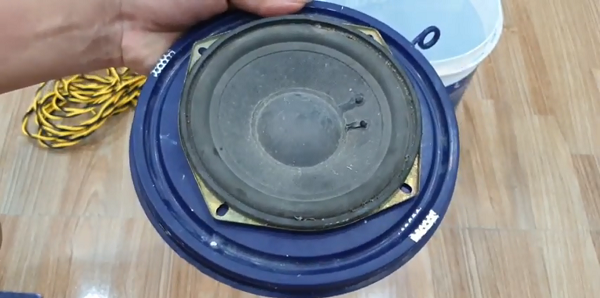
Step 2 : Use glue to fix the bass and install the paint hole with each hole. Screw the screws into the corners of the bass then apply glue to the screws and the bottom bass to increase the strength.
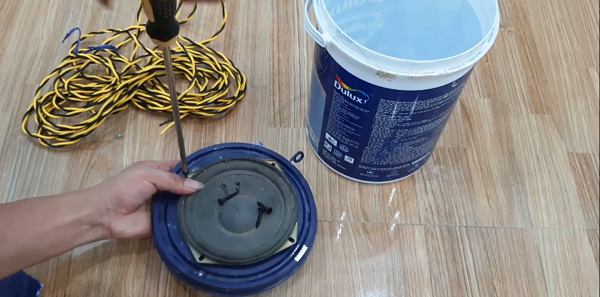
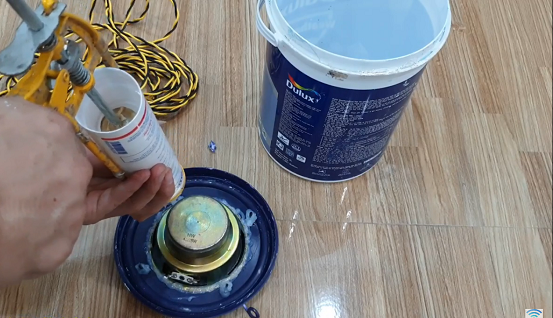
Step 3 : On the body of the paint bucket, use a drill, drill 2 holes, 1 hole diameter of about 1cm to go the speaker cable and 1 hole of the diameter to fit the twisted plastic tube to escape the sound.
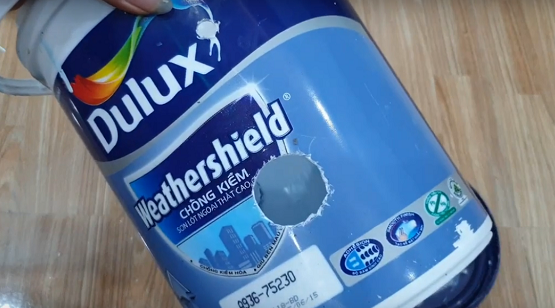
Step 4 : For twisted plastic tube through the hole, use glue to fix.
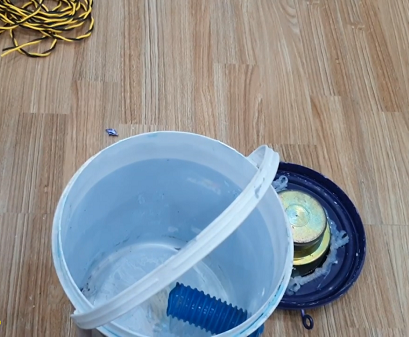
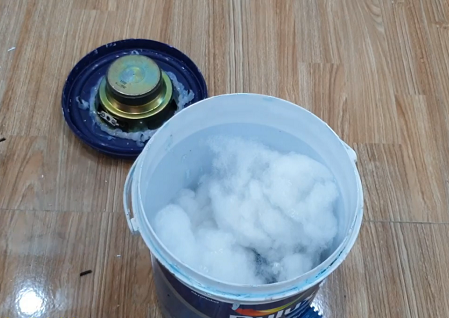
Step 5 : Put cotton inside the paint container.
Step 6 : Insert the wire into the small hole in the body of the paint bucket then connect to the bass.
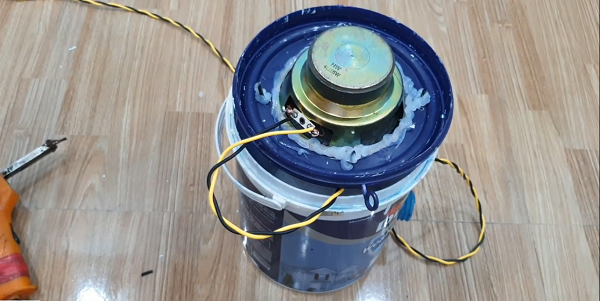
Step 7 : Use glue to attach fixed to the paint body.
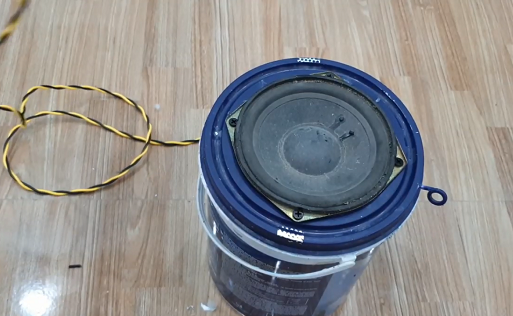
Step 8: Pair the newly built subwoofer with the devices in the system and enjoy great tunes!

You can use this speaker as a subwoofer car or listen to music at home are very good and cost-effective.
Making super good subwoofer, professional
If the subwoofer from the paint bucket above does not satisfy you or you want a speaker with a more professional design, please refer to the following method:
Items needed
- 1 moderately hard plywood, with enough space to be separated into 6 small pieces (size depends on each person's estimate).
- 1 5.5 inch woofer, 1 inch 1 inch tweeter (size may vary depending on each person's preference).
- 1 crossover 2 audio lines. In case you use full-range subwoofer, no crossover is required.
- 1 8cm diameter iron pipe, 6cm in length and a few smaller plastic tubes of the same length to make the sound hole.
- Carpentry and wiring equipment.
Steps to make homemade bass speakers
Step 1: Make the speaker front
- On the plywood panel, mark and draw the details on top.
- Cut 1 small section as front of speaker. On the front side, make 2 holes to put the speakers. Note: The shape of the hole depends on the selected drive shape and when necessary, leave an inner concentric circle to hold the speaker.
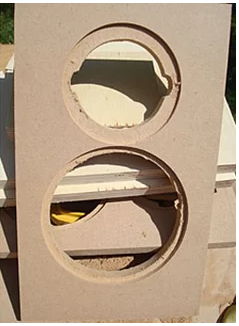
Step 2: Subwoofer cabinet design
- Cut the other sides to make the cabinet.
- Make 2 holes in the back of the loudspeaker, 1 inlet, 1 for the speaker stakes.
- Polish, varnish then decorate the cabinet according to your taste.
- Clean inside the cabinet.
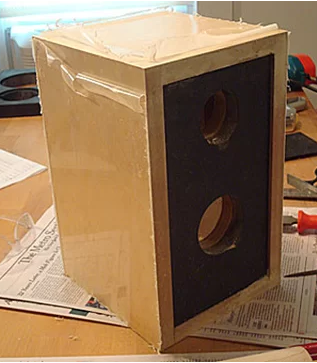
Step 3: Install parts inside the cabinet
- Get the crossover first.
- Arrange the drive wires through the corresponding holes. The input cable connected to the speaker stakes is fixed on the back.
Step 4: Make a sound drain
- Fill the iron pipe with the prepared small plastic hoses as the intended opening. Fix them with wood glue.
- Drill holes in the pipe mouth to attach to the back of the cabinet. Note: should be placed in contact with a rubber band to prevent internal sounds from leaking out.
Step 4: Connect and fix the driver
- Connect the wires from the crossover on the front side to the respective subwoofers, then drill them firmly into the cabinet.
- Listen to see if the speaker is working properly.
Hope the homemade subwoofers that we share will help you. Do not forget to visit TipsMake.com to share more useful information in your life!
>>> :
- When do you need 2 subwoofers?
- Compare power sub and steam sub
- Advice on how to choose a subwoofer to listen to music, sing karaoke
FAQ
What is How to Prepare Subwoofers, Simple Bass Speakers at Home about?
It provides a structured overview of manufacture subwoofer, explains the main context, and highlights practical takeaways for readers.
Why does this topic matter?
Understanding the main concepts helps readers evaluate the issue, avoid common mistakes, and make better-informed decisions.
How should readers use this information?
Use the guidance as a practical starting point, confirm details that may have changed, and follow current product, safety, or security recommendations.
Related Articles
 Extra Bass Technology on Sony Speakers and Headphones Explained14 minutes read
 How to Enhance the Bass for Speakers and Headphones in Windows 104 minutes read
 Computer Speakers Are Low, Extremely Simple Fix7 minutes read
 How to Adjust the Bass on a Computer9 minutes read
 Subwoofer: Compare Power Sub and Steam Sub6 minutes read
 How to Set up Google Home, Mini and Max Smart Speakers15 minutes read
Reader Comments 0
Sign in with email or Google to join the discussion.