Table of Contents
This updated guide examines Text: How to Draw Basic Shapes Using Open Office Draw and organizes the essential facts, background, and practical takeaways in clear American English.
Method 1
Flowcharts, Stars and Banners
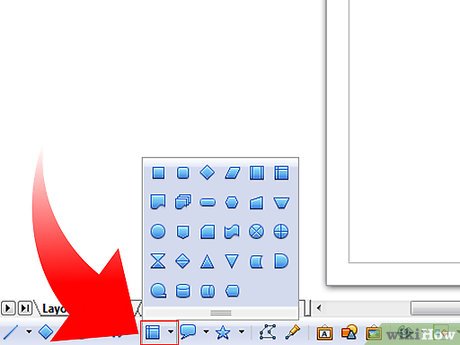 Get the tools for drawing flowcharts by clicking on the icon.
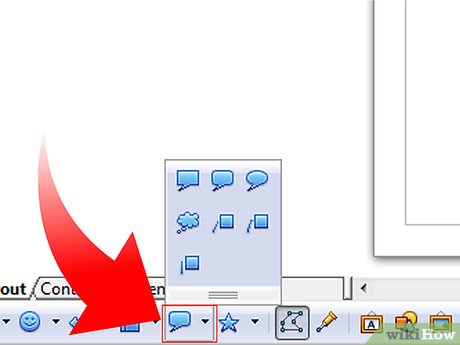 Use callouts by clicking on this icon. It open the Callouts toolbar.
- Note: These new callouts replace the old ones in Version 1. If you still need the old ones, you can add them manually to this or another toolbar.
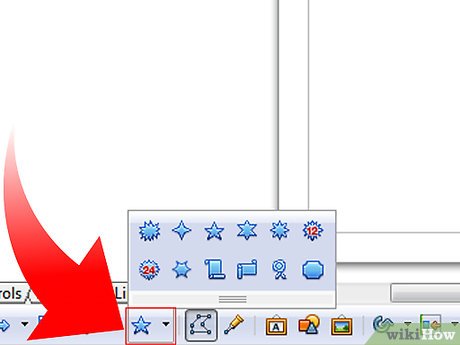 Access the Stars and banners by clicking on this icon.
- You can add text to all these shapes.
Method 2
Add Text to Objects
- Know that there are two ways to add text to a drawing; A dynamic text frame as an independent Draw object or as text in a previously drawn object. In the latter case the text is integrated with the object.
- Use dynamic text frames

- Use dynamic text frames
 The text tool is activated by clicking on the icon Text for horizontal or for vertical script
- (to be able use this latter option you must activate support for Asian languages under Tools > Options > Language Settings > Languages).

- Text frames can be moved and rotated like all draw objects.

- (to be able use this latter option you must activate support for Asian languages under Tools > Options > Language Settings > Languages).
 After activating the Text command mode,click at the location where you want to position the text. A small text frame appears. It contains only the cursor. You can move the frame if desired. The Text Formatting toolbar appears and you can choose the font type, font size and other text properties and begin to type in your text.
- The text frame grows with the text. You can insert a line break with the Shift+Enter key combination.

- The Enter key begins a new paragraph. Neither line breaks nor new paragraphs terminate the text frame.

- The text frame grows with the text. You can insert a line break with the Shift+Enter key combination.
 Observe the information field in the status bar: it shows that you are editing text and also provides details about the current cursor location - paragraph, line, and column numbers.
- Text properties can also be changed during text input. Any changes will be reflected from the cursor position onwards.

- Text properties can also be changed during text input. Any changes will be reflected from the cursor position onwards.
 After choosing the Text icon, you can alsodraw a frame with the mouse to contain future text. Line breaks are inserted automatically at the right edge of the frame when the text fills the frame width. You can however—just like when editing other text—insert your own line breaks, begin new paragraphs or change any of the text properties.
Method 3
Use text elements in Draw objects
- Be aware that a text element is associated with most Draw objects. By means of these elements text can be added to an object.
- The exceptions to this are control elements like buttons or list boxes, as well as 3D scenes and their associated elements and groups.

- The exceptions to this are control elements like buttons or list boxes, as well as 3D scenes and their associated elements and groups.
 In the middle of the Draw object you will see a black bar as the text cursor; start typing to input text. The status bar shows at lower left 'Text Edit' and the position of the cursor within the text.
- Text can contain paragraphs and these can be in the form of bulleted or numbered lists. For a new line without beginning a new paragraph, use (as in text documents) the key combination Shift+Enter. To end the text input, click next to the object or press the Esc key.

- Text can contain paragraphs and these can be in the form of bulleted or numbered lists. For a new line without beginning a new paragraph, use (as in text documents) the key combination Shift+Enter. To end the text input, click next to the object or press the Esc key.
FAQ
What is Text: How to Draw Basic Shapes Using Open Office Draw about?
It provides a structured overview of text, explains the main context, and highlights practical takeaways for readers.
Why does this topic matter?
Understanding the main concepts helps readers evaluate the issue, avoid common mistakes, and make better-informed decisions.
How should readers use this information?
Use the guidance as a practical starting point, confirm details that may have changed, and follow current product, safety, or security recommendations.
Related Articles
 How to Draw Basic Shapes in Adobe Illustrator6 minutes read
 The Easiest Way to Draw with Powerpoint8 minutes read
 Instructions for Drawing Straight Lines in Word5 minutes read
 Insert and Draw Shapes on Slide in PowerPoint4 minutes read
 How to Draw Shapes in Word 2013 and 20165 minutes read
 How to Draw Using Powerpoint7 minutes read
Reader Comments 0
Sign in with email or Google to join the discussion.