Table of Contents
This updated guide examines How to Check Your Java Version in the Windows Command Line and organizes the essential facts, background, and practical takeaways in clear American English.
Method 1
Using Windows 10
 Click the Windows Start
 icon. It's the icon with Windows logo. By default, it's in the bottom-left corner of the taskbar. This opens the Start menu.
- You can also press the⊞Winkey to open the Start menu.
 Typecmd. This displays the Command Prompt icon at the top of the Start menu. As you type, a list of programs and search results appears in the Windows Start menu.
 Click the Command Prompt icon
 . It's the black square icon with a small white "C:" in the upper-right corner.
 Typejava -versionin the Command Prompt. This is the Command Prompt command to check which version of Java you are using. Type it in the Command Prompt window.
 Press↵Enter. This displays a readout of the current Java version that is installed on your computer in the Command Prompt. Make sure you include a space after "java".
- If it doesn't display any information or there is an error while running the command, you might not have Java installed on your computer. To download Java, go to https://www.java.com/en/ in a web browser and click Free Java Download . After you install Java, restart your computer.
- If you have Java, make sure you have the latest version of Java.
- To determine if your system is running a 32-bit or 64-bit version, read How to Check If Your PC is Running the 32-bit or 64-bit Version of Windows to determine which version of Windows you are running.
Method 2
Using Windows 8
 Right-click the Windows Start
 icon. It's the icon with the Windows logo. By default, it's in the lower-left corner. Right-clicking this icon displays the System menu above the Start button.
 ClickRun. It's the third option from the bottom of the System menu. This opens the "Run" program.
 Typecmd.exenext to "Open". Use the space next to "Open" in the Run program to type the command to open the Command Prompt.
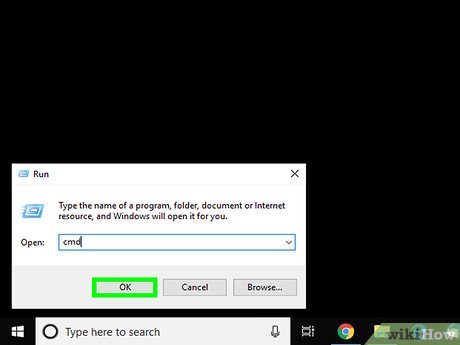 ClickOk. It's the first button at the bottom of the "Run" program. This opens the Command Prompt.[1]
 Typejava -versionin the Command Prompt. This is the Command Prompt command to check which version of Java you are using. Type it in the Command Prompt window.
 Press↵Enter. This displays a readout of the current Java version that is installed on your computer in the Command Prompt. Make sure you include a space after "java".
- If it doesn't display any information or there is an error while running the command, you might not have Java installed on your computer. To download Java, go to https://www.java.com/en/ in a web browser and click Free Java Download . After you install Java, restart your computer.
- If you have Java, make sure you have the latest version of Java and find out if your system is running a 32-bit or 64-bit version.
Method 3
Using Windows 7, Vista, and XP
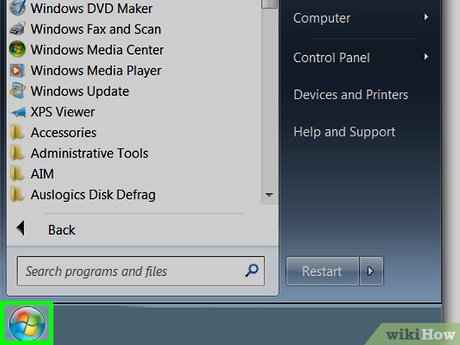 Click the Windows Start icon. It's the icon with the Windows logo. By default, it's in the lower-left corner in the taskbar. This displays the Windows Start menu.
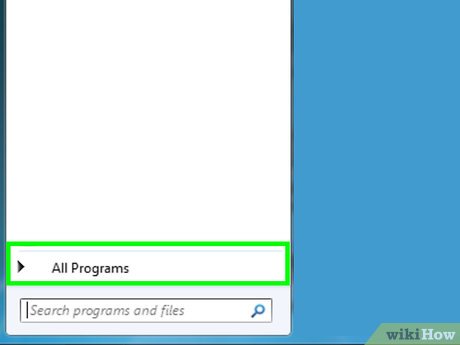 ClickAll Programs. It's in the Windows Start menu. This displays a list of all programs installed on your computer.
 ClickAccessories. This is a sub-folder in "All Programs" list. This displays a list of Windows pre-installed programs.
 ClickCommand Prompt. It's in the list of Accessories. This opens the Command Prompt.
 Typejava -versionin the Command Prompt. This is the Command Prompt command to check which version of Java you are using. Type it in the Command Prompt window.
 Press↵Enter. This displays a readout of the current Java version that is installed on your computer in the Command Prompt. Make sure you include a space after "java".
- If it doesn't display any information or there is an error while running the command, you might not have Java installed on your computer. To download Java, go to https://www.java.com/en/ in a web browser and click Free Java Download . After you install Java, restart your computer.
- If you have Java, make sure you have the latest version of Java.
FAQ
What is How to Check Your Java Version in the Windows Command Line about?
It provides a structured overview of java, explains the main context, and highlights practical takeaways for readers.
Why does this topic matter?
Understanding the main concepts helps readers evaluate the issue, avoid common mistakes, and make better-informed decisions.
How should readers use this information?
Use the guidance as a practical starting point, confirm details that may have changed, and follow current product, safety, or security recommendations.
Related Articles
 How to Check the Java Version on Windows and macOS5 minutes read
 How to Check Java Version on Mac: Practical Guide4 minutes read
 How to Check Java Version on a Mac4 minutes read
 Instructions on How to Compile and Execute Java Using Command7 minutes read
 Manage the Event Log with the Command Line6 minutes read
 5 Best Command Line Emulation Software for Windows 106 minutes read
Reader Comments 0
Sign in with email or Google to join the discussion.