Table of Contents
This practical guide walks through how to change the default shell in Windows terminal, explains the main requirements, and highlights common issues that may appear along the way.
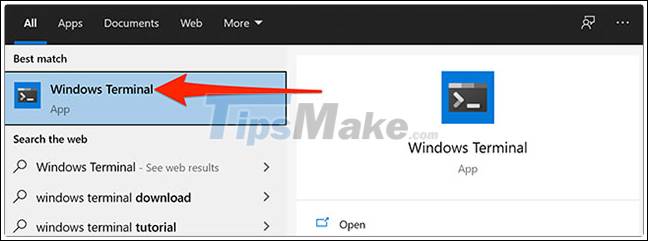
To get started, open the 'Start' menu, search for 'Windows Terminal' and click on the corresponding application in the results.
Next, click the down arrow icon at the top of the Windows Terminal window, then select 'Settings'.
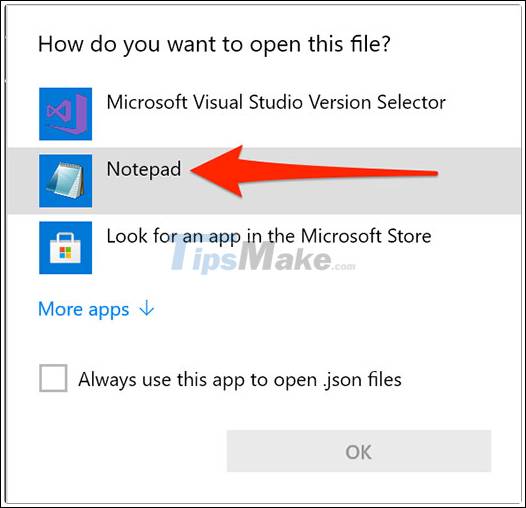
Windows will ask you with which application you want to open the settings file. You can choose any code (or plain text) editor from the list, but we recommend using Notepad for simplicity. Please click 'Notepad' in the list and press 'OK'.

When the settings file opens in Notepad, scroll to the shell section that you want to set as default. There is a heading at the top of each section that tells what each particular shell is used for.
For example, the section of PowerShell says 'Make changes here to the powershell.exe profile'. Similarly, the section of the Command Prompt says 'Make changes here to the cmd.exe profile'. The part of Ubuntu has the keyword 'Ubuntu' to the right of the 'name'.
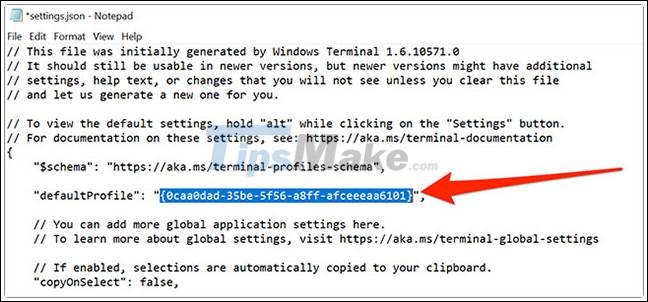
Now copy the text next to 'guid' in the shell you want to select. You don't need to copy both the quotes. Just copy the text inside the quotes, as shown below:

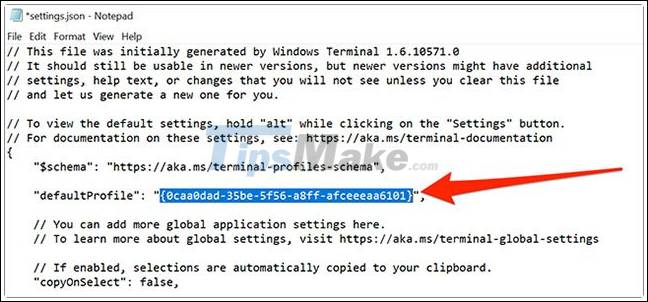
Next, you scroll to the top of the settings file and find the 'defaultProfile' text field. Delete the text next to this field and paste the text you copied above here by pressing Ctrl + V.
Now, click File > Save in Notepad to save the changes.
The shell you selected now becomes the default shell in Windows Terminal.
Key Takeaways
Use the information above as a practical reference for how to change the default shell in Windows terminal. Review each step carefully, confirm any requirements, and choose the option that best fits your situation.
FAQ
What does this guide explain about Change the Default Shell in Windows Terminal?
It explains the main concepts, practical considerations, and useful steps related to change the default shell in Windows terminal without requiring advanced knowledge.
Who can benefit from learning about Change the Default Shell in Windows Terminal?
This information is useful for readers who want a clear overview, practical guidance, and reliable steps related to change the default shell in Windows terminal.
What should I check before applying this information?
Review the requirements, confirm that your device, software, or situation matches the instructions, and back up important data before making major changes.
Related Articles
 How to Customize Windows Terminal Application6 minutes read
 How to Change Default Folder in Windows Terminal6 minutes read
 Notable Changes in Windows Terminal Ver 0.113 minutes read
 How to Make Windows Terminal the Default Terminal4 minutes read
 Windows Terminal Is About to Have a Retro Version with a3 minutes read
 How to Reset Windows Terminal to Default Settings on Windows3 minutes read
Reader Comments 0
Sign in with email or Google to join the discussion.