Table of Contents
Have you ever wondered how many stars are in the sky? How many stars can we see on a moonless day?
Have you ever wondered how many stars are in the sky? How many stars can we see on a moonless day? Let's find out!
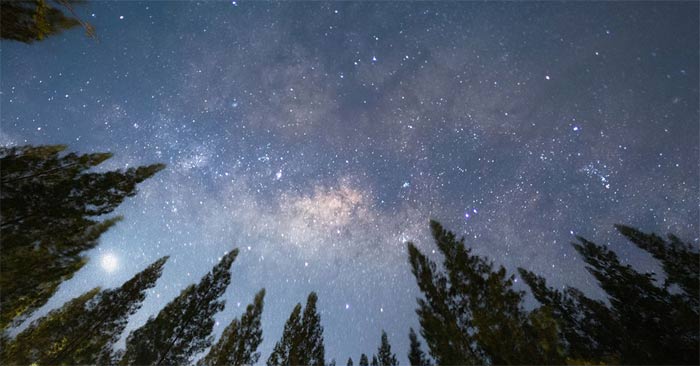
How many stars can be seen in the sky?
Imagine you are far away from city lights, under a pitch-black sky, on a moonless, cloudless, and fogless night. How many stars can you see with the naked eye? There is really no definitive answer to this question. No one has ever counted all the stars in the night sky, and astronomers use various theoretical estimates.
Considering all the stars visible in all directions around the Earth, the highest estimate is that there are nearly 10,000 stars visible on a moonless night. This number is calculated by astronomytrek.com as follows:
The brighter the star, the lower its apparent magnitude value, with the brightest star being assigned a negative number. There are a total of 22 stars with magnitudes ranging from -1 to 1, making them the brightest stars in the night sky. Meanwhile, there are 71 2nd magnitude stars, 190 3rd magnitude stars, 610 4th magnitude stars, 1,929 5th magnitude stars, and 5,946 6th magnitude stars. When you add in another 3,150 stars at the visual limit of +6.5, there are a total of 9,096 stars visible in the night sky from both the Northern and Southern Hemispheres with the naked eye.
Of course, in the Northern Hemisphere, you can't see stars below the southern horizon in the Southern Hemisphere. So each hemisphere can only see about 5,000 stars. And at any given time, half the Earth is in daylight. So only about half of the estimated number—perhaps 2,500—are visible from the night side of Earth. Plus, a small fraction of those observable stars are hidden in the darkness surrounding the horizon. That number drops to about 2,000.
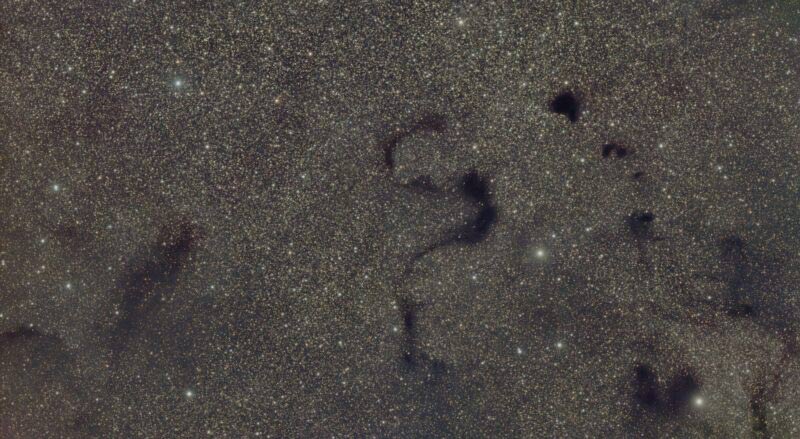
Factors affecting the ability to observe stars
Why can't astronomers agree on how many stars are visible? That's because not everyone sees the sky the same way. Even under ideal conditions, there are significant differences in how well You can see stars. Factors that affect this include eyesight and age. As you get older, for example, your eyes become less sensitive to dim light. It's also important to remember that it takes up to 30 minutes for your eyes to adjust to darkness.
You also need to consider the brightness of the night sky. Even on moonless nights, light from the Earth's surface illuminates the sky. However, far from city lights – in perfect darkness and clear skies – a young to middle-aged person with normal vision will be able to see thousands of stars.
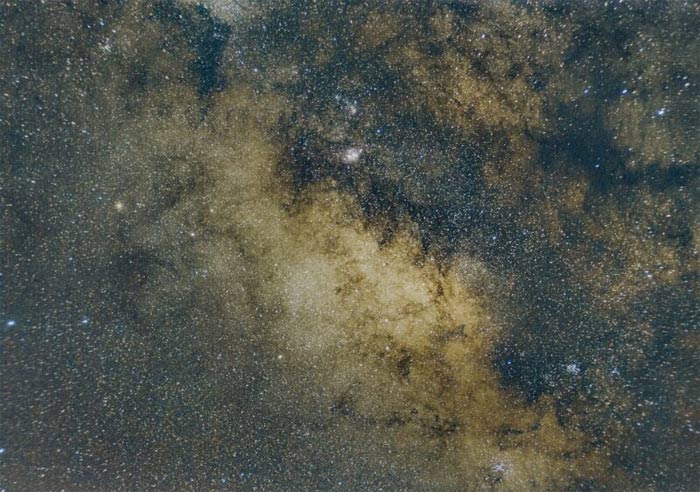
Summary: The number of stars visible in the sky on a moonless night depends on how dark the sky is, your age, and other limiting factors.
FAQ
What should you know about how many stars can be seen in the sky on a moonless night?
In practical terms, have you ever wondered how many stars are in the sky? How many stars can we see on a moonless day.
Why does how many stars can be seen in the sky on a moonless night matter?
The article highlights that how many stars can we see on a moonless day.
What is the main takeaway?
The main takeaway is that summary: The number of stars visible in the sky on a moonless night depends on how dark the sky is, your age, and other limiting factors.
Related Articles
 10 Brightest Stars in the Sky4 minutes read
 What Are Binary Stars? How to Find and Observe Binary Stars: Complete Guide7 minutes read
 Why Does a 5-Pointed Star Twinkle in the Sky?3 minutes read
 Stt for the Night the Mood Couldn't Sleep: Good Words About Night10 minutes read
 Admire the Rare Moment Venus and Jupiter 'Meet' Each Other in the Sky4 minutes read
 Instructions for Activating Night Shift on iOS 9.35 minutes read
Reader Comments 0
Sign in with email or Google to join the discussion.