There are so many interesting things about the Sun , do you know them all? Let's explore the Sun and some surprising facts about it!
The Sun is located at the center of the solar system, where it is the largest object. The Sun contains 99.8% of the solar system's mass and has a diameter approximately 109 times that of Earth — about a million Earths could fit inside the Sun.
The surface of the sun is approximately 10,000 degrees Fahrenheit (5,500 degrees Celsius), while the temperature in its core reaches over 27 million degrees Fahrenheit (15 million degrees Celsius) due to nuclear reactions. According to NASA, it would take 100 billion tons of explosives detonated every second to generate the same amount of energy as the sun.
The Sun is one of over 100 billion stars in the Milky Way. It orbits the galactic core at a distance of about 25,000 light-years, completing one rotation every 250 million years. The Sun is relatively young, part of a generation of stars known as Population I, which is relatively rich in elements heavier than helium. An older generation of stars is known as Population II, and an earlier generation of Population III may have existed, although no members of this generation are known.
Astronomers have studied it for centuries, and in the meantime, they've uncovered countless fascinating details about this fiery "giant." So, let's explore some of its most intriguing features and delve deeper into its impact on Earth, or discover some interesting facts you might not know about the Sun !
The Sun, located at the center of the Solar System , plays a crucial role in sustaining development on Earth. This fiery sphere marks the passage of time, providing the necessary substances and light to nourish humans, as well as plants and animals on our planet. Additionally, the Sun creates some incredibly beautiful visual effects in the sky – considering all that the Sun has done for humankind, you can understand why some ancient cultures worshipped the Sun as a deity. And after reading the following interesting facts about the Sun, you'll surely be surprised by our star and the ancient civilizations. Let's take a look at 40 fascinating facts about the Sun that you may not know!
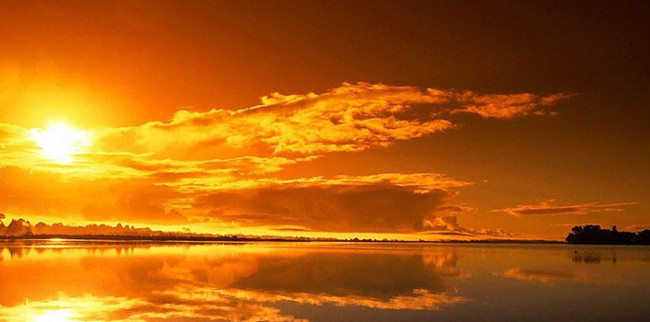
1. Amazingly, the Sun weighs 1,989,100,000,000,000,000,000 trillion kilograms, almost equal to the weight of 330,060 Earths!
2. If the inside of the Sun were completely hollow, it could be filled with 960,000 spherical Earths. However, if Earths were compressed inside the hollow Sun, they could be filled with 1,300,000 flattened Earths, with no space wasted.
3. The surface area of the Sun is 11,990 times larger than the surface area of the Earth.
4. Our Sun is just one of 100 billion stars in the Milky Way galaxy.
5. Many people believe there are nine planets orbiting the Sun in the Solar System: Mercury, Venus, Earth, Mars, Jupiter, Saturn, Uranus, and Neptune. However, according to science, there are only eight planets because Pluto – also known as a dwarf planet – deviated from its orbit compared to the other eight and was therefore ejected from the Solar System. [ Space Science: The Order of the 8 (or 9) Planets in the Solar System ]
6. Besides Pluto, there are four other stars orbiting the Sun that are all out of orbit: Ceres (the smallest dwarf planet), Haumer, Makemake, and Eris.
7. The sun's size, shape, brightness, temperature, age, and distance are perfectly suited for life to exist on Earth. If any of these parameters were off, even slightly, life on our planet might not exist.
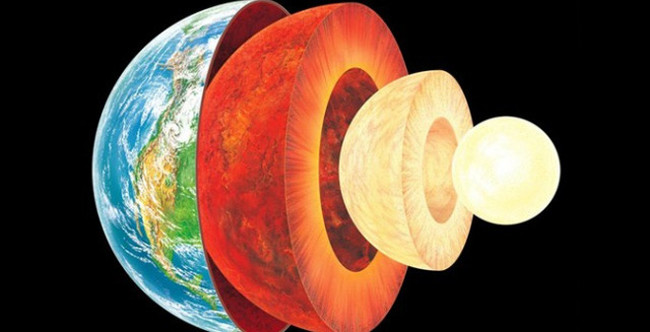
8. The Sun was formed and has a similar " life cycle " to other stars: it begins as a cloud of gas and dust called a nebula . Initially, this cloud is very dense, with a temperature of around -226 degrees Celsius. Then, due to the gravitational pull between particles, parts of the cloud begin to collide with each other and form clusters called " proto-stars ".
9. During the collision of " proto-stars ," gravitational energy is transformed, friction generates heat, and these proto-star clusters burn brightly, giving off a reddish glow. This continues until the heat is sufficient to create nuclear reactions within the core, eliminating the natural gravitational pull, and thus these proto-star clusters gradually form a massive star that we now call the Sun.
10. At over 4.6 billion years old, the Sun is considered a " middle-aged " dwarf star – meaning the Sun has "lived" half its life and is now known as a yellow dwarf star.
11. When the Sun burns up all the hydrogen inside, it will switch to burning helium in about 130 million years. During that time, the Sun will become so large that it will engulf Mercury, Venus, and Earth. At that point, the Sun will become a " red giant ."
12. After the Sun has transitioned to the " red giant " phase, its outer shell will be ejected (almost completely degenerate) and its core will gradually shrink. This process is known as a nebula planet, defined as a hot gas shell being ejected from a star and undergoing the final stage in a star's evolution.
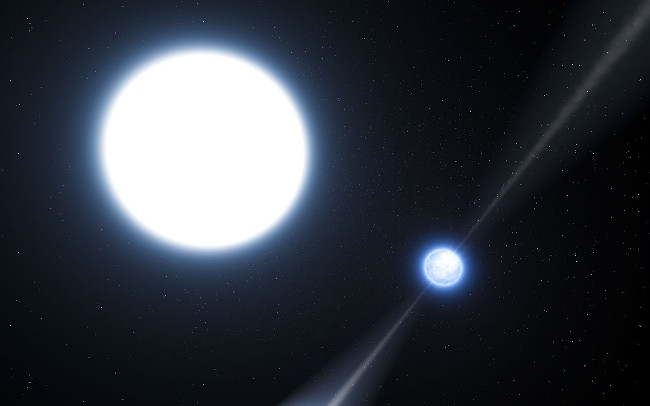
13. During this phase, the remaining core of the Sun retains its enormous mass, but is only approximately equal to the mass of the planet Earth. At this time, the Sun will be surrounded by nebulae and will be known as a white dwarf star .
14. The Sun's enormous gas mass accounts for 99.86% of the total gas mass of the entire solar system.
15. The Sun consists of approximately 75% hydrogen and 25% helium; other metals make up only 0.1% of the Sun's gaseous mass.
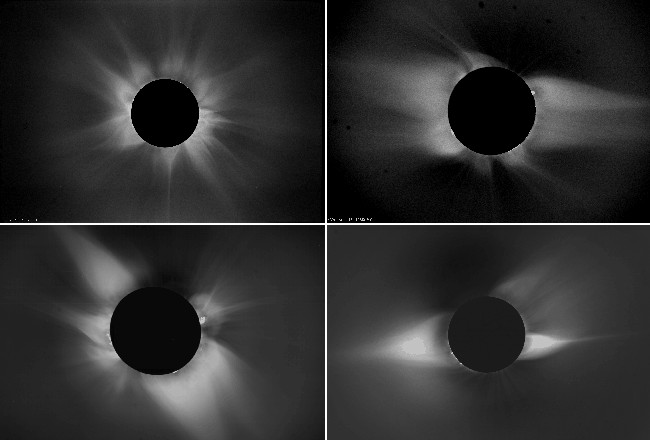
16. The Sun is surrounded by an extremely powerful stream of plasma, known as the "corona"—which in Latin means "crown . " The Sun's corona can extend millions of kilometers into space and is most easily seen during a total solar eclipse.
17. However, there is a device similar to a telescope called a coronagraph, with which you can easily see what is closest to the Sun without glare or eye damage. In addition, you can admire other planets, and even observe comets up close.
18. With a distance of 150 million km from the Sun to the Earth, it takes light from the Sun 8 minutes and 20 seconds to reach the Earth's surface.
19. Although the light rays (including infrared and ultraviolet rays) from the Sun take less than 10 minutes to reach Earth, it takes millions of years for these rays to travel from the Sun's core to its surface.
20. The average distance from the Sun to the Earth is approximately 150 million km, but in reality, this distance always varies considerably. This is because the Earth orbits the Sun in an elliptical path, so the distance can change, with the closest being 147 million km and the furthest being 152 million km. The distance between the Sun and the Earth is also measured in astronomical units ( AU ).
21. If we were to depart from Earth in a normal airplane traveling at 664 km/h, it would take us 20 years of non-stop travel to reach the Sun.
22. The diameter of the Sun's equator is roughly equal to the diameter of its poles, about 10 km, meaning the Sun is almost a perfect sphere. However, currently, the Sun is not the most perfect sphere in the Solar System; the most perfect sphere is Venus.
23. Our planet Earth takes 24 hours to rotate on its axis, while the Sun takes 25 days to rotate on its axis. But 25 days is at the equator; at the poles, the Sun takes 36 days to complete one rotation. This is why the Sun's rotation speed is inversely proportional to latitude. When combined with the tilt of the Sun's axis, the higher the latitude, the slower the rotation speed. Imagine if you stick a pencil through an apple at an angle, it will stick out at the top and bottom of the apple. Now, if you rotate the apple, the middle part of the apple will rotate faster than the corners.
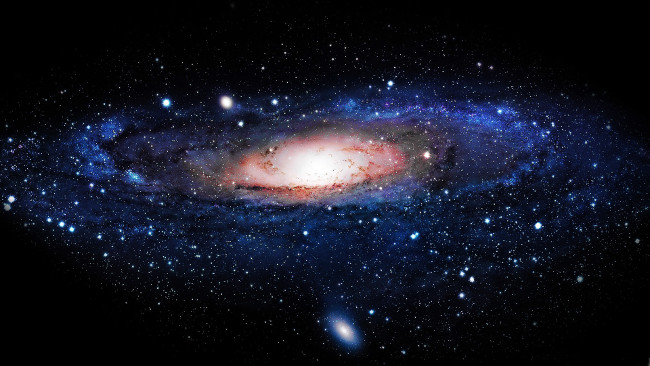
24. The Sun is located approximately 24 to 26 thousand light-years from the center of the galaxy, and it takes the Sun 225–250 million years to complete one orbit.
25. Assume the Sun takes 225–250 million years to orbit the center of the Milky Way galaxy at an average speed of 220 km/second (approximately 136.7 miles/second).
26. The energy in the Sun's core is generated by nuclear reactions when hydrogen atoms are burned to produce helium. In this process, the Sun can produce approximately 386 billion megawatts (MW).
27. In fact, helium is lighter than hydrogen, so when hydrogen atoms fuse to form helium atoms in the Sun's core, its mass decreases slightly.
28. During nuclear reactions in the Sun, the temperature of the core can reach up to 150 million degrees Celsius.
29. The surface of the Sun has a temperature of about 5,500 degrees Celsius, although it appears to be much cooler there than in the core.
30. Nuclear reactions in the Sun's core generate tremendous heat and cause the core to expand. Without the enormous gravitational pull inside, the Sun would have exploded like a bomb.
31. The Sun has a very strong magnetic field , which is why magnetic storms occur. During a magnetic storm, we can clearly see the storm on the Sun through images: they appear as small black spots, also known as "sunspots . " During a magnetic storm, the magnetic field lines twist and rotate violently, similar to tornadoes on Earth.
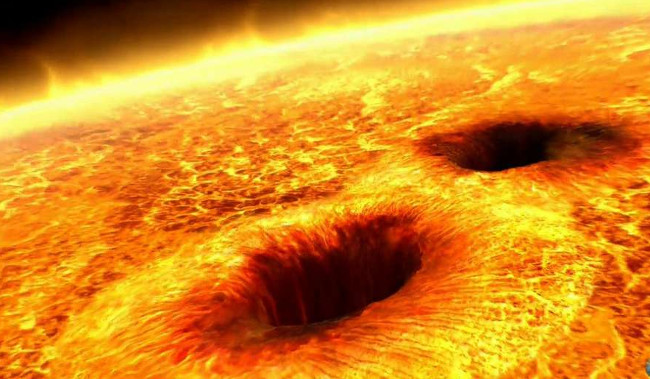
32. The highest number of solar sunspots occurs repeatedly within an 11-year period, meaning the Sun has a cycle of this behavior that occurs once every 11 years.
33. Sometimes the Sun creates something called solar wind, which are streams of charged particles like protons and electrons, ejected and "blown" throughout the solar system at speeds of about 450 km/s.
34. These solar winds are created when protons and electrons accumulate enough charge and momentum to escape from the Sun's center, overcoming its immense gravitational pull.
35. Winds from the Sun can cause interference on Earth and disrupt the orbits of spacecraft.
36. In addition, solar winds also create some aurora phenomena in polar regions, comet tails, and the Aurora Borealis or The Northern Lights ("Northern Lights," from Latin for "northern dawn") are also caused by these winds.
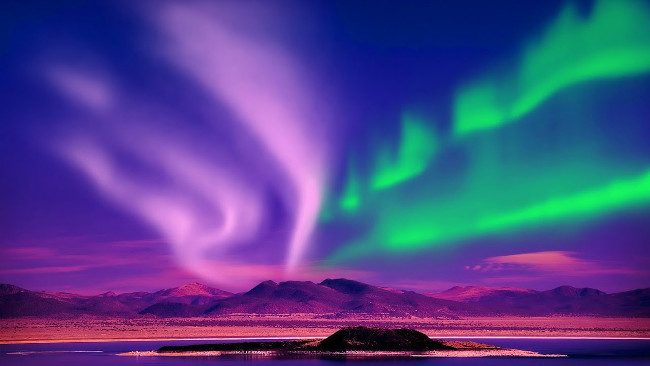
37. Earth-like planets with strong magnetic fields often deflect solar winds, causing them to be pushed back and preventing them from making contact with the planet's surface.
38. Throughout human history, the Sun has had a profound influence on ancient cultures. The Sun was often seen as the giver of life , and many ancient cultures revered the Sun as a deity. The Egyptians worshipped the Sun God Ra, and the Aztecs worshipped the Sun God Tonatiuh.
39. For centuries, astrologers considered the Earth to be the center of the universe and the Sun to be constantly revolving around the Earth. They believed the Moon was the planet closest to Earth, followed by Venus, Mercury, or the Sun.
40. Suppose the Sun lost its illuminating surface; the whole world would be plunged into darkness. Although in reality, the surface of the Sun is so bright that looking at it for too long will burn your retina, its core is completely black.
See also some other articles:
- When will we be able to pinpoint the location of the "ninth planet" in our solar system?
- A collection of images of the ninth planet in our solar system.
- Interesting facts about the universe aren't entirely what we think.
Have fun everyone!
Related Articles
 40 Interesting Facts You Didn't Know About the Sun13 minutes read
 15 Interesting Facts About DRAGON Phenomenon You May Not Know3 minutes read
 11 Interesting and Quirky Historical Facts That Make4 minutes read
 12 Interesting Facts About Food That Everyone Should Know7 minutes read
 21 Interesting Facts About the Human Body Not Everyone Knows4 minutes read
 Interesting Facts That Can Change the Way You See the World5 minutes read
Reader Comments 0
Sign in with email or Google to join the discussion.