Table of Contents
From Joomla! to Joomla! Vietnam is easier to understand when the core ideas are paired with practical examples. The sections below explain the topic clearly, highlight useful steps, and point out details that can prevent common errors.
Designing a website is very familiar to computer users today. There are many software and tools to help us do this. One of them, quite popular, is Joomla! Joomla! is an open source content management system. Joomla! written in PHP language and connected to MySQL database, this makes it easy for users to publish their content on the internet. Joomla! pronounced in Swahili as Jumla, which means 'Concentric synergy'. Joomla! Open source and completely free for all users around the world Joomla! There are basic features: page caching to speed up display, indexing, reading RSS feeds (RSS feeds), printing pages, instant bulletins, blogs, forums, votes, tables, support in site search and multilingual support. A few lines of history 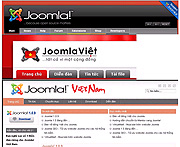 Joomla! The Mambo is a tool to help create and administer the website quite well. However, when Mambo Foudation supported Australia's Miro group to prevent Mambo from being widely used in the community, dissent occurred. On August 17, 2005, all 20 core members of the development team left the Mambo project while working with version 4.5.3 and established a new branch called Joomla! Thanks to the help of the Software Freedom Law Center (SFLC), 20 Mambo former core members have established another non-profit organization called Open Source Matters, to assist with The organization, legal and funding aspects of open source projects have yet to be named. At the same time, the development team also created a website called OpenSourceMatters to distribute information to users, developers, designers and the general Joomla community. September 16, 2005 Joomla! 1.0 was born. Applications and Joomla! + Line version 1.0.x is quite stable and widely used. The latest version released on July 21, 2007 is 1.0.13 + Line version 1.5.x has also developed Joomla! 1.5 RC1 at the end of July this year, but the operation is not stable, so it is mainly run on a single machine + Show Joomla! Applied for: Online electronic, commercial portals, online newspapers, websites of individuals or organizations. These addresses need attention Official website of Joomla! at http://joomla.org. If you want to see the demo of Joomla! How does it work, visit http://demo.joomla.org. To receive extensions and support, the address is http://extensions.joomla.org Details about Joomla! written in Vietnamese can be read at http://en.wikipedia.org/wiki/Joomla! Community Joomla! Vietnam has just made 1 year old birthday on July 7, 2007. Currently worldwide there are 100,000 community members Joomla! of which 5,000 members are Vietnamese. The addresses help us read the documents in Vietnamese, discuss Joomla!, download and install to apply, the instruction manual in Vietnamese pdf format. is: http://vinaora.com/joomla http://www.joomlaviet.org http://www.joomlavietnam.org http://www.giaovien.net/content/view/102/48/ Those who like to study websites and are interested in open source pay attention to Joomla! Ta Xuan Quan
FAQ
What is From Joomla! to Joomla! Vietnam?
Designing a website is very familiar to computer users today.
Why is From Joomla! to Joomla! Vietnam important?
A clear understanding of From Joomla! to Joomla! Vietnam helps you make informed decisions, avoid common mistakes, and use the relevant tools or techniques more effectively.
How should beginners approach From Joomla! to Joomla! Vietnam?
Start with the fundamental concepts, follow the examples step by step, and test each change in a safe environment before applying it to important systems or data.
Related Articles
 How to Play Pokémon GO on a Computer6 minutes read
 How to Play Pokémon GO on a Smartphone6 minutes read
 26 Types of Poké Balls Explained: Part 25 minutes read
 How to Earn and Use Stardust in Pokémon GO5 minutes read
 Pokémon GO Eggs: Incubation and Hatching Guide4 minutes read
 26 Types of Poké Balls Explained: Part 18 minutes read
Reader Comments 0
Sign in with email or Google to join the discussion.