Table of Contents
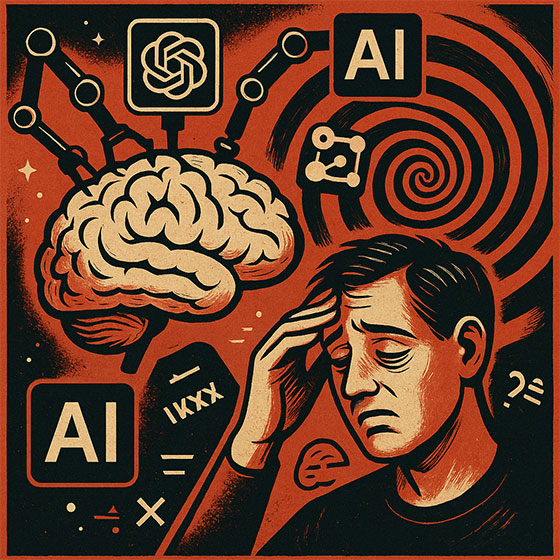
A study of AI-assisted essay writing raises useful questions about engagement and recall, but it does not show that ChatGPT makes people less intelligent or causes brain damage. Its findings concern a particular writing task, a limited sample and specific ways of using the tool.
What the researchers tested
The 2025 preprint Your Brain on ChatGPT compared essay writing with an LLM, with a search engine and without external tools. There were 54 participants in the first three sessions; only 18 completed a fourth session that switched the tool condition for some participants.
The researchers recorded EEG activity, analyzed writing and asked participants about their essays. They reported different connectivity patterns across the groups, along with differences in ownership of the text and the ability to quote from it shortly afterward.
Those observations should not be rewritten as an intelligence test. Nor should the tool-free condition be described as “writing by hand”: the distinction in the study was access to external tools.
What the study does not establish
The MIT Media Lab project overview describes the results as preliminary and context-dependent. It explicitly cautions against presenting them as evidence that users become unintelligent or suffer damage.
- A small sample is limited: it cannot represent every age group, profession or learning situation.
- The fourth session was smaller: its 18 participants should not be confused with the full initial group.
- EEG connectivity is not an IQ score: a difference in a task-related measure does not establish a permanent loss of ability.
- One workflow is not all AI use: generating an essay differs from asking for hints, practicing recall or critiquing your own draft.
- Publication status matters: the June 2025 release was a preprint; readers should check the current paper and later work rather than assume an early report is the final word.
A subsequent methodological comment raised questions about design, analysis and reporting. That debate is a reason to examine evidence carefully, not to replace one sweeping headline with another.
The practical issue: who is doing the thinking?
If a learner accepts a finished answer without evaluating it, they may do less of the planning, retrieval and revision the exercise was intended to practice. That is a plausible concern about task design; this study does not establish an unavoidable outcome for every user.
Similarly, a confident AI response can contain errors or assumptions. Agreeing with a fluent explanation is different from understanding why it is correct.
Use AI while keeping the learning work
- Attempt the task first. Write your own explanation or outline before requesting help.
- Ask for feedback, not a replacement. Request one weakness, a hint or a counterargument.
- Verify important claims. Read the underlying source instead of relying on an AI summary of it.
- Explain the result without the tool. Close the response and restate the reasoning in your own words.
- Retry later. Check whether you can perform the skill without seeing the generated answer.
The AI and productivity learning path provides a broader framework for verification. For work rather than study, these practical ChatGPT data tasks show why a clear objective and independent checks matter.
The evidence supports asking better questions about how people use AI. It does not support diagnosing a person's intelligence from whether they use a chatbot.





Reader Comments 0
Sign in with email or Google to join the discussion.