Table of Contents
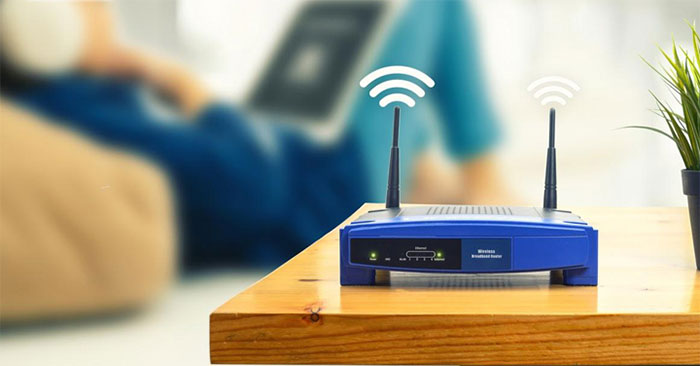
Wi-Fi signals can be used for contactless sensing because breathing, a heartbeat, and larger body movements slightly change how radio waves travel through a room. At Computex 2024, Delta Electronics demonstrated algorithms that estimated breathing and pulse from those changes. The demonstration was promising, but it was not evidence that an ordinary router can replace a medical monitor.
What Delta demonstrated
Dr. Tzi-cker Chiueh of the Delta Research Center presented the work during a Computex keynote. Reports from the event said Delta's breathing-rate algorithm achieved 95% accuracy within five meters, while its heart-rate estimate achieved 83% accuracy within one meter.
The presentation also showed two people lying near smartphones while the system distinguished sleep-related states from breathing patterns and body motion. Suggested applications included occupancy detection, elder care, hospital observation, child-presence detection in vehicles, and smarter access-point management.
Those figures were claims made in a trade-show presentation. Public reporting did not provide enough detail to treat them as a clinical accuracy result: the number and characteristics of participants, reference sensors, definition of “accuracy,” error distribution, room layouts, interference, and independent replication were not specified. The original Computex report also noted that Delta gave no commercialization timeline.
How Wi-Fi sensing works
A Wi-Fi receiver does more than recover data packets. Compatible hardware can expose measurements describing the wireless channel between transmitter and receiver. These measurements are often called channel state information, or CSI.
A room contains many signal paths. Some radio waves travel directly; others reflect from walls, furniture, and people. Movement changes the length and strength of those paths. Breathing creates periodic chest motion, and a heartbeat produces a much smaller movement. Signal-processing and machine-learning methods can search CSI for those repeating patterns.
Delta's presentation described using time of flight and angle of arrival to reason about where signals came from, then analyzing small channel changes over time. This is related to radar sensing, but it uses Wi-Fi radios and waveforms rather than a dedicated medical radar.
Wi-Fi generation alone does not guarantee that a consumer router exposes the measurements or antenna control an algorithm needs. For context on the networking side, TipsMake's guide to Wi-Fi standards explains how wireless capabilities differ across generations.
What can make the result fail?
Contactless vital-sign sensing must separate a weak biological signal from a changing radio environment. Performance can be affected by:
- the person's position and orientation relative to the transmitter and receiver;
- multiple people moving in the same sensing area;
- fans, curtains, pets, doors, and other objects that create periodic or abrupt motion;
- walls, furniture, antenna placement, and reflections unique to the room;
- neighboring networks and radio-frequency interference;
- loose clothing, blankets, posture changes, talking, coughing, or turning over;
- differences in body size, breathing pattern, heart rhythm, and health condition;
- hardware, firmware, sampling rate, calibration, and model-training data.
A system that performs well for a stationary participant in a known bedroom may not perform the same way in a busy hospital ward or moving vehicle.
Wi-Fi sensing is not the same as a medical measurement
| Use | What Wi-Fi sensing might provide | What remains necessary |
|---|---|---|
| Wellness or sleep trends | Contactless estimates of breathing rhythm, motion, or presence. | Clear error ranges, repeatability, and guidance on when readings are unreliable. |
| Fall or occupancy alerts | A change or absence of movement without a camera. | False-alarm testing, backup detection, and a defined response workflow. |
| Vehicle child-presence detection | Possible detection of very small periodic movement. | Automotive validation across temperature, seating, blankets, multiple occupants, and failure modes. |
| Clinical monitoring | A non-contact signal that could complement other sensors. | Regulatory review, clinical validation, cybersecurity, calibrated reference comparison, and medical oversight. |
An ECG measures the heart's electrical activity; a pulse oximeter uses light to estimate blood oxygen saturation and pulse. Wi-Fi sensing does neither. It infers motion associated with breathing or a heartbeat. It should not be used to diagnose an arrhythmia, sleep apnea, respiratory illness, or another condition unless a specific product has been validated and authorized for that purpose.
Privacy and security questions
Contactless sensing avoids a camera, but it is not automatically private. A system may reveal room occupancy, movement, sleep schedules, or health-related patterns. Depending on radio range and building layout, sensing may extend beyond the space a user expects.
A responsible product needs:
- clear consent from people in the sensing area;
- visible controls to turn sensing off;
- local processing where practical and a stated retention period;
- encryption and access control for raw and derived data;
- separation between network administration and health or occupancy profiles;
- tests for spoofing, replay, unauthorized tracking, and compromised access points;
- a way to delete data and disconnect third-party services.
Hospitals, care homes, workplaces, rentals, and shared residences also need policies explaining who may view alerts and how the data can be used.
What evidence would make this ready for real use?
Look for a peer-reviewed study or regulatory submission that reports participant count and diversity, room configurations, reference instruments, mean absolute error rather than a vague percentage, confidence intervals, failure rates, multi-person performance, and tests by an independent group. A product should also explain compatible hardware and whether performance changes after a router update or furniture move.
The practical conclusion is measured: Wi-Fi can act as a motion sensor sensitive enough for experimental breathing and heart-rate estimation. Delta's demo shows a plausible direction for contactless monitoring, not a reason to discard wearables or medical equipment today.
Related Articles
 30 Surprising Facts in the World Surprise Both Smartest People7 minutes read
 Anonymous Browsing Has More Uses Than You Think5 minutes read
 3 Ways to Enable or Disable Network Discovery on Windows 7/8/106 minutes read
 3 Ways to Turn Network Discovery on or Off in Windows: Explained4 minutes read
 Experience Mobile Web Browsing Mode on Your Computer6 minutes read
 How to Speed up Web Browsing, Block Out Virtual Money on Safari5 minutes read
Reader Comments 0
Sign in with email or Google to join the discussion.