Table of Contents
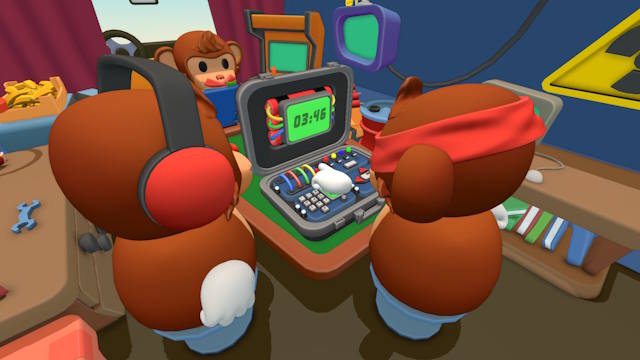
BOMBANANA! is an online co-op bomb-defusal game built for exactly three players. One monkey handles the bomb, one has the manual, and one connects the information between them. The individual puzzles are only half the challenge: the team must pass accurate instructions through restrictions on sight, speech, and hearing before the timer expires.
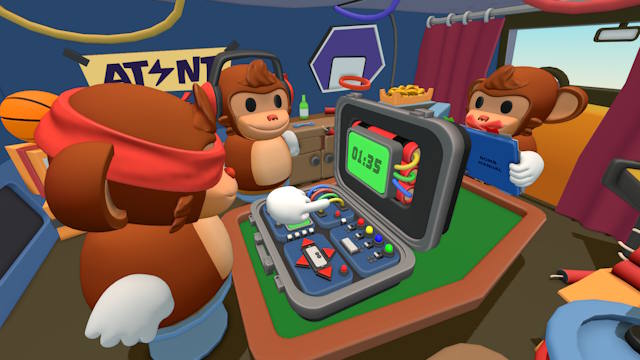
A free demo is available from the official BOMBANANA! Demo page on Steam. The full game is listed separately with an expected August 2026 release window; check its Steam page for the latest availability rather than relying on an older date.
How BOMBANANA! works
Each level places the trio in a minivan with a bomb made of several puzzle modules. The group must solve the required modules before time runs out and without exceeding the allowed mistakes. No single player receives all the information or controls needed to finish alone.
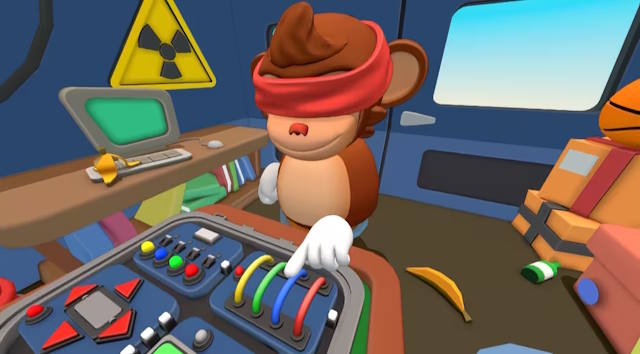
The game requires three players—no more and no fewer. It uses restricted in-game voice communication and role-specific information, so external voice chat can defeat the intended puzzle. For a first session, use the game’s communication system and let the limitations create the challenge.
The three monkey roles
Blind Monkey: operates the bomb
The Blind Monkey is the only player who can physically manipulate the bomb. This role cannot rely on colors or readable displays and instead identifies controls through position, shape, and touch-related cues. When a module includes tactile or Braille-style information, this player must report it accurately before acting.
The role rewards patience. Repeat the requested action—such as “top-left switch, move down”—and wait for confirmation before touching the control.
Mute Monkey: reads the manual
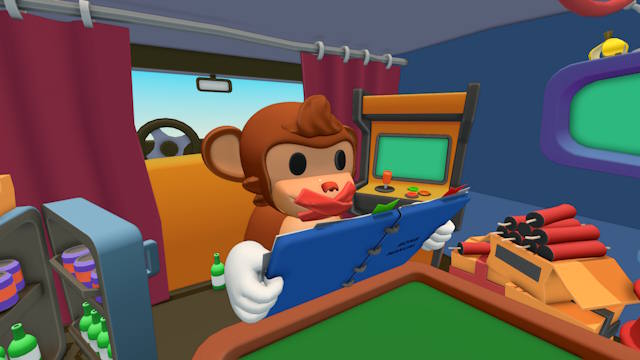
The Mute Monkey has the defusal manual and the rules needed to solve modules, but cannot simply speak the answer. They must convert instructions into clear gestures that another player can interpret.
Do not pantomime a complete sentence if a small agreed signal will work. Pointing, counting on fingers, showing left or right, and using a consistent stop gesture are easier to read under pressure.
Deaf Monkey: observes and relays
The Deaf Monkey can see the bomb and speak, but cannot hear the others. This player watches both the bomb and the Mute Monkey, interprets gestures, and gives verbal directions to the Blind Monkey. It is usually the busiest role because it joins the manual’s answer to the physical control.
Build a communication loop before the timer starts
The game does not force one communication method, but a predictable loop prevents players from talking or gesturing over one another:
- The Deaf Monkey identifies the current module and shows the relevant details to the Mute Monkey where possible.
- The Mute Monkey finds the matching rule in the manual and signals the answer.
- The Deaf Monkey reads that signal and gives one short instruction to the Blind Monkey.
- The Blind Monkey repeats the instruction, performs it, and reports the result.
- The team confirms success before moving to the next module.
If a puzzle needs tactile information from the Blind Monkey, the loop may need to travel back through the Deaf Monkey to the Mute Monkey first. The important point is not a rigid direction; it is that every message has a known sender, receiver, and confirmation.
Agree on signals first
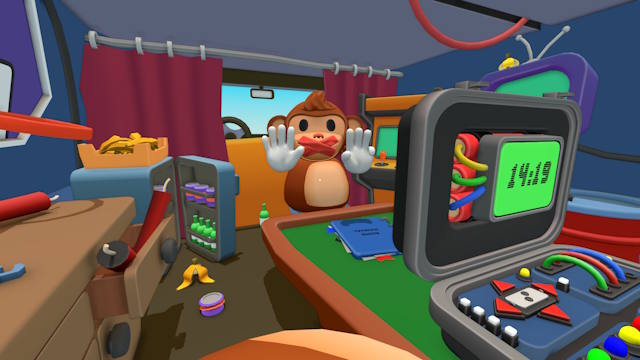
Spend a minute establishing a small vocabulary before beginning a difficult bomb:
- Yes and no: use gestures that cannot be confused when viewed from an angle.
- Stop: choose one unmistakable signal that pauses all input immediately.
- Left and right: decide whether directions are from the bomb operator’s view or the observer’s view.
- Numbers: show one hand at a time and hold the count long enough to be read.
- Repeat: use a separate gesture for “show that again” rather than guessing.
- Module complete: confirm success before anyone changes focus.
Keep signals literal. Inventing a large codebook often creates more memory work than it saves.
A reliable first-round routine
- Survey the bomb. The Deaf Monkey identifies the modules, while the Blind Monkey reports any tactile details that the others cannot access.
- Pick one module. Do not split the team across several puzzles; the communication channels are shared.
- State the reference point. Use exact positions such as “second switch from the left,” not “that one.”
- Ask for the rule. The Mute Monkey finds the correct manual entry and gives the shortest usable signal.
- Repeat before acting. The Blind Monkey repeats the final instruction so the Deaf Monkey can catch a misunderstanding.
- Confirm the outcome. Watch for the game’s success or strike feedback, then reset attention for the next module.
How to approach the demo’s puzzles
The demo introduces its systems through levels and different module types. Treat each new puzzle as a communication exercise rather than a speedrun. Learn the input, the information the manual requires, and the feedback for a correct answer before trying to optimize.
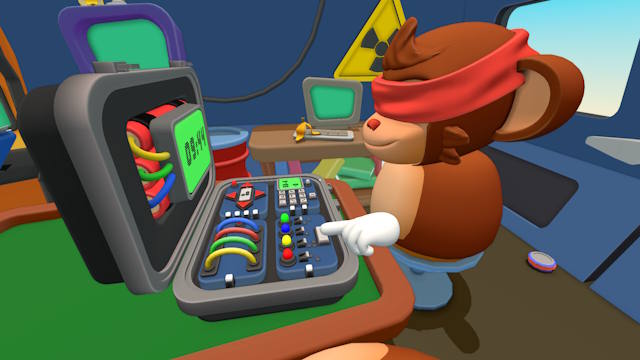
Free Mode can also be useful after the basics because it lets the group design a bomb and isolate the types of module causing trouble. If the team repeatedly fails a comparison or switch sequence, practice that interaction instead of replaying a long level without changing the method.
Which role should a beginner choose?
The Blind Monkey can be an approachable first role for a player who prefers following precise directions instead of interpreting the manual. The Deaf Monkey generally carries the heaviest communication load, while the Mute Monkey needs to scan rules quickly and express them without speech.
There is no universally easiest role, however. A player who is comfortable with spatial controls may prefer Blind, an expressive player may prefer Mute, and a confident caller may prefer Deaf. Rotate after a few rounds so everyone understands why another role needs extra time or a repeated signal.
Common first-session mistakes
- Acting before confirmation. A correct instruction can still cause a strike if it is applied to the wrong control.
- Using vague directions. “Over there” and “the next one” become ambiguous when players have different viewpoints.
- Solving multiple modules at once. Gestures and spoken instructions become disconnected from their intended puzzle.
- Guessing hidden information. Let the role that can perceive a color, screen, shape, or tactile symbol report it.
- Changing signals mid-round. Stick with the agreed meaning unless the entire team pauses to reset it.
- Skipping the debrief. After an explosion, identify the exact handoff that failed and change one thing for the next attempt.
Quick checklist
- Bring exactly three players.
- Understand what each role can see, hear, say, and touch.
- Agree on stop, repeat, yes, no, number, and direction signals.
- Work on one module at a time.
- Repeat every final instruction before operating the bomb.
- Confirm the module result, then move on.
- Rotate roles and review the cause of each failure.
A calm, boring instruction is usually better than a clever one. Once the team can pass simple information without ambiguity, the timer and harder modules become much easier to manage.
Related Articles
 Guide to Playing God of War for Beginners5 minutes read
 How to Play Balatro Game for Beginners5 minutes read
 Black Beacon: Beginner's Guide10 minutes read
 Instructions for Playing Little Witch in the Woods for Beginners4 minutes read
 Play Mikecraft for Beginners: Mikecraft Beginner's Guide4 minutes read
 Pocket Build Guide for Beginners4 minutes read
Reader Comments 0
Sign in with email or Google to join the discussion.