Table of Contents
Magma blocks can be mined in both the Nether and the Overworld, and they can also be crafted from Magma Cream. For a large project, mining exposed patches in the Nether is usually the fastest approach. For a small build, an ocean-floor patch or ruined portal may be safer and closer.
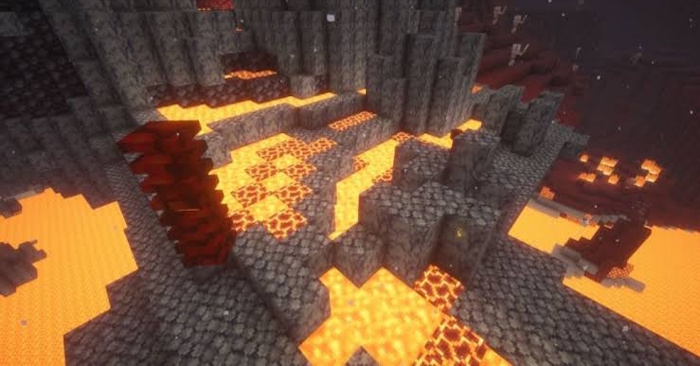
Where to get magma blocks
| Method | Where to look | Best for |
|---|---|---|
| Mine Nether generation | Underground blobs and exposed Basalt Deltas terrain | Collecting large quantities |
| Search bastion remnants | Some Treasure Room and Hoglin Stable sections | Players already exploring a bastion |
| Dive to the ocean floor | Seabed trenches and underwater caves marked by downward bubble columns | A few blocks without a Nether trip |
| Inspect generated structures | Some ocean ruins and ruined Nether portals | Opportunistic collection while exploring |
| Craft them | Four Magma Cream arranged in a 2×2 square | Using spare drops from Magma Cubes |
1. Mine magma blocks in the Nether
Natural blobs of magma blocks generate in the lower Nether, commonly around Y-levels 27–36 in standard world generation. You can also find broad exposed patches in Basalt Deltas, where the dark red-orange texture stands out among basalt, blackstone, and lava.
Bring a pickaxe, food, solid blocks for bridges, and at least one spare flint and steel in case a Ghast disables your portal. Fire Resistance is useful around lava, but it does not make poor footing safe: mark a return route and avoid mining the block beneath you.
Basalt Deltas are productive but dangerous because of irregular terrain, lava pockets, Ghasts, and Magma Cubes. If you only need a few blocks, mine an exposed edge rather than crossing the center of a lava-filled area.
2. Collect blocks from a bastion remnant
Magma blocks can appear in parts of certain bastion remnants, including Treasure Room and Hoglin Stable layouts. This is not the easiest source to farm: Piglins, Piglin Brutes, Hoglins, drops, and lava make bastions significantly more dangerous than an ordinary Nether tunnel.
Treat these blocks as a bonus when you are already prepared to raid the structure. Do not enter a bastion solely for magma if an exposed Basalt Delta or underground blob is available nearby.
3. Follow ocean bubble columns
In the Overworld, magma blocks on the seabed and in underwater caves create bubble columns that pull entities downward. Look for a vertical stream of bubbles, then descend beside it rather than directly through the center.
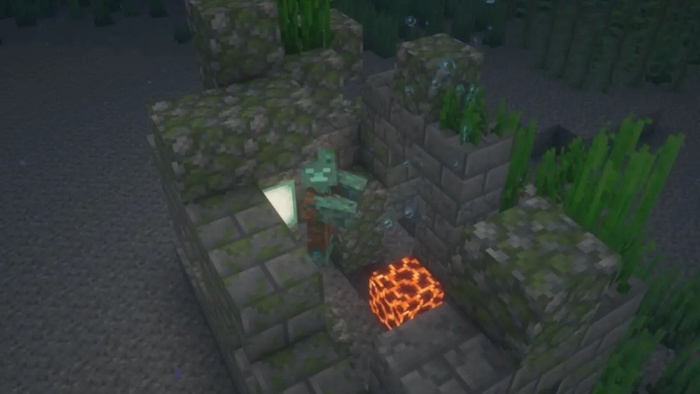
A Water Breathing potion, Respiration helmet, or other reliable source of air makes the trip safer. Carry a pickaxe and leave enough inventory space for the blocks. Watch the air meter while mining; being pulled down can make the return to the surface slower than expected.
4. Check ocean ruins and ruined portals
Ocean ruins
Some ocean-ruin structures incorporate magma blocks. They rarely provide enough for a large farm, but they are worth checking when you are already exploring for loot or archaeology.
Ruined portals
Ruined Nether portals can generate with magma blocks around their base. Surface portals are easy to inspect; underwater and underground variants require more preparation. These structures may also contain obsidian, crying obsidian, gold blocks, and a loot chest, but the exact layout is random.
5. Craft magma blocks from Magma Cream
Place four Magma Cream in a 2×2 square in a crafting grid to make one magma block. Magma Cream is dropped by Magma Cubes and can also be crafted from a slimeball and blaze powder.
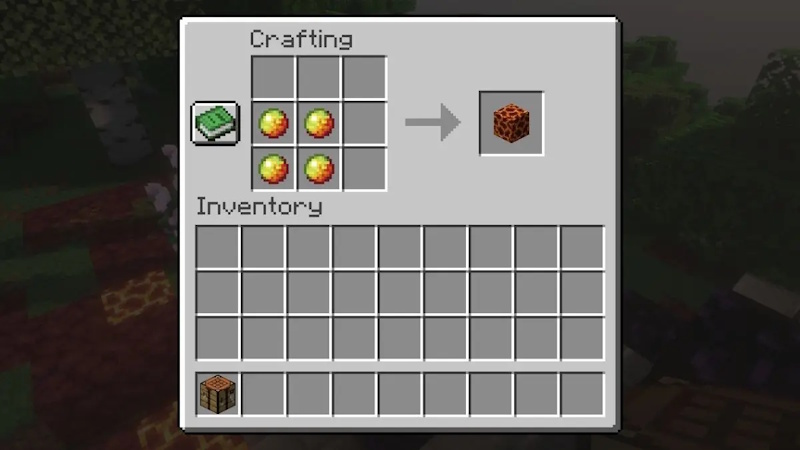
This recipe is convenient when you already have spare Magma Cream. If you need hundreds of blocks, direct mining is usually more efficient because every crafted block consumes four ingredients.
Choose the fastest method for your project
- A handful for decoration: Check a nearby ruined portal or ocean-floor patch.
- Many blocks for a mob or gold farm: Mine natural Nether patches, preferably where the terrain is exposed.
- A bubble elevator or water feature: Collect a few ocean-floor blocks, but remember that magma creates a downward column; soul sand creates an upward column.
- Spare Magma Cream in storage: Craft only the amount you need.
Handle magma blocks safely
Magma blocks damage most living entities that stand on them. Sneaking prevents the normal contact damage to a player, but it does not protect against nearby lava, mobs, drowning, or a fall. Underwater, the downward bubble column can pull players and boats toward the block, so test elevators and traps before depending on them as an escape route.
If this is your first Nether resource trip, review these essential Minecraft survival tools before leaving the Overworld. New players can also use the Minecraft game overview to understand Survival and Creative mode differences.






Reader Comments 0
Sign in with email or Google to join the discussion.