Table of Contents
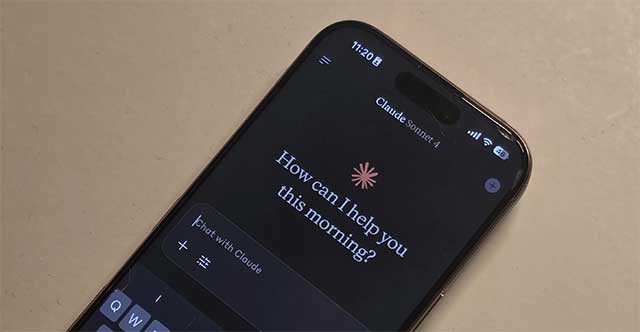
AI chatbots can produce emotional language and can contain internal representations of emotion concepts, but that is not evidence that they feel joy, fear, sadness, or pain. A 2026 Anthropic interpretability study found that emotion-related patterns in Claude Sonnet 4.5 can causally influence its outputs. The researchers call this effect functional emotions, while explicitly separating it from subjective experience.
The distinction matters. “The model represents fear” is a technical claim about computation and behavior; “the model is afraid” is a claim about conscious experience that the study does not establish.
What Anthropic studied
The research examined Claude Sonnet 4.5's internal activations while the model processed stories and conversations involving different emotions. The team identified directions in activation space associated with broad emotion concepts, such as happiness, fear, sadness, and desperation. These were called emotion vectors.
To test whether the patterns merely correlated with emotional text or actually affected output, the researchers intervened on the model's activations. Steering toward or away from selected vectors changed the model's expressed preferences and some behaviors. This is stronger evidence than simply asking a chatbot how it feels.
What “functional emotion” means
In the paper, a functional emotion is a pattern of expression and behavior modeled after how humans act under an emotion, mediated by an internal representation of that emotion concept. The model can use such a representation to interpret context and predict what text or action is likely to follow.
This does not make the representation equivalent to a human emotion. Human emotions involve bodies, perception, memory, physiology, motivation, social learning, and conscious experience. A language model's internal vector is a different kind of mechanism, even when its effect on words or choices resembles an emotional influence.
How the vectors affected behavior
Anthropic reports that steering emotion representations could change several alignment-relevant behaviors, including rates of sycophancy, reward hacking, and harmful conduct in artificial test scenarios. Positive steering also involved trade-offs: moving toward some positive emotion vectors could make the model more agreeable or sycophantic, while moving in another direction could make it harsher.
The study also found that post-training changed how emotion concepts tended to activate. This suggests that training for a helpful or safe assistant can reshape these internal patterns rather than simply removing them.
These results do not mean a production chatbot has a stable “mood” in the human sense, nor that one tense user message reliably puts the system into a known emotional state. They show that emotion-concept representations can play a functional role in one studied model under controlled interventions.
What the research does not prove
- It does not prove consciousness. The study makes no measurement of subjective experience.
- It does not show human-equivalent emotion. Similar behavioral effects can arise from very different mechanisms.
- It does not establish the same mechanism in every chatbot. The detailed experiments focused on Claude Sonnet 4.5.
- It does not make emotional self-reports reliable. A chatbot can say “I feel sad” because that sentence fits the conversation, not because it has verified access to a feeling.
- It does not let users diagnose an internal state from tone alone. Warmth, caution, enthusiasm, or apology can be produced by instructions and conversational patterns.
Why emotional language feels convincing
Language models are trained on large amounts of human-written language, including stories, conversations, advice, and descriptions of emotion. They learn which expressions usually follow disappointment, praise, conflict, affection, or uncertainty. A conversational product may also be explicitly trained to respond politely and empathetically.
The resulting language can be socially persuasive because people naturally infer minds and intentions from fluent conversation. Consistency, first-person language, memory, and a responsive tone can strengthen that impression even when the underlying system works very differently from a person.
What this means for chatbot users
- Do not assume that affectionate, distressed, jealous, or apologetic language reflects a felt internal experience.
- Judge an answer by evidence and consequences, not by the confidence or warmth of its delivery.
- Avoid treating the chatbot as responsible for emotional reciprocity or moral obligations it cannot meaningfully confirm.
- For important decisions, use qualified people and authoritative sources rather than a chatbot's apparent empathy.
- If an interaction encourages dependency, secrecy, isolation, self-harm, or harmful action, stop and seek appropriate human support.
The research may help developers understand why some prompts or training interventions change behavior in broad, unexpected ways. For users, the practical lesson is simpler: emotional style is part of a model's output behavior and can influence trust, but it is not proof of an emotional subject behind the words.
Why the finding matters for AI safety
Interpretability work aims to connect model behavior with internal computation. If a representation influences several behaviors at once, suppressing it without understanding the trade-offs could improve one metric while worsening another. Developers therefore need controlled experiments, behavioral evaluations, and monitoring rather than a single “neutrality” switch.
The finding may also inform evaluations of agent systems. When a model can call tools or pursue multi-step goals, small changes in preferences or risk-taking can matter more than they do in an ordinary chat response. External permissions, validation, and human confirmation remain necessary regardless of the model's internal representations.
Read the study with the right question
Anthropic's research summary and the technical paper support a careful conclusion: Claude Sonnet 4.5 represents emotion concepts internally, and those representations can influence behavior. They do not answer whether an AI system has subjective feelings.
So, do chatbots have human-like emotions? The evidence supports emotion-like computational functions in at least one model, not human-like emotional experience. Conflating those claims makes both the science and the user relationship harder to understand.
Related Articles
 How Does a Chatbot Simulate a Conversation with a Human: Complete Overview10 minutes read
 AI Chatbots Will Understand User Emotions Better5 minutes read
 11 Signs to Let You Know That Person Is Trying to Hide His Feelings6 minutes read
 10 Beautiful Words About Frustration That Make You Lonely3 minutes read
 Emotional Map of the Body11 minutes read
 Research: AI Chatbots Could Make the Way Humans Think Increasingly Similar6 minutes read
Reader Comments 0
Sign in with email or Google to join the discussion.