Table of Contents
A benchmark result reproduced in the source material shows the Xiaomi Pad 8 scoring 2,258,723 points in AnTuTu Benchmark v11.0.9. That total combines CPU, GPU, memory, and user-experience tests. It is useful as a snapshot of one device under one set of conditions, but it is not a guarantee that every Pad 8 will return the same number.
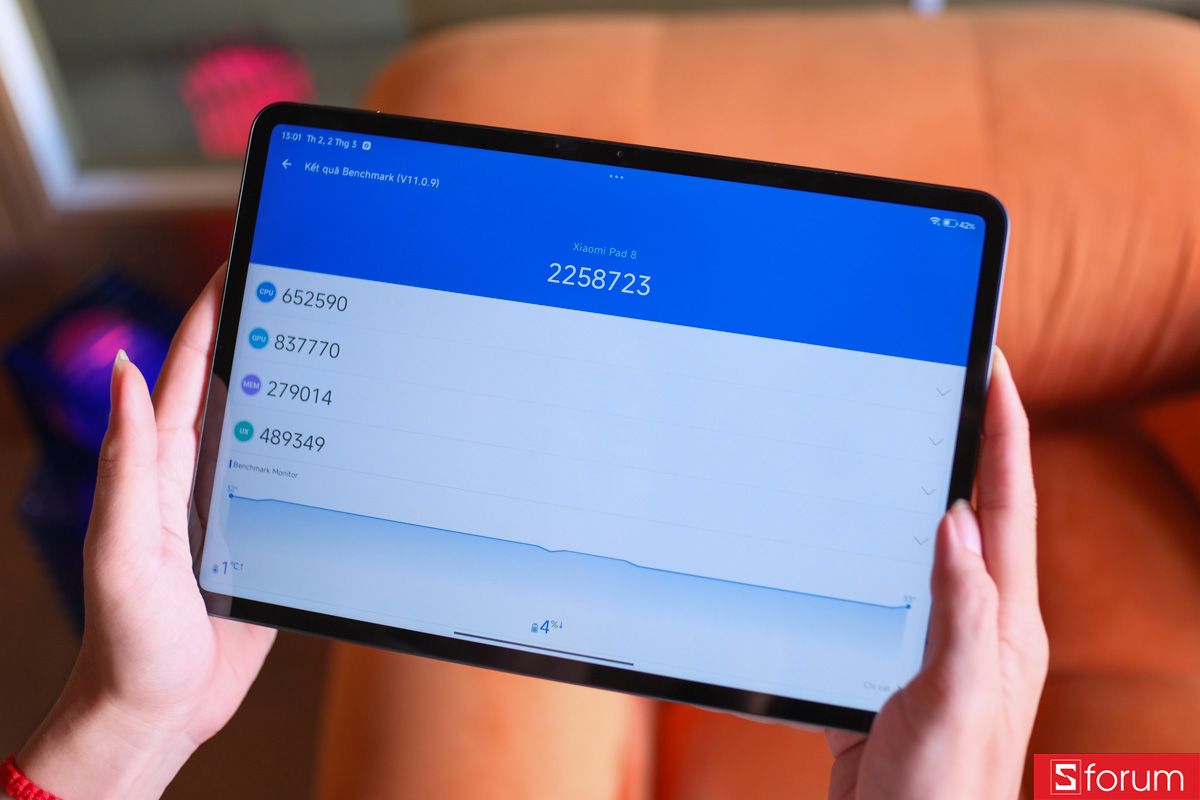
Reported Xiaomi Pad 8 AnTuTu result
| Test | Reported score | What it represents |
|---|---|---|
| CPU | 652,590 | General processor and multi-core workloads |
| GPU | 837,770 | Graphics rendering workloads |
| MEM | 279,014 | Memory and storage operations measured by the benchmark |
| UX | 489,349 | Selected interface and application-style workloads |
| Total | 2,258,723 | Combined result from this recorded run |
The four component figures add up to the stated total. When comparing results, use the same AnTuTu major version because test workloads and scoring can change between versions.
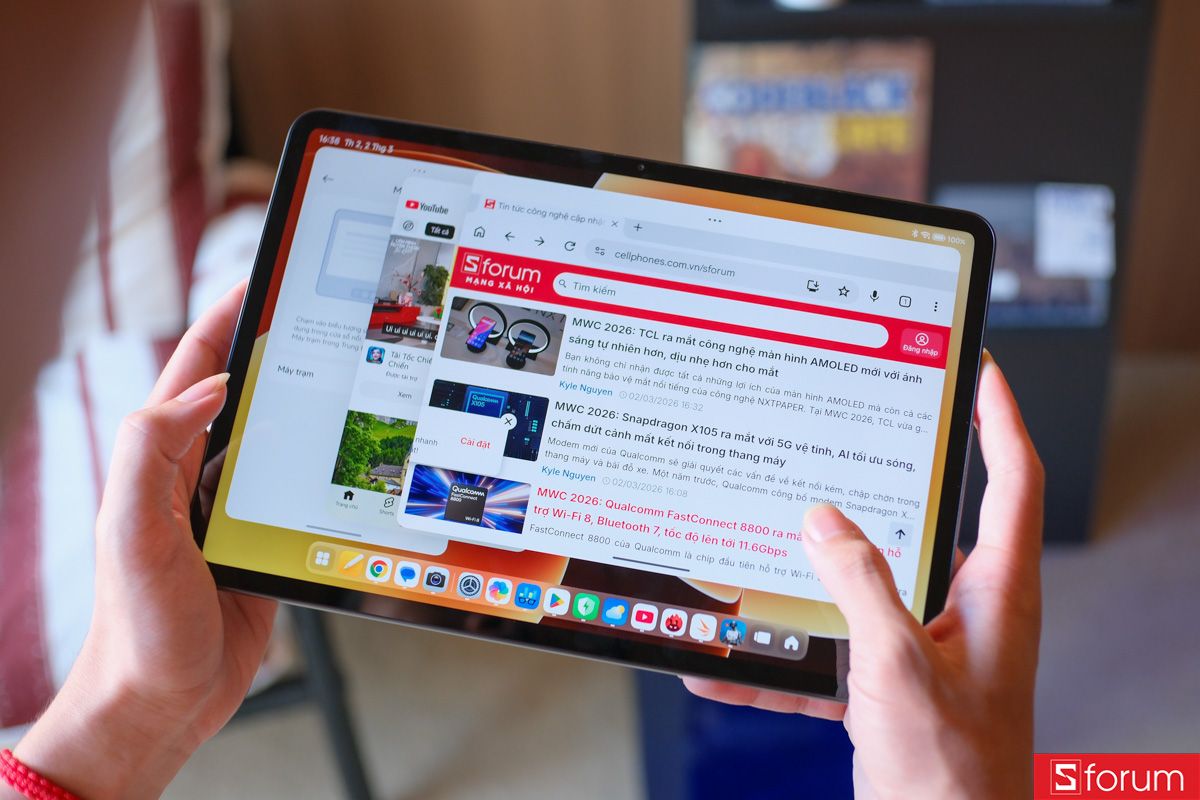
What the component scores can tell you
CPU score
The CPU portion reflects computational workloads. A strong result can indicate that the tablet should handle multitasking and processor-heavy applications well, but sustained performance also depends on cooling, power settings, and application optimization.
GPU score
The GPU score is the largest part of this recorded total. It gives a broad indication of graphics capability for games and visual workloads. Actual game performance still depends on resolution, graphics settings, frame-rate limits, drivers, and whether a particular title is optimized for the hardware.

Memory and UX scores
The MEM test covers aspects of memory and storage behavior, while UX represents a collection of tasks intended to approximate responsiveness. Neither score measures every real-world situation. Storage capacity, the amount of free space, background activity, and software version can all affect how responsive the tablet feels.
Why benchmark results vary
- Benchmark version: compare AnTuTu v11 results with other v11 results, not scores from a different major version.
- Temperature: repeated runs can heat the device and reduce sustained performance.
- Battery and performance modes: power-saving settings can lower a score.
- Software state: system updates, background downloads, and running apps may influence the result.
- Memory and storage configuration: regional variants can use different capacities or storage specifications.
How to use this score when choosing a tablet
Treat the reported 2,258,723-point result as one piece of evidence. For gaming, check sustained frame-rate tests for the specific games you play. For drawing or work, examine stylus behavior, display quality, application support, file handling, and accessory compatibility. Battery life, charging, speakers, cameras, and software-update policy are not measured by the AnTuTu total.
Cross-platform comparisons also require care. A score from an Android tablet does not by itself show how the same workload will behave on iPadOS or Windows, and scores from different benchmark versions should not be placed in the same ranking.
Bottom line
The source result of 2,258,723 points indicates high benchmark performance for this Xiaomi Pad 8 test unit, with the GPU contributing the largest component score. Confirm performance with current, repeatable tests that match your intended applications before making a purchase decision.
Related Articles
 Xiaomi Xring 01 AnTuTu Score Falls Below Claims3 minutes read
 Antutu Updated with a Completely New Design Interface for Android3 minutes read
 How Is Your Android Device Benchmark?8 minutes read
 AnTuTu Smartphone Ranking 1/2025: Complete Guide8 minutes read
 The Strongest Android 10 Smartphone Chart as of April 20194 minutes read
 Motorola Razr Ultra 2025 Geekbench Benchmark Score Revealed3 minutes read
Reader Comments 0
Sign in with email or Google to join the discussion.