Table of Contents
Overview
This guide explains a 7200rpm hard drive in clear, practical terms. It covers the key concepts, recommended steps, common limitations, and useful checks so you can make a better-informed decision.
Hard drive is a device for storing data, this is something almost everyone knows. Based on the structure of the hard drive, we know that in the middle of the hard drive is attached a rotating motor that moves the magnetic disk surface to support reading and writing data. The rotation speed of this motor affects the speed of Windows startup, data copying speed. When buying a hard drive, you will see this index called rpm. However, not everyone knows this RPM index.
So what is a 7200rpm hard drive?
To learn exactly about this information, let's review a little about the structure of the hard drive. The HDD hard drive is a traditional hard drive that operates based on the most commonly used physical principles today to store data. In terms of structure, the HDD hard drive includes a magnetically coated circular disk that is combined with a rotating motor and a data reader to read and write data. You can imagine the operating principle of the hard drive similar to the old record players. In addition to that main part, the HDD hard drive also includes an electronic circuit board to control the rotation speed and the reading/writing position of the reader to help users access the exact location of the data.
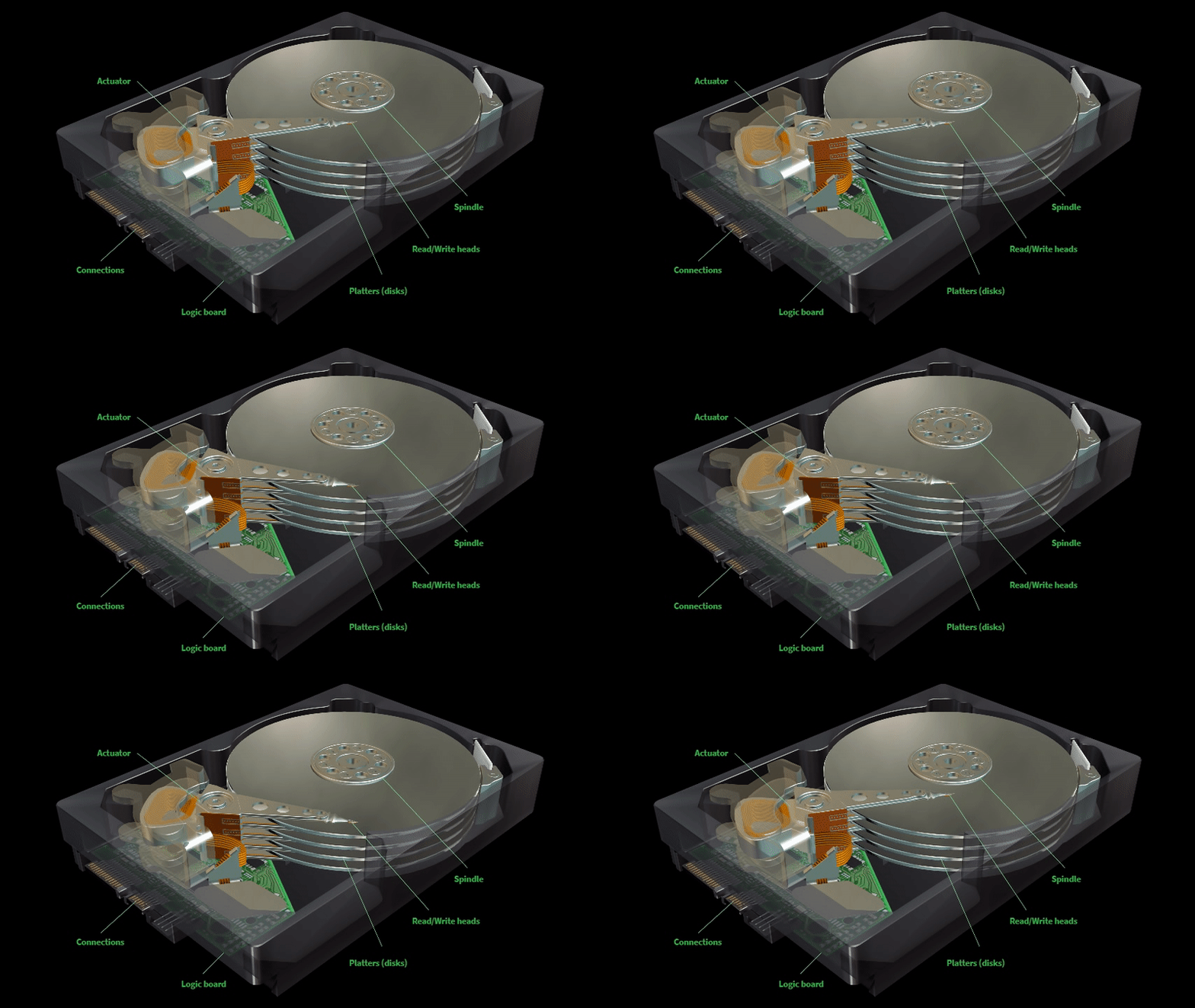
Back to the rpm index, this is an abbreviation of the English phrase 'Revolutions per minute' translated into Vietnamese meaning the number of revolutions per minute. So if you see a hard drive with the parameter 7200rpm, it means that this is an HDD hard drive with a rotation speed of 7200 revolutions per minute.
Which hard drive is better 7200 or 5400?
Unlike SSD drives, HDD hard drives operate on mechanical principles. Therefore, hard drives with higher rotation speeds will have better data copying speeds. The higher the rotation speed, the faster the hard drive will operate. However, the more it rotates, the greater the wear and tear on the hard drive, and therefore the life of the hard drive will also decrease.
To compare 7200 and 5400 hard drives, we see that 7200rpm hard drives will have advantages in performance and speed. So if you want programs and software to work faster, you should choose 7200rpm hard drives.
In contrast, 5200 rpm hard drives are slightly slower but have the advantages of low power consumption, low operating noise, low operating temperature, and longer life.
Key Takeaways
Use the guidance above as a practical reference for 7200rpm hard drive. Check compatibility, follow the steps carefully, and verify important details with official documentation when software, security, accounts, health, or purchases are involved.
FAQ
What is a 7200rpm hard drive used for?
A 7200rpm hard drive is used for the purposes described in this guide. Its practical value depends on your goals, device, workflow, and required features.
What are the main benefits and limitations of a 7200rpm hard drive?
The benefits may include convenience, performance, or greater control, while limitations can involve cost, compatibility, complexity, or security.
How do I decide whether a 7200rpm hard drive is right for me?
Compare its requirements, limitations, cost, compatibility, and real-world value with your own priorities before making a decision.
Related Articles
 How to Identify Hard Drive Failure, Hard Drive Failure, Bad Hard Drive7 minutes read
 What Is a Hard Drive? There Are Several Types?7 minutes read
 Dissection of Hard Drive Components9 minutes read
 Pros and Cons of Using an External Hard Drive for PS49 minutes read
 5 Ways to Check Hard Drive Effectively to Help Periodically Check11 minutes read
 Know About Bad Sectors on Your Hard Drive8 minutes read
Reader Comments 0
Sign in with email or Google to join the discussion.